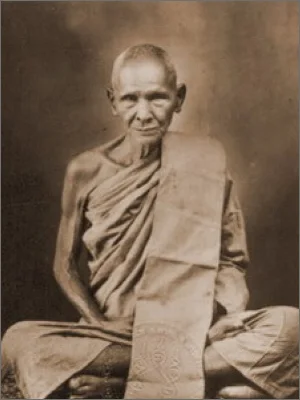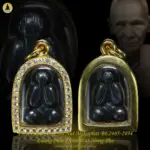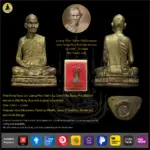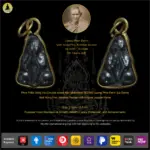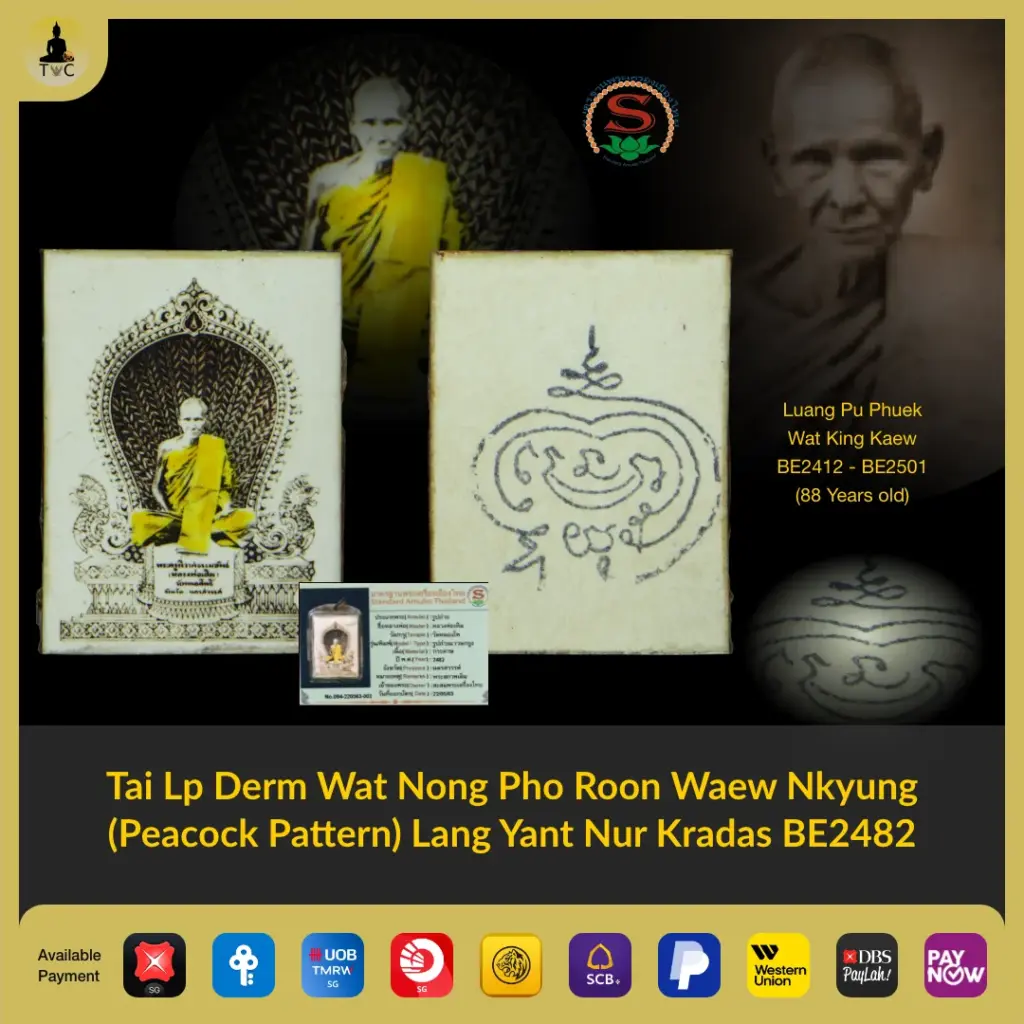
Roop Tai Luang Phor Derm Wat Nong Pho Waew Nkyung Lang Yant Nur Kradas BE2482
| Monk | Luang Phor Derm Phutthasaro (Lp Derm) Wat Nong Pho, Nakhon Sawan |
| Temple | Wat Nong Pho |
| B.E. Year | 2482 |
| Material | Kradas |
| SKU | TAC-0190 |
Authentic Roop Tai Luang Phor Derm Wat Nong Pho Waew Nkyung Lang Yant Nur Kradas BE2482 by Luang Phor Derm Phutthasaro (Lp Derm) Wat Nong Pho, Nakhon Sawan.
What is the Roop Tai Luang Phor Derm Wat Nong Pho Waew Nkyung Lang Yant Nur Kradas BE2482 by Luang Phor Derm Phutthasaro (Lp Derm) Wat Nong Pho, Nakhon Sawan?
The Roop Tai Luang Phor Derm Wat Nong Pho Waew Nkyung Lang Yant Nur Kradas BE2482 by Luang Phor Derm Phutthasaro (Lp Derm) Wat Nong Pho, Nakhon Sawan is a photographic portrait amulet issued in BE 2482 (1939 CE) at Wat Nong Pho, pressed on nur kradas (sacred paper) with the Peacock Pattern obverse and a protective yant inscription on the reverse.
Luang Phor Derm and the Peacock Pattern series
Luang Phor Derm Phutthasaro (Lp Derm) Wat Nong Pho, Nakhon Sawan is widely known among northern-central Thai collectors as the “God of Pak Nam Pho.” His standing rests on a forest-practice lineage that stressed meditative stillness, metta (loving-kindness) transmission, and kongkrapan chatri — the invulnerability discipline that runs through the design and empowerment of every batch he produced.
The Waew Nkyung, or Peacock Pattern, is one of the named runs from his output at Wat Nong Pho. The peacock motif carries specific meaning here: charisma and auspicious dignity, paired with LP Derm’s protective wicha (sacred knowledge) for leadership presence and warding danger. The rear bears a lang yant — a stamped or hand-drawn sacred inscription — completing the formula his devotees associated with safe passage and authority.
Nur Kradas: the material and how the piece was made
Nur kradas translates literally as “paper substance.” In LP Derm’s context it means paper infused with muan sarn — a blend that the original records describe as scripture soot, herbal powders, and candle wax from ceremonial rites. It is not plain paper. The sacred components are worked into the substrate before the photographic image is applied, making the material itself part of the empowerment rather than just a carrier.
Consecration followed a multi-day phutthaphisek (pluk sek) ceremony conducted by LP Derm. The cycle included metta chant rounds, invulnerability chant sequences, and a five-element invocation. For a piece dated BE 2482, that places the rites in 1939 — a period of genuine regional uncertainty, which gives some context to why protection and safe passage were central to the batch’s stated purpose. Understanding that full context sits within the broader Thai Buddhist amulet tradition going back centuries.
Nur kradas ages differently from metal or clay. The paper laminate picks up toning over decades, and the yant on the reverse can show wear at the edges. A well-preserved Waew Nkyung piece with the lang yant still legible is genuinely scarce — not a marketing claim, just the physics of paper surviving eighty-plus years.
What collectors look for and how value is assessed
Roop Tai Luang Phor Derm Wat Nong Pho Waew Nkyung Lang Yant Nur Kradas BE2482 pieces have been assessed as collector-grade rare. Authenticated examples from this batch appear in major Thai collector association records and have placed in competition circuits. No certificate is listed with this specific piece, so a buyer should factor that into any comparison against certified examples.
The authentication points collectors focus on:
- Nur kradas condition — paper integrity, lamination consistency, no signs of modern reproduction
- Peacock Pattern obverse — correct image registration and toning consistent with genuine age
- Lang yant on reverse — legibility, ink or stamp characteristics matching known BE 2482 examples
- Overall age toning — even, natural darkening rather than artificial patination
- Provenance documentation — any prior certification from recognised Thai associations adds weight
Value among comparable pieces is driven primarily by condition of the nur kradas substrate. Intact lang yant on the reverse pushes price further. Pieces that have been through association grading carry a premium over unpapered examples, all else being equal.
This Roop Tai Luang Phor Derm Wat Nong Pho Waew Nkyung Lang Yant Nur Kradas BE2482 is a paper-substrate piece from one of LP Derm's named runs — fragile by nature, which is exactly why intact examples are hard to find at this age. We at TAC sourced this for collectors who want a documented LP Derm piece from a specific named batch rather than a generic attribution.
Attributes reflect Thai Buddhist devotional tradition and are not measurable claims.