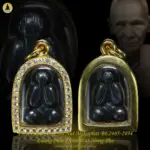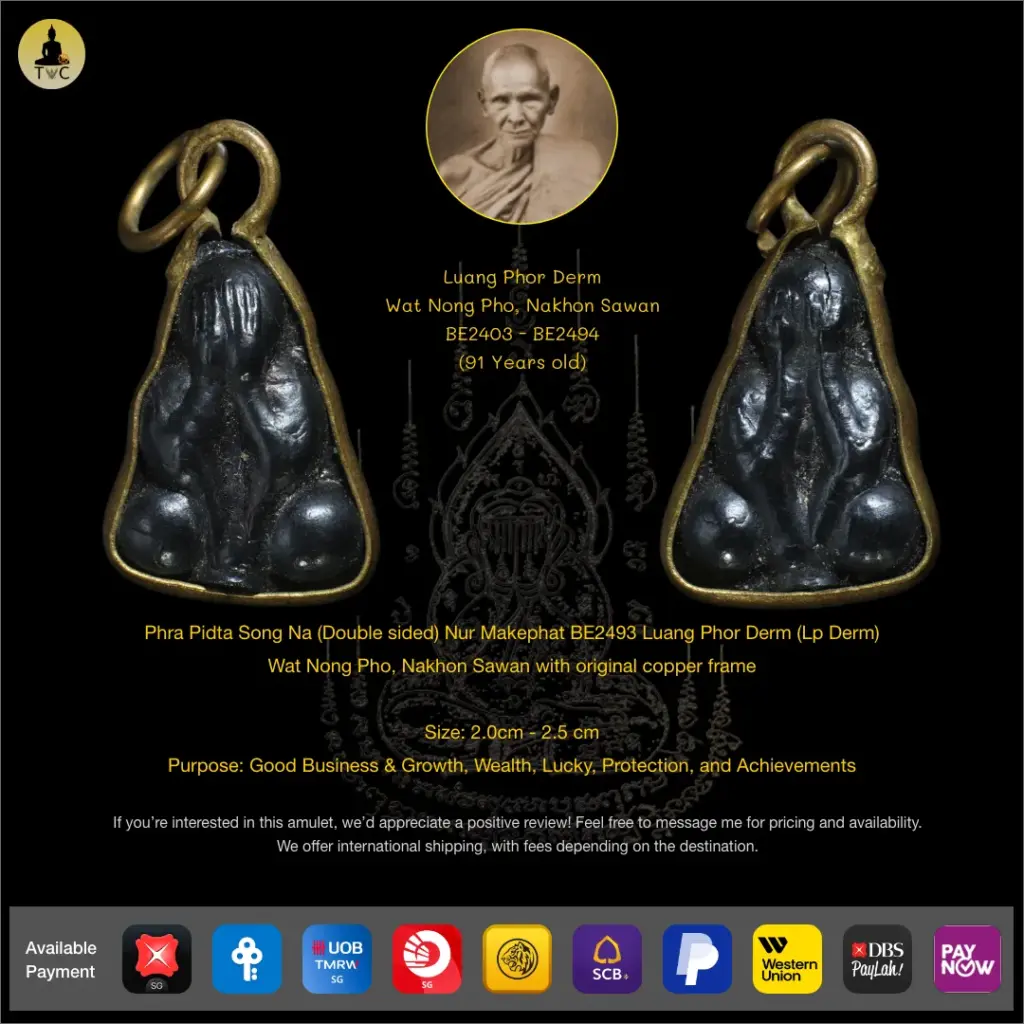
Phra Pidta Song Na (Double sided) Nur Makephat BE2493 Luang Phor Derm Wat Nong Pho
| Type | Phra Pidta |
| Monk | Luang Phor Derm Phutthasaro (Lp Derm) Wat Nong Pho, Nakhon Sawan |
| Temple | Wat Nong Pho |
| B.E. Year | 2493 |
| Material | Makephat |
| SKU | TAC-0741 |
Authentic Phra Pidta Song Na by Luang Phor Derm Phutthasaro (Lp Derm) Wat Nong Pho, Nakhon Sawan. BE 2493, nuea Makephat, original copper frame.
What is the Phra Pidta Song Na (Double-Sided) by Luang Phor Derm Phutthasaro (Lp Derm) Wat Nong Pho, Nakhon Sawan?
The Phra Pidta Luang Phor Derm Phutthasaro (Lp Derm) Wat Nong Pho, Nakhon Sawan listed here is a Song Na (double-sided) Pidta pressed in nuea (material/substance) Makephat, dated BE 2493. It retains its original copper frame and is attributed to Luang Phor Derm Phutthasaro (Lp Derm) Wat Nong Pho, Nakhon Sawan of Wat Nong Pho, one of the most studied temple lineages in Nakhon Sawan collecting.
Luang Phor Derm and the Wat Nong Pho Pidta Line
Luang Phor Derm Phutthasaro is among the most recognised monks in Nakhon Sawan amulet study. His name carries clear lineage memory, and collectors who follow the Wat Nong Pho tradition read his pieces through consistent temple identity, disciplined consecration practice, and a body of work that spans multiple formats and materials. BE 2493 falls within the final phase of his lifetime, which makes pieces dated to this period of particular interest to serious collectors.
The Pidta itself sits within the broader Thai Buddhist amulet tradition as one of the most immediately recognisable devotional forms — the meditating figure, eyes and senses closed, turned inward. In the Song Na format, meaning “two faces” or ปิดตาสองหน้า, both sides carry that image. A collector studies each face separately: proportion, hand placement, body contour, rim behaviour, and how the mould character holds across both surfaces.
No separate batch name or issue purpose is recorded for this listing. The honest reading is a late-period Wat Nong Pho Pidta in Song Na format, appreciated through lineage context, physical study, and direct comparison rather than through claims the documentation does not support.
Reading the Nuea Makephat and the Song Na Construction
Nuea Makephat (เนื้อเมฆพัตร) is a traditional collector-language identifier for dark-toned sacred compositions with a dense, lacquer-like surface presence. It is assessed through visible texture, tone variation, wear distribution, and how the pim (mould) detail sits within the body of the piece. Material names like this give useful context, but the real study is whether the surface expression looks coherent and consistent with age across the whole amulet.
- On a naturally aged piece, wear appears most convincingly on raised points — the figure’s hands, shoulders, and the outer rim — rather than evenly across the surface.
- In a framed piece like this one, edges may be partially covered by the copper frame, so front and back reading both matter.
- The original copper frame is part of the period character. Its fit, patina, and contact marks are authentication reference points in their own right.
The Song Na construction means neither face is secondary. Collectors check that both sides share the same material tone, the same surface ageing, and the same quality of mould impression. Inconsistency between faces is a red flag; coherence across both strengthens the read.
What a Collector Looks For — and What the Certification Picture Shows
No third-party certificate is recorded for this piece. That is a straightforward fact, not a problem to paper over. For collectors comfortable working from lineage attribution, visual study, and direct comparison, the combination here — Luang Phor Derm attribution, Wat Nong Pho lineage, BE 2493 dating, Song Na format, nuea Makephat, original copper frame intact — is a meaningful starting point for further research.
Collectors new to this line should approach the piece through reference material on the Wat Nong Pho Pidta tradition and, where possible, handle comparable examples. The listing does not claim certified status, and that transparency is part of how TAC presents what it knows and what it does not.
Luang Phor Derm of Wat Nong Pho is among the most studied monks in the central Thai amulet tradition, and a BE2493 Pidta Song Na in Nur Makephat represents a late-period expression of his Wat Nong Pho lineage — a format that collectors pursue precisely because the double-sided construction and makephat material together carry a distinct period character that is harder to find than single-faced examples. The retention of the original copper frame is worth noting, as intact frames from this era are increasingly uncommon and speak to the care with which a piece has been kept. At SGD 199 with a standard certificate, we at TAC regard this as a considered entry point into the Luang Phor Derm collecting line for those building a focused, authenticated collection.
Attributes reflect Thai Buddhist devotional tradition and are not measurable claims.