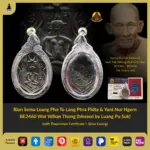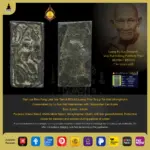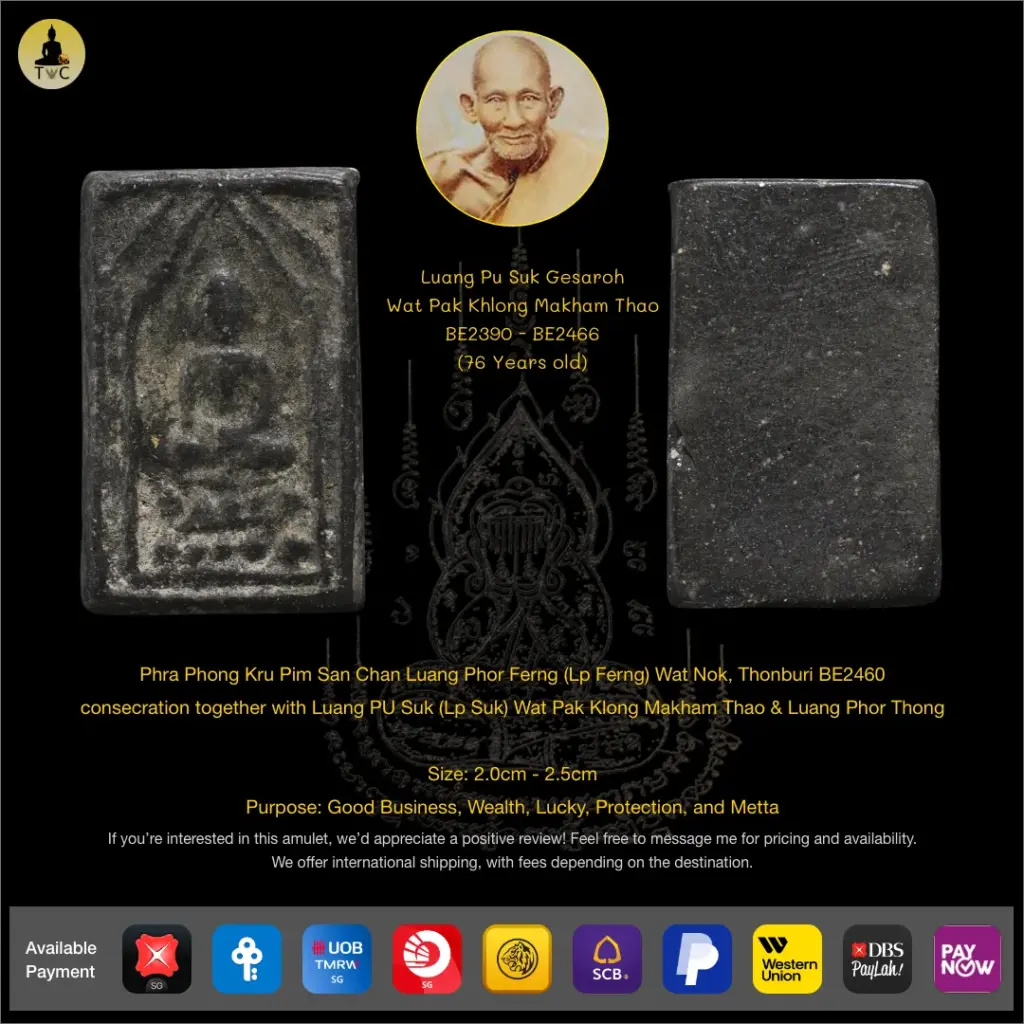
Phra Phong Kru Pim San Chan Luang Phor Ferng (Lp Ferng) Wat Nok, Thonburi BE2460 consecration together with Luang PU Suk (Lp Suk) Wat Pak Klong Makham Thao & Luang Phor Thong
| Monk | Luang Phor Ferng |
| Temple | Wat Pak Klong Makham Thao |
| B.E. Year | 2460 |
| SKU | TAC-0614 |
Authentic Phra Phong Kru Pim San Chan Luang Phor Ferng Wat Nok Thonburi BE2460, consecrated with Lp Suk & Lp Thong. Sacred phong amulet, kru-recovered.
What is the Phra Phong Kru Pim San Chan Luang Phor Ferng (Lp Ferng) Wat Nok, Thonburi BE2460 consecration together with Luang PU Suk (Lp Suk) Wat Pak Klong Makham Thao & Luang Phor Thong by Luang Phor Ferng?
The Phra Phong Kru Pim San Chan Luang Phor Ferng (Lp Ferng) Wat Nok, Thonburi BE2460 consecration together with Luang PU Suk (Lp Suk) Wat Pak Klong Makham Thao & Luang Phor Thong is a sacred phong (powder-pressed) amulet produced at Wat Sakunaram — commonly called Wat Nok — in Thonburi in BE2460 (1917), under the guidance of Luang Phor Ferng, with consecration shared by Luang Phor Suk of Wat Pak Klong Makham Thao and Luang Phor Thong, then sealed within a kru (temple crypt) for later discovery.
Wat Nok, Thonburi — and why this batch carries unusual weight
Wat Sakunaram, known among collectors simply as Wat Nok, stands in Thonburi with roots reaching back to the Ayutthaya period. By BE2460 it was under the stewardship of Luang Phor Ferng, who organised the creation of this phong amulet batch. The temple’s age and the calibre of monks involved are what make this particular run significant to serious collectors.
What sets these amulets apart from a single-temple edition is the consecration arrangement. Luang Phor Ferng presided over the sacred creation at Wat Nok. Luang Phor Thong contributed to the pluk sek (consecration ceremony). Luang Phor Suk — the legendary monk of Wat Pak Klong Makham Thao, widely regarded as one of the most accomplished amulet masters of his era — also participated. That combination of three senior monks from separate temples at a single phutthaphisek is uncommon for the period and is a primary reason collectors track this pim (mould-type) carefully.
The design of these amulets shows clear stylistic proximity to pieces associated with Luang Phor Suk, which the original sources attribute to the close knowledge exchange between the monks involved. For collectors familiar with the Thai Buddhist amulet tradition, that cross-temple lineage connection is a meaningful provenance point, not just background colour.
Nuea, kru discovery, and how these amulets reached collectors
The muan sarn (sacred powder blend) used for this pim draws on a documented combination of ingredients: sacred powders derived from ancient Buddhist texts, rare herbs gathered by monks from sacred locations, holy relics and blessed substances, and soil and minerals sourced from multiple temple sites. This layered composition is consistent with the approach Luang Phor Suk’s circle was known for in that period.
Once pressed and consecrated, the amulets were stored inside a kru — a sealed underground chamber — to preserve their condition and spiritual integrity. Some pieces were additionally placed within a sacred chedi at Wat Srakes in Ang Thong Province. The kru discovery came years later, and the recovered amulets were redistributed to devotees as part of a fundraising effort for temple restoration. That sequence — consecration, kru sealing, later recovery — is a well-documented pattern in Thai amulet history and adds a layer of verifiable provenance that collectors value.
What to check when authenticating, and what drives value
Collectors approaching this pim should focus on the powder surface, mould definition, and any age-consistent patina that would align with a BE2460 production date. The design elements carry stylistic markers linked to Luang Phor Suk’s output, so cross-referencing against documented reference pieces from that lineage is standard practice. A piece that shows clear pim definition with surface characteristics consistent with over a century of age is the baseline for niyom (collector-standard) status.
- Powder surface texture and colour consistent with a century-old phong composition
- Mould sharpness and pim proportions matching documented BE2460 examples
- Stylistic markers aligned with Luang Phor Suk–associated design conventions
- Kru patina or mineral deposits where applicable, consistent with underground storage
Pieces from this batch are traded without a formal certificate at this time. Authentication therefore relies on physical examination against known reference pieces and, where possible, opinion from established Thai amulet societies. TAC recommends collectors do their own comparison research before acquiring any piece of this age and lineage.
How can you tell an authentic Phra Phong Kru Pim San Chan Luang Phor Ferng (Lp Ferng) Wat Nok, Thonburi BE2460 consecration together with Luang PU Suk (Lp Suk) Wat Pak Klong Makham Thao & Luang Phor Thong by Luang Phor Ferng?
Authentication centres on three areas: pim fidelity, nuea characteristics, and age-consistent surface condition. The powder composition should show tonal and textural qualities consistent with a BE2460 phong amulet that has spent time in a kru environment — mineral deposits, subtle colour shifts, and a surface that has settled over more than a century. Mould definition is compared against documented reference pieces from this batch, paying particular attention to the design elements shared with Luang Phor Suk–associated work. No formal certificate currently accompanies these pieces, so physical cross-referencing against niyom examples and consultation with experienced collectors or amulet societies is the accepted authentication path.
What is the Phra Phong Kru Pim San Chan Luang Phor Ferng (Lp Ferng) Wat Nok, Thonburi BE2460 consecration together with Luang PU Suk (Lp Suk) Wat Pak Klong Makham Thao & Luang Phor Thong traditionally carried for?
Collectors and devotees traditionally associate this amulet with three areas of belief: Metta Maha Niyom (kindness, charm, and positive reception from others), Kleaw Klart (protection from harm and misfortune), and support for wealth and business matters. These associations reflect the combined spiritual reputation of the three monks who consecrated the batch, particularly Luang Phor Suk, whose amulets have long been linked with strong metta and protective qualities. As with all amulets in the Thai Buddhist tradition, these are matters of personal faith and cultural belief — TAC presents them as the traditions surrounding this piece, not as guarantees of any outcome.
This piece holds particular significance in the Thai amulet canon because it unites the consecration efforts of three highly respected monks of the early Rattanakosin period — Luang Phor Ferng of Wat Nok, Luang Phor Suk of Wat Pak Klong Makham Thao, and Luang Phor Thong — a convergence of lineages that is rarely documented in a single batch dating to BE2460. Luang Phor Suk in particular is regarded by serious collectors as one of the foremost masters of sacred powder amulets from that era, and his participation in this consecration substantially elevates the piece's historical and collectible standing. We at TAC consider amulets of this provenance and age, especially those accompanied by a certificate, to be meaningful additions to any collection focused on early 20th-century Thai Buddhist material culture.
Attributes reflect Thai Buddhist devotional tradition and are not measurable claims.