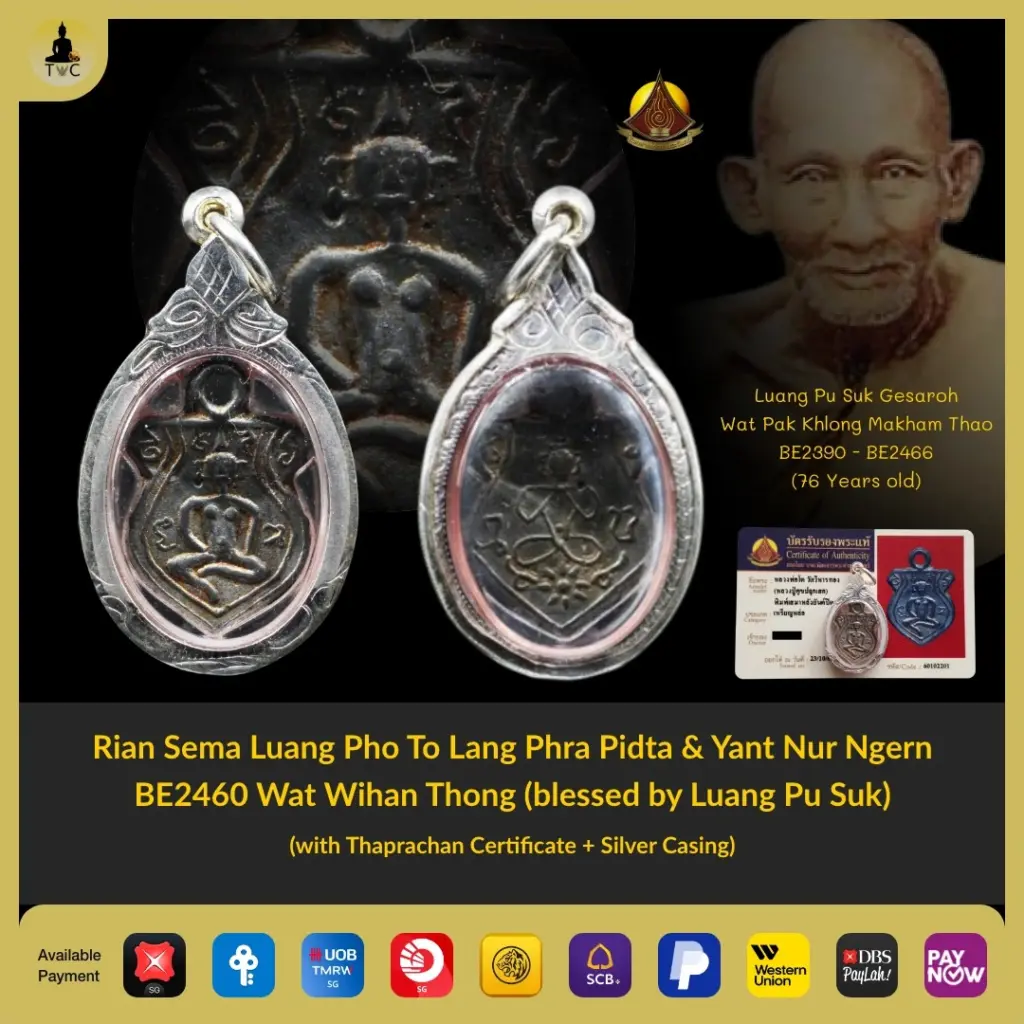
Rian Sema Luang Phor To Lang Phra Pidta & Yant BE2460 Wat Wihan Thong Luang Pu Suk
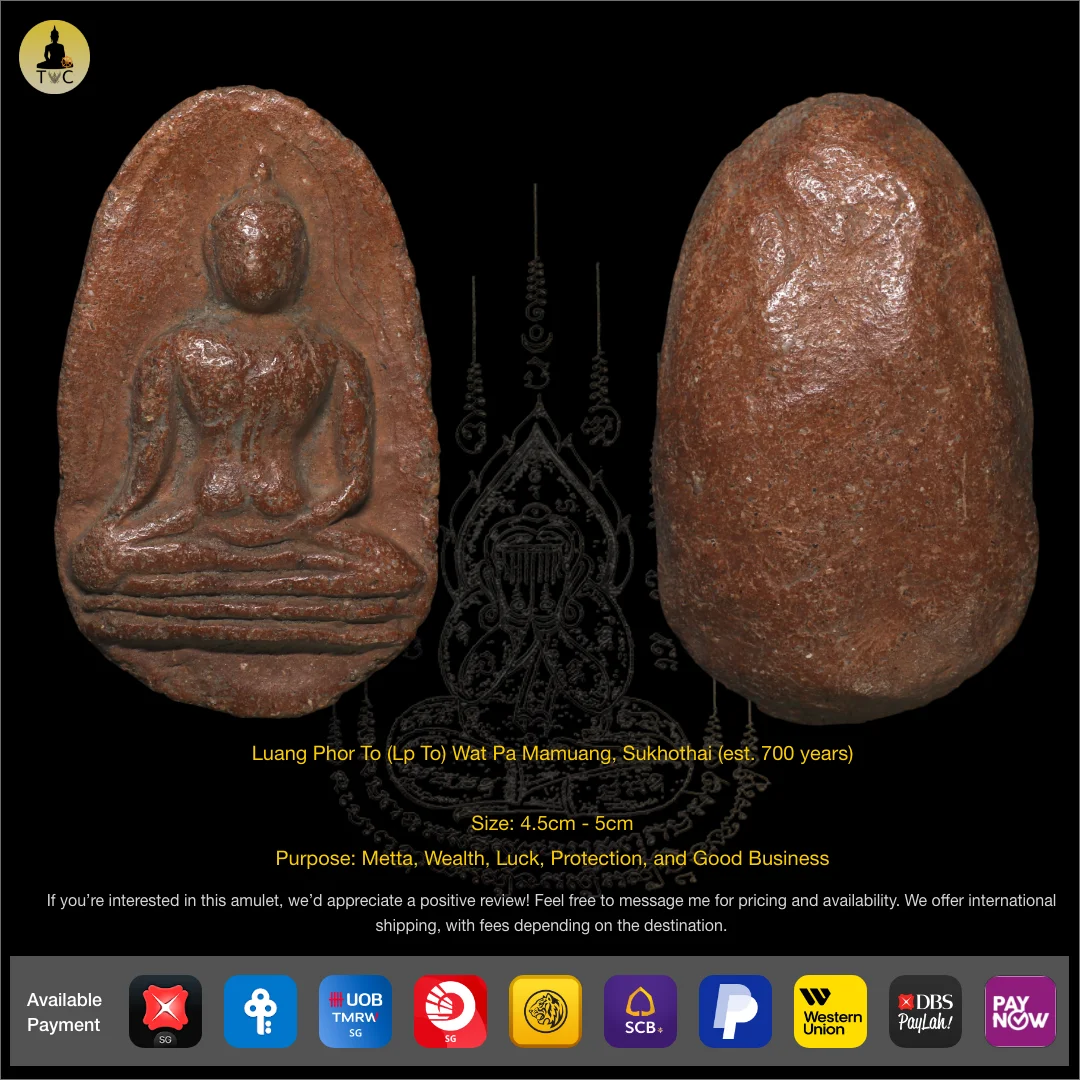
| Monk | Luang Phor To (Lp To) Wat Pa Mamuang, Sukhothai (est. 700 years) |
| Temple | Wat Wihan Thong |
| B.E. Year | 2460 |
| SKU | TAC-0552 |
Authentic Rian Sema Luang Phor To Lang Phra Pidta & Yant BE2460 Wat Wihan Thong Luang Pu Suk by Luang Phor To (Lp To) Wat Pa Mamuang, Sukhothai.
What is the Rian Sema Luang Phor To Lang Phra Pidta & Yant BE2460 Wat Wihan Thong Luang Pu Suk by Luang Phor To (Lp To) Wat Pa Mamuang, Sukhothai (est. 700 years)?
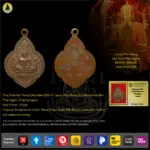
The Rian Sema Luang Phor To Lang Phra Pidta & Yant BE2460 Wat Wihan Thong Luang Pu Suk by Luang Phor To (Lp To) Wat Pa Mamuang, Sukhothai (est. 700 years) is a shield-form devotional medal struck in Nur Ngern (silver), issued BE2460 at Wat Wihan Thong, Chainat Province, with blessing attributed to Luang Pu Suk of Wat Pak Khlong Makham Thao. The obverse carries Luang Phor To in a composed seated posture; the reverse pairs Phra Pidta with a yant (sacred inscription) field. A Thaprachan certificate is included as shown.
A 1917 medal from Wat Wihan Thong — what the pairing tells a collector
The rian sema format — a devotional medal cut in the profile of a sema boundary stone — was a practical choice in early 20th-century Siam. It wears flat against the body, holds iconography clearly, and travels well. This BE2460 issue from Wat Wihan Thong in Chainat Province sits in that tradition: a temple-issued object likely distributed for merit occasions or devotional support in the community.
What makes the design deliberate is the dual-face logic. Luang Phor To on the obverse signals composure and meditative authority — a teacher-figure. The reverse is more functional in Thai talisman grammar: Phra Pidta (พระปิดตา, the “closed-eye” protective figure) paired with yant inscription lines. Together the two faces form a complete devotional circuit — steadiness of mind on one side, protective scripture on the other. This is not decorative coincidence. It is a considered pairing that collectors in this category recognise immediately.
For those new to the Thai Buddhist amulet tradition, the yant on the reverse is not ornamental script. It carries specific vicha (วิชา, sacred knowledge lineage) activated through the consecration blessing — in this case, attributed to Luang Pu Suk (หลวงปู่ศุข) of Wat Pak Khlong Makham Thao, a name with strong weight in collector culture for protective wicha.
Nur Ngern and what the silver should show after a century
Nur Ngern (เงิน, silver) is the documented nuea for this piece. Silver is favoured for devotional medals because it holds relief detail crisply and develops honest toning over decades — darkening in recessed fields, staying brighter on raised contours. On a piece from BE2460, that tonal gradient is part of how a collector reads age consistency. Fresh uniform shine, or heavy polishing that erases surface micro-texture, would both flag attention.
Specific points to check on this pim:
- Toning distribution: recessed areas around the face, robe folds, and yant lines should carry darker tone; raised edges and high relief points should retain brighter metal.
- Relief retention: facial lines and robe structure on the obverse, and the yant inscription on the reverse, should remain legible and structured — not blurred by wear or heavy cleaning.
- Edge and sema contour: rim wear should be coherent and gradual, without abrupt cuts that suggest re-edging or alteration.
- Surface texture: honest silver ageing shows micro-texture that does not look machine-polished or chemically treated.
No specific run (roon) name or dated consecration program is stated in the listing documentation. The responsible collector approach is to treat BE2460 as the issue anchor, then build confidence from material behaviour and document-to-object alignment — not from claimed batch names alone.
Certification and what it actually covers
A Thaprachan certificate is included with this piece, as shown in the listing images. Thaprachan is a well-known Bangkok amulet market certification issuer, and a certificate here adds a meaningful layer of documentation — particularly when the photographed medal, serial details, and issuer records are cross-checked and consistent. That cross-check is the step collectors should not skip.
The blessing attribution to Luang Pu Suk carries weight in the collector community because his name is associated with specific protective wicha. Without a consecration log, the certificate and physical examination remain the two strongest pillars. When both align — coherent silver ageing, correct relief style for the type, and paper-to-object matching — the piece stands on solid ground for a serious collector.
Issued in BE2460 — over a century ago — this Nur Ngern (silver) rian sema from Wat Wihan Thong, Chainat, is a disciplined example of early 20th-century Thai votive medal craft: the obverse carries Luang Pho To's portrait as a meditative anchor, while the reverse pairs Phra Pidta with yant in a composition that speaks to protective intent without ornamental excess. For collectors, the material choice matters — silver tones honestly with age, and a piece of this vintage will carry surface character that registers its century of existence rather than concealing it . The blessing attribution to Luang Pu Suk of Wat Pak Khlong Makham Thao adds a meaningful lineage dimension, connecting a Chainat temple issue to one of the most respected monk names in Central Thai amulet history. We at TAC hold this certificate-accompanied piece as a considered option for collectors building around early Rattanakosin-period medals or the Luang Pho To devotional tradition .
Attributes reflect Thai Buddhist devotional tradition and are not measurable claims.