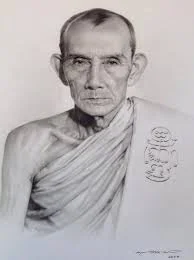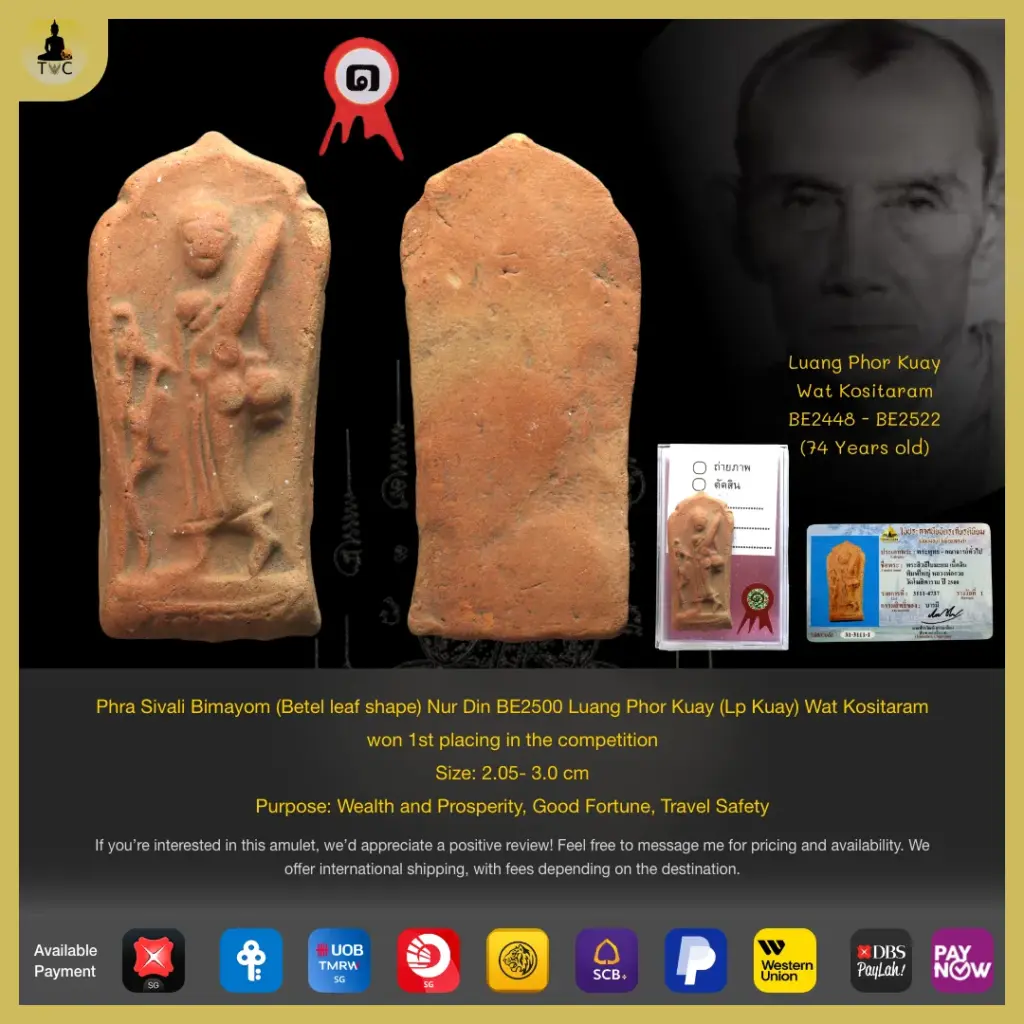

Phra Sivali Bimayom (Betel leaf shape) Nur Din BE2500 Luang Phor Kuay (Lp Kuay) Wat Kositaram won 1st placing in the competition
| Monk | Luang Phor Kuay Wat Kositaram |
| Temple | Wat Kositaram |
| B.E. Year | 2500 |
| Material | Din |
| Competition | Won 1ST placing |
| SKU | TAC-0776 |
Authentic Phra Sivali Bimayom (Betel leaf shape) Nur Din BE2500 Luang Phor Kuay (Lp Kuay) Wat Kositaram won 1st placing in the competition by Luang Phor Kuay…
What is the Phra Sivali Bimayom (Betel leaf shape) Nur Din BE2500 Luang Phor Kuay (Lp Kuay) Wat Kositaram won 1st placing in the competition by Luang Phor Kuay Wat Kositaram?
The Phra Sivali Bimayom (Betel leaf shape) Nur Din BE2500 Luang Phor Kuay (Lp Kuay) Wat Kositaram won 1st placing in the competition is a sacred earth amulet created by Luang Phor Kuay Wat Kositaram in BE 2500 (1957 CE). Pressed from din (sacred earth) and shaped in the distinctive bimayom betel leaf form, it carries the image of Phra Sivali and took first place in a formal amulet competition.
Luang Phor Kuay and the piece that put him on the competition map
Luang Phor Kuay Chotcho of Wat Kositaram, Chai Nat Province, is one of the most respected monk-makers of the mid-twentieth century Thai Buddhist amulet tradition. His command of sacred sciences — selecting materials, composing incantations, timing ceremonies to auspicious dates — gave his pieces a reputation that still holds in collector circles across Thailand, Malaysia, and Singapore.
BE 2500 was a significant year in the Thai Buddhist amulet tradition, coinciding with the 2,500th anniversary of the Buddhist era. This piece did not simply mark that occasion — it won first placing in a formal competition, a verifiable record that separates it from other Luang Phor Kuay output of the same period.
The nuea, the pim, and how this amulet was made
The nuea (material/substance) here is din — sacred earth gathered from auspicious grounds, blended with herbal powders and holy ash from ceremonial fires. Luang Phor Kuay combined these with kata (sacred incantations) recited throughout preparation, following methods passed down through the monastic lineage at Wat Kositaram.
The pim (mould collectors authenticate against) produces the bimayom form: a betel leaf silhouette framing the seated image of Phra Sivali. The betel leaf outline is uncommon in Thai amulet production — most Phra Sivali pieces use a standard arch or oval — which makes this pim immediately recognisable once you know what to look for. Each piece was hand-pressed, then marked with sacred yant (sacred inscriptions) before the consecration.
The phutthaphisek (consecration ceremony) was held at Wat Kositaram under Luang Phor Kuay’s direct supervision. The ceremony involved sustained Pali chanting, deep meditative states among the participating monks, and scheduling aligned to an auspicious astrological date — standard practice for Luang Phor Kuay’s major runs, but carried out with particular care for this edition given its competition submission.
What collectors look for and how this piece is certified
Phra Sivali is well established in the Thai Buddhist tradition as a figure associated with wealth, good fortune, and safe travel. Collectors associate the bimayom pim specifically with those qualities, and the first-placing competition result adds a layer of historical documentation that underpins value beyond devotional use alone.
For authentication, experienced collectors focus on several points:
- The betel leaf outline — clean, symmetrical, with no mould shift on the edges
- Din surface texture — aged sacred earth shows a particular granular character and patina distinct from later reproductions
- Phra Sivali facial and robe detail — sharpness of the image consistent with original hand-pressing from a well-maintained pim
- Yant markings on the reverse — placement and depth match documented reference pieces from this run
- Overall proportions of the bimayom form — height-to-width ratio consistent with the Wat Kositaram BE2500 edition
No certificate information has been recorded for this listing. Buyers should request any available documentation and cross-reference against niyom (collector-standard reference pieces) from established Thai amulet publications before purchase.
We at TAC regard this as one of the more documentable Luang Phor Kuay pieces from BE 2500 — the first-placing competition result gives it a factual credential that most din amulets of this era simply do not have. The uncommon bimayom pim and the historical weight of the BE 2500 anniversary year make it worth serious attention from collectors focused on Luang Phor Kuay or mid-century Chai Nat Province material.
Attributes reflect Thai Buddhist devotional tradition and are not measurable claims.