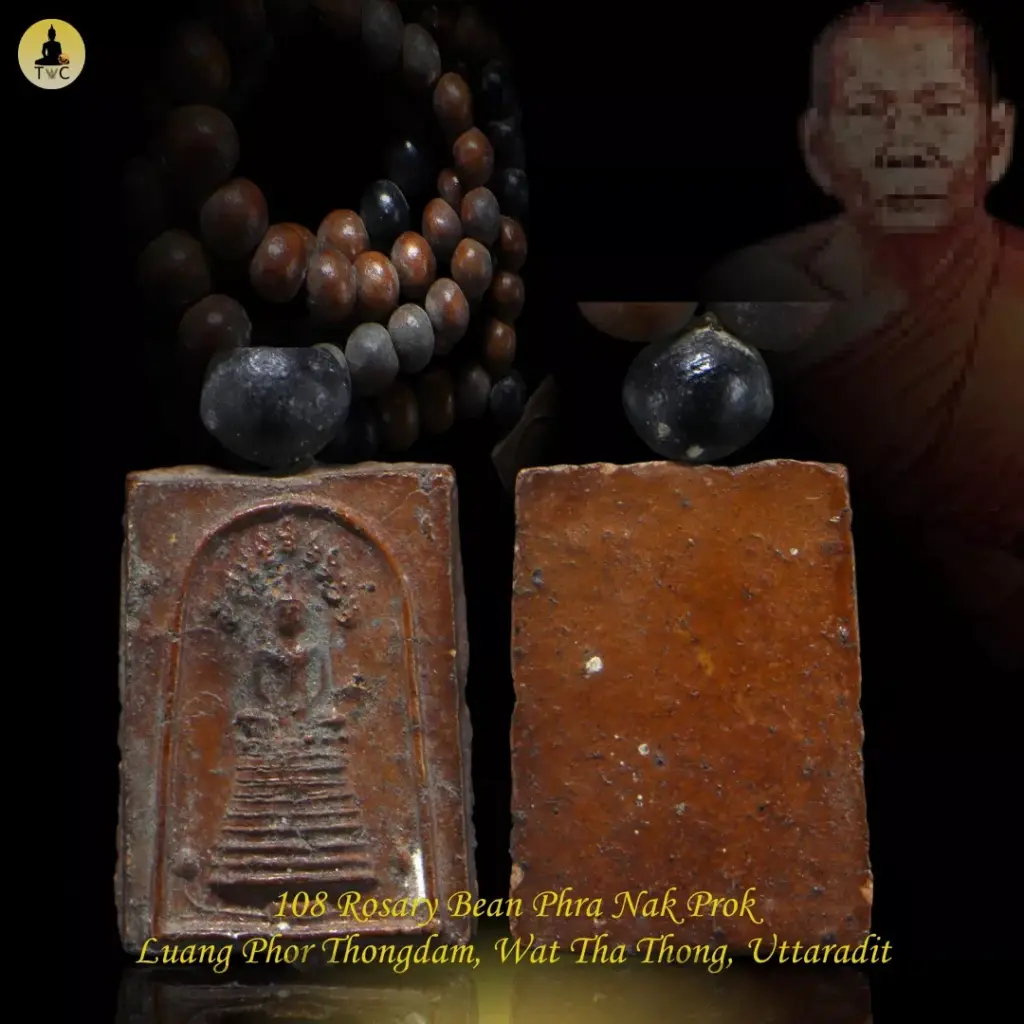
108 Rosary Bean Phra Nak Prok Luang Phor Thongdam, Wat Tha Thong, Uttaradit
| Type | Phra Nak Prok |
| Monk | Luang Phor Thongdam |
| Temple | Wat Tha Thong |
| SKU | TAC-0092 |
Authentic 108-bead Phra Nak Prok rosary by Luang Phor Thongdam, Wat Tha Thong, Uttaradit. Pressed from consecrated sacred powder blend. Singapore dealer, TAC.
What is the 108-Bead Phra Nak Prok Rosary by Luang Phor Thongdam?
The Phra Nak Prok Luang Phor Thongdam is a 108-bead devotional rosary consecrated at Wat Tha Thong in Uttaradit. Each bead is pressed from a consecrated muan sarn (sacred powder blend) incorporating holy herbs, temple soil, incense ash, altar floral pollen, and minute relic powders. The centerpiece carries the Phra Nak Prok image — the Buddha seated in meditation, sheltered by a seven-headed Naga.
Why the Number 108 and the Nak Prok Image Both Matter
In the Thai Buddhist amulet tradition, the number 108 carries specific weight. It references both the defilements a practitioner works to overcome and the auspicious qualities to be cultivated — so the count itself has doctrinal meaning, not just ritual convenience.
The Phra Nak Prok iconography reinforces that same idea. The Naga’s hood arching over the meditating Buddha represents composure held steady through adversity. As a centerpiece on a counting rosary, it connects each recitation cycle back to that image of poised, undisturbed practice. Collectors who use rosaries for daily chanting — Iti Pi So, Metta verses, breath-counting — find this pairing deliberate rather than decorative.
The Muan Sarn and How These Beads Were Made
The nuea (material/substance) here is a consecrated powder blend. The documented components are holy herbs, selected temple soils, incense ash from rites, altar floral pollen, and minute relic powders entrusted by senior monks. That combination is consistent with the type of muan sarn Luang Phor Thongdam was noted for incorporating into his devotional items.
Each of the 108 beads was hand-finished with smooth edges — practical for extended recitation cycles where the fingertips need to move without interruption. The surface shows what collectors call sacred powder complexion: slight micro-pitting from the setting process, visible on close inspection. The centerpiece medallion is separately mounted and should sit securely without play in the stringing.
Consecration took place at Wat Tha Thong through multi-session chanting and silent meditation periods. LP Thongdam presided, and the emphasis during those rites was on serenity and compassionate intention — consistent with his known approach to both personal practice and the items he blessed.
What Collectors Look for in Authentic Examples
Luang Phor Thongdam had a reputation for strict discipline and deep meditation practice. His amulets and rosaries were made as practical aids for lay devotion, not as display pieces, and the construction of this rosary reflects that. Bead proportions should be consistent across the full strand. The powder complexion should be uniform in character — irregular in the natural way of pressed phong, not in a way that suggests replacement beads.
- Bead surface: Natural micro-pitting and pressed grain texture; no overly smooth or painted-over beads
- Centerpiece: Secure mount, clear Phra Nak Prok relief, powder complexion matching the bead strand
- Stringing: Original interval markers present; no signs of restringing with non-period cord
- Provenance: Lineage to Wat Tha Thong, Uttaradit, confirmed by the seller
This piece carries no noted certificate. Collectors should rely on physical authentication against known examples from Wat Tha Thong and, where possible, consult specialists familiar with LP Thongdam’s output before acquiring.
We at TAC sourced this 108-bead Phra Nak Prok rosary from Wat Tha Thong, Uttaradit — a lineage piece connected to LP Thongdam's known output of practical devotional items. What draws serious collectors to this piece is the combination of a documented muan sarn formula and LP Thongdam's reputation for strict, meditation-grounded consecration practice — rare to find in a complete, undisturbed strand.
Attributes reflect Thai Buddhist devotional tradition and are not measurable claims.