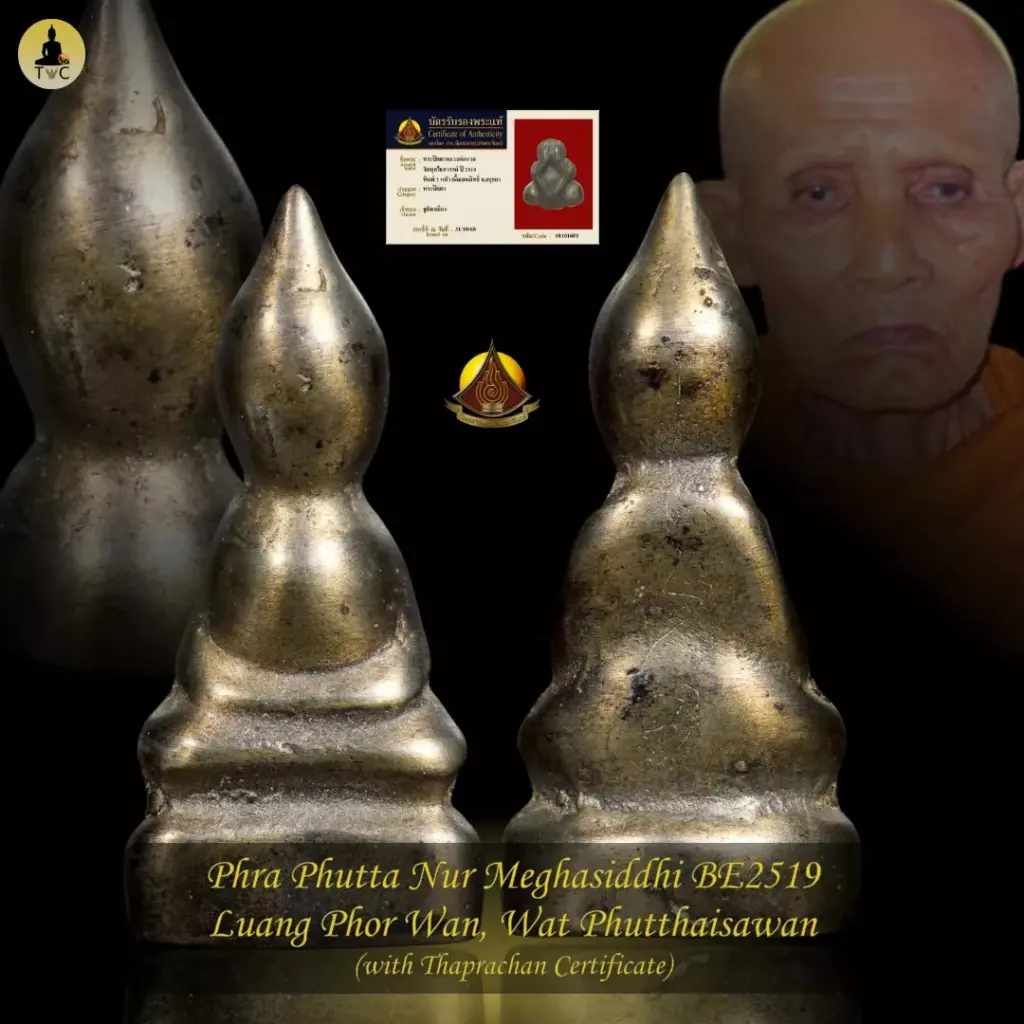
Phra Phutta Nur Meghasiddhi BE2519 Luang Phor Wan, Wat Phutthaisawan
| Monk | Luang Phor Wan (Lp Wan) Wat Phutthaisawan |
| Temple | Wat Phutthaisawan |
| B.E. Year | 2519 |
| Material | Meghasiddhi |
| SKU | TAC-0715 |
Authentic Phra Phutta Nur Meghasiddhi BE2519 Luang Phor Wan, Wat Phutthaisawan by Luang Phor Wan (Lp Wan) Wat Phutthaisawan. Meghasiddhi nuea.
What is the Phra Phutta Nur Meghasiddhi BE2519 Luang Phor Wan, Wat Phutthaisawan by Luang Phor Wan (Lp Wan) Wat Phutthaisawan?
The Phra Phutta Nur Meghasiddhi BE2519 Luang Phor Wan, Wat Phutthaisawan is a Buddha-image amulet attributed to Luang Phor Wan (Lp Wan) Wat Phutthaisawan, pressed in nuea (material/substance) Meghasiddhi and dated to BE 2519. It is documented with a Thaprachan certificate, making it one of the more formally supported pieces from Wat Phutthaisawan in the current market.
Luang Phor Wan and what Wat Phutthaisawan means for this piece
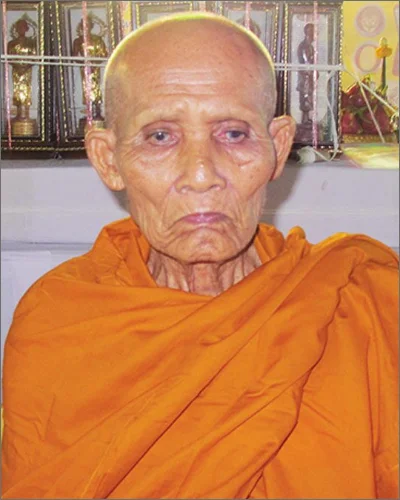
Luang Phor Wan (Lp Wan) Wat Phutthaisawan is the monk behind this edition. The attribution is not incidental — Wat Phutthaisawan carries genuine historical weight as an Ayutthaya-period temple site, and pieces linked to it attract collectors who track both lineage and location. That context matters, but it is not a substitute for piece-level documentation.
That is where the Thaprachan certificate becomes the real trust anchor here. Where no official temple-issued book reference or committee documentation is provided for the specific run, the certificate shifts the conversation from oral attribution to a market-recognised reference standard. For collectors operating across Singapore, Malaysia, or the broader Chinese-speaking market, that kind of paper trail carries practical weight at the point of resale or transfer.
The broader Thai Buddhist amulet tradition places equal emphasis on the monk’s practice, the temple’s sanctity, and the physical evidence of the piece itself. All three lines of inquiry point in the same direction here.
Reading the nuea — what Meghasiddhi actually tells a collector
Meghasiddhi (เนื้อเมฆสิทธิ์) is a specific sacred alloy category with its own visual signature. The term appears across the market in varying contexts, so the disciplined approach is always evidence-first: how the surface reads across front, back, and edge — not just in polished highlights, but in the recessed areas where the nuea’s true character shows.
Three things to check on a piece like this:
- Surface skin: consistent texture across raised and recessed areas, not selectively polished. Honest age reads evenly.
- Edge profile: the side view reveals casting or press consistency and where natural wear has accumulated over five-plus decades since BE 2519.
- Alignment with the certificate: the Thaprachan documentation provides a reference image — the physical piece should track against it in form, proportion, and surface character.
Buddha-image amulets in this category are judged on quiet proportions rather than dramatic detail. The harmony between head, torso, and base; the clarity of the seated posture; the symmetry of the surrounding frame — these are the points that separate a genuine, well-preserved piece from something that merely reads right at a glance.
What collectors traditionally associate with this amulet
In Thai Buddhist practice, Phra Phutta amulets are treated as a focal point for refuge and conduct. Collectors associate this type with phuttha-khun (พุทธคุณ) — broadly understood as steadiness of mind, clarity under pressure, and restraint. These are framed as practice intentions, not guaranteed outcomes.
Two other associations come up regularly among wearers: khumkhrong (คุ้มครอง), the cultural framing of protection through mindfulness and careful choices, and metta (เมตตา), a calmer interpersonal presence. Pieces from a temple with Ayutthaya-era standing tend to carry an added layer of cultural gravity for collectors in the region, particularly those in Thailand and among the diaspora communities in Singapore and Malaysia.
We at TAC are offering this Phra Phutta Nur Meghasiddhi BE2519 Luang Phor Wan, Wat Phutthaisawan with a Thaprachan certificate — which for a piece without published temple-book documentation is the primary reference anchor a careful buyer should look for. What makes this worth a collector's attention is the combination of a historically grounded temple attribution, a defined nuea category in Meghasiddhi, and documentation that moves it beyond verbal provenance.
Attributes reflect Thai Buddhist devotional tradition and are not measurable claims.