Phra Somdej Hubaysri Khanen Nur Phong BE2495 Luang Pu Nak (Lp Nak) Wat Rakang
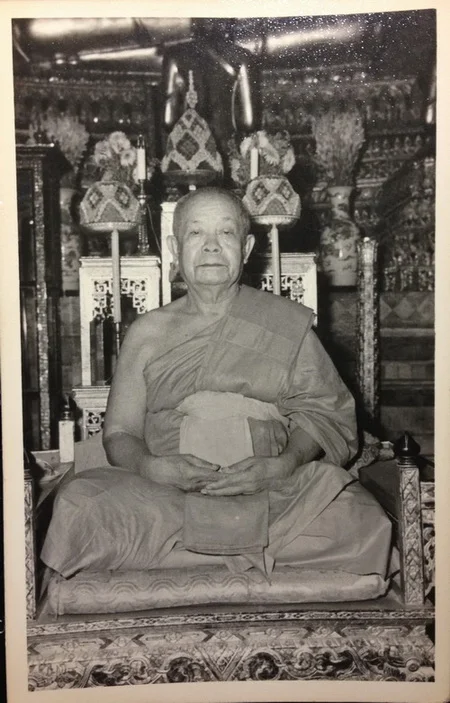
| Monk | Luang Pu Nak Wat Rakang Kositaram |
| Temple | Wat Rakang |
| B.E. Year | 2495 |
| Material | Phong |
| SKU | TAC-0102 |
Authentic Phra Somdej Hubaysri Khanen Nur Phong BE2495 Luang Pu Nak (Lp Nak) Wat Rakang by Luang Pu Nak Wat Rakang Kositaram. DD-Pra certified.
What is the Phra Somdej Hubaysri Khanen Nur Phong BE2495 Luang Pu Nak (Lp Nak) Wat Rakang by Luang Pu Nak Wat Rakang Kositaram?
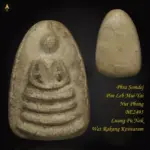
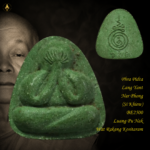
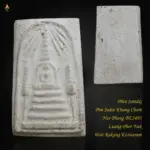
The Phra Somdej Hubaysri Khanen Nur Phong BE2495 Luang Pu Nak (Lp Nak) Wat Rakang by Luang Pu Nak Wat Rakang Kositaram is a post-war era sacred powder tablet pressed at Wat Rakang Kositaram, Bangkok, in BE 2495 (1952). It belongs to the Hubaysri Khanen pim — a mould variation noted for its flared side contours and clearly defined arm structure — and comes with a DD-Pra certificate.
The Hubaysri Khanen Pim and What Makes It Distinct at Wat Rakang
The name tells you what to look for. Hubaysri (หูบายศรี) refers to the flared side contours on the tablet — curves that echo the shape of a bai sree ceremonial leaf offering, traditionally read as a symbol of purity and protective auspiciousness. Khanen (แขน) means the Buddha’s arms are more clearly sculpted in this mould than in a standard Somdej pim, giving the image a stronger sense of definition without losing the calm Somdej composure.
Within the broader Wat Rakang Somdej conversation, this pim sits in the post-war continuation category. It is not from the deep-old Somdej Toh era, but it draws from the same temple lineage and the same sacred powder tradition — which is precisely why collectors who focus on Wat Rakang heritage pieces take it seriously. For those entering that space, it also offers a clearer authentication reference point than earlier batches.
Luang Pu Nak and How This Batch Was Made
Luang Pu Nak Wat Rakang Kositaram was a senior monk and meditation master known for a disciplined, inward-focused practice. Accounts describe him as personally overseeing the empowerment of this batch — sustained Vipassana meditation sessions, daily Pali chanting of key suttas, and private blessing periods. Some narratives also place a broader phutthaphisek (Buddha Abhiseka-style consecration ceremony) at Wat Rakang with senior monks participating, consistent with the temple’s tradition of communal consecration.
The nuea (material/substance) here is phong — sacred powder — prepared in the layered way typical of serious Somdej work. Traditional descriptions of the muan sarn (sacred powder blend) for this piece list Phong Itthijay and Phong Patamang as the core Buddhist verse powders, combined with Bai Lan (palm-leaf scripture) powder, ash from ceremonial joss sticks and candle wax, flower pollen from temple offerings, and herbal resins used as natural binders. The mixture was combined with holy water and sacred oils, pressed into tablets, and left to air-dry in consecrated spaces. Understanding how these materials come together is part of what the Thai Buddhist amulet tradition turns on for serious collectors.
What Collectors Look For and How This Piece Is Certified
On the surface, the Hubaysri Khanen reads as a rectangular tablet in the light grey to cream range. Natural aging on genuine examples typically shows powder bloom (คราบแป้ง) and a gentle grain texture. The front carries a Buddha seated in meditation on a three-tier base, with the ear-like contours and arm outlines that define this pim. The back is usually flat or lightly textured; some pieces show faint hand-marked traces that vary by individual tablet.
- Check the side contours — the Hubaysri flare should be consistent and well-defined, not blurred or re-pressed looking.
- Arm definition (the Khanen quality) should be clear but not sharp in a way that suggests modern machining.
- Surface aging should be even; powder bloom that looks applied or artificially concentrated is a flag.
- Condition of the phong matters — stability of the powder surface affects both appearance and collector value.
- This piece comes with a DD-Pra certificate, which should be cross-referenced against the physical tablet.
Availability of this batch in good condition is limited today. It trades frequently alongside the DD-Pra documentation, and condition plus certificate alignment is what separates strong examples from mid-grade ones at the point of sale.
We at TAC are offering this Phra Somdej Hubaysri Khanen Nur Phong BE2495 Luang Pu Nak (Lp Nak) Wat Rakang — a post-war Somdej tablet from Wat Rakang Kositaram that sits in a category collectors overlook more than they should, given the clarity of the pim and the meditation lineage behind it. The DD-Pra certificate is included and should be described as sighted and matched to the physical tablet.
Attributes reflect Thai Buddhist devotional tradition and are not measurable claims.