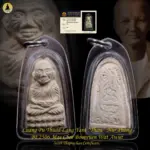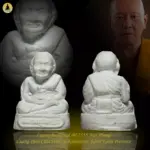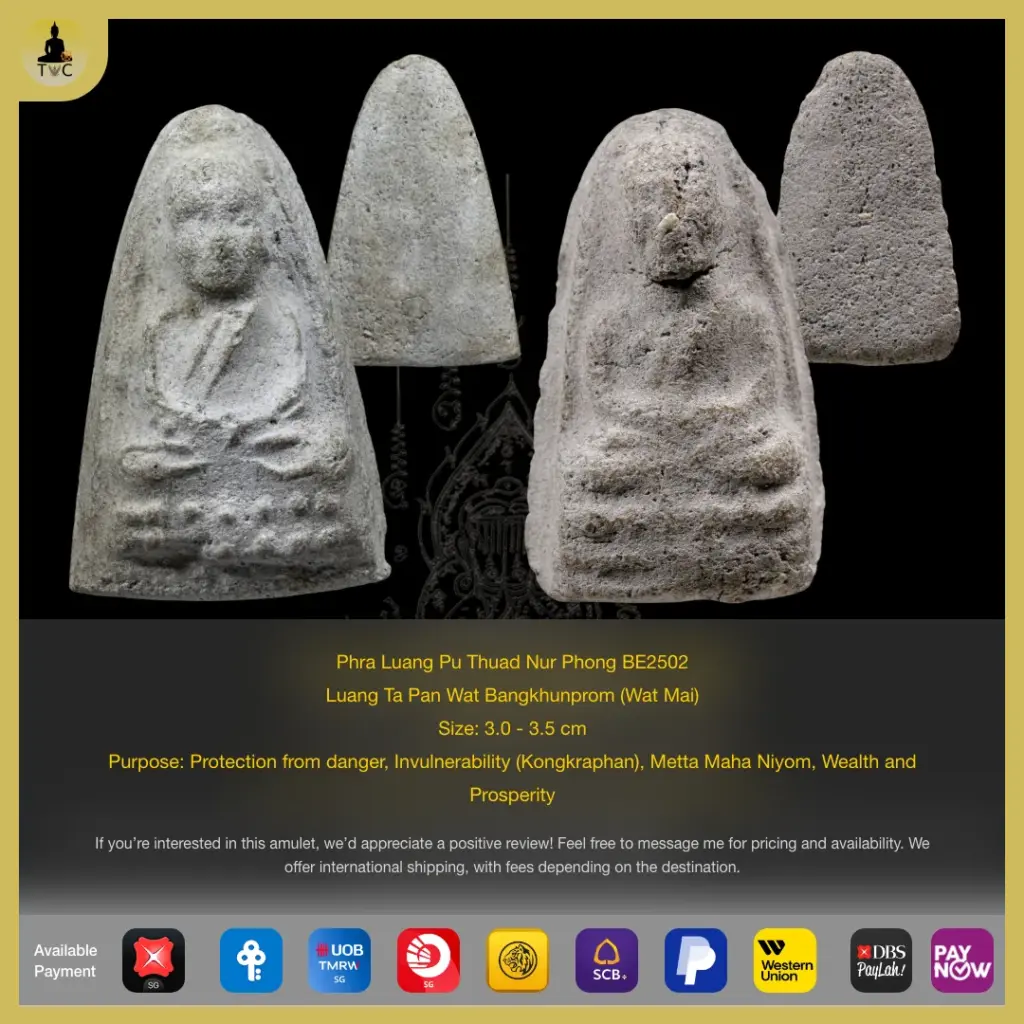
Phra Luang Pu Thuad (Lp Thuad) Nur Phong BE2502 Luang Ta Pan (LT Pan) Wat Bangkhunprom (Wat Mai)
| Type | Phra Somdej |
| Monk | Luang Pu Thuad |
| Temple | Wat Bangkhunprom (Wat Mai) |
| B.E. Year | 2502 |
| Material | Phong (Nur Phong) |
| Condition | Good |
| SKU | TAC-0522 |
Authentic Phra Somdej Luang Pu Thuad, Wat Bangkhunprom (Wat Mai) BE 2502. Sacred phong batch by Luang Ta Pan. No certificate. Available from TAC Singapore.
What is the Phra Somdej Luang Pu Thuad from Wat Bangkhunprom, BE 2502?
The Phra Somdej Luang Pu Thuad from Wat Bangkhunprom (Wat Mai) is a sacred phong (powder) amulet pressed in BE 2502 under the oversight of Luang Ta Pan. Created as a merit batch to support Buddhist propagation and temple development, it carries the image of Luang Pu Thuad — one of the most recognised figures in the southern Thai monk tradition.
Luang Pu Thuad and why his image appears on this batch
Luang Pu Thuad is the monk collectors reach for when they want a piece rooted in endurance and protection. His legend — crossing the sea, surviving hardship through sheer moral force — is what makes his image meaningful on an amulet, not just decorative. Devotees across Thailand, Malaysia, and Singapore have carried pieces bearing his image for generations, and demand has never really cooled.
This BE 2502 batch was produced at Wat Bangkhunprom (Wat Mai), a Bangkok temple with its own deep ties to the Phra Somdej lineage — the same tradition that flows from Wat Rakang and Wat Bangkhunprom’s older powder recipes. Luang Ta Pan, who oversaw the blessing intent for this run, is remembered in collector circles for a devotional, unhurried approach to merit-batch work. That reputation shapes how this piece is read today.
A commonly circulated account of the consecration lists several respected masters joining the ceremony: Luang Pu Toh (Wat Pradoochimplee), Luang Phor Ngern (Wat Don Yai Hom), Luang Phor Tob (Wat Chon Daen), Luang Phor Phae (Wat Pikulthong), and Luang Pu Khiew (Wat Rong Bon). Treat that line-up as tradition-based; period documentation confirming every name is not always available.
The phong body — what the material tells you
Nuea phong means the amulet is pressed from muan sarn — a sacred powder blend. For Wat Bangkhunprom batches of this era, that blend typically draws on old Bangkok lineage powders, sometimes including herbal components and auspicious mixtures collectors refer to as Wahn 108. The powder body is where age shows first, and where experienced eyes focus. Understanding what to look for here is central to the broader Thai Buddhist amulet tradition.
A genuine piece from BE 2502 should read honestly to its age. The surface tone should be stable and consistent. Powder preservation — no crumbling, no forced re-pressing, no artificial whitening — is what separates a piece collectors trust from one they pass on. The pim (mould impression) should be clean and period-appropriate, with details that match documented reference examples from this batch.
Key points collectors check on this piece:
- Powder stability: consistent density, no signs of forced compression or re-pressing
- Surface tone: natural ageing that reads as decades of handling and ambient exposure, not chemical treatment
- Pim details: mould impression consistent with known Wat Bangkhunprom BE 2502 reference pieces
- Overall honesty: stable, unforced, and coherent across front and back
What collectors value — and what this piece does not have
There is no certificate (gammakan committee or otherwise) accompanying this piece. That is a fact, not a flaw — many respected older batches predate the formal certification systems that came later. What it means practically is that authentication rests on physical comparison against known references, collector consensus, and provenance where it exists.
Condition drives value here more than almost anything else. A well-preserved powder body with stable surface tone commands significantly more attention than one that has been touched up or stored carelessly. Beyond condition, authenticity confidence and any special surface traits — period-appropriate markings, consistent ageing — are what separate a mid-market piece from one collectors actively chase.
We at TAC are offering this Phra Somdej Luang Pu Thuad in phong from the BE 2502 Wat Bangkhunprom (Wat Mai) merit batch — a piece that predates formal certification systems and is authenticated on physical merit alone. What draws serious collectors to this batch is the combination of a meaningful monk image, an old Bangkok temple lineage, and a powder body that — when well-preserved — reads honestly to its age. No certificate means the authentication work falls on the piece itself, which is exactly where experienced eyes want to start.
Attributes reflect Thai Buddhist devotional tradition and are not measurable claims.