Phra Chaiwat Songkhram (Phra Ngan), Ayutthaya Est. 300 – 400 Years Bucha
| SKU | TAC-0240 |
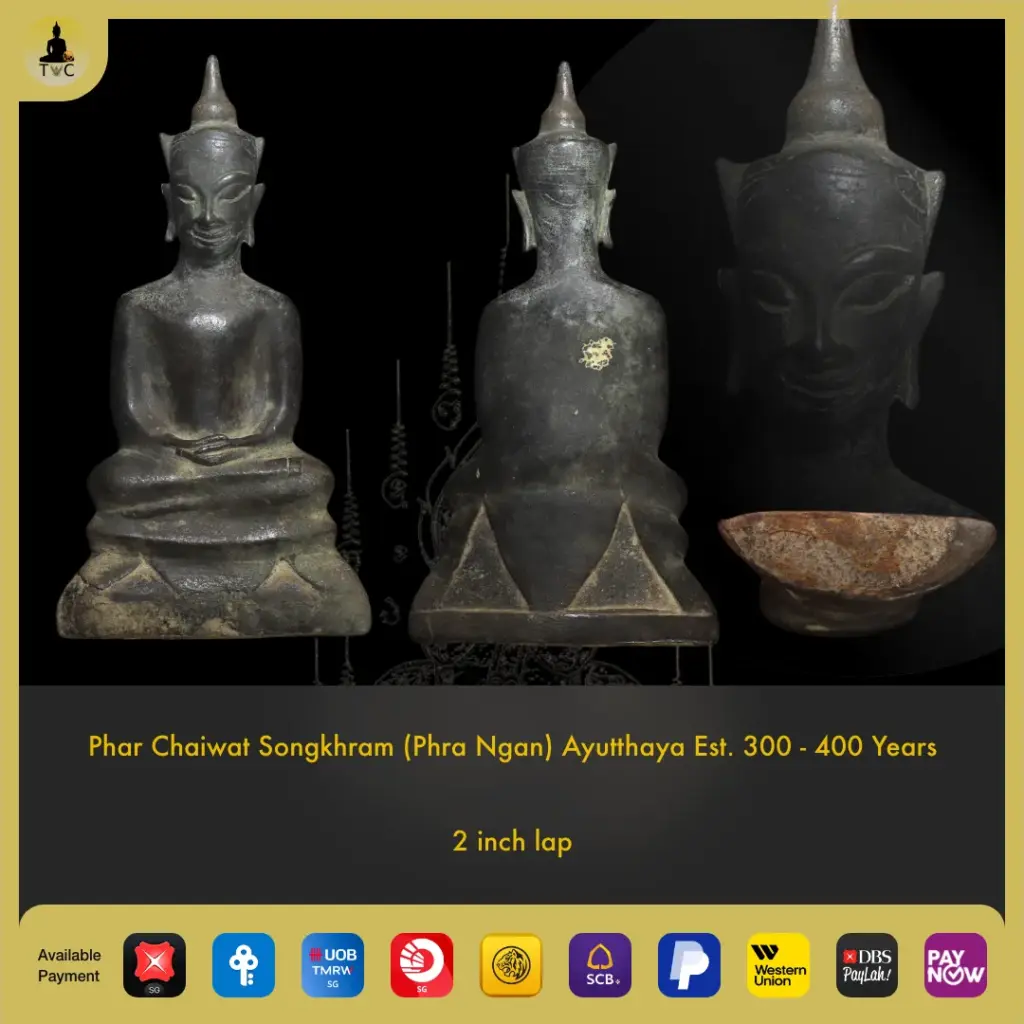
Authentic Phra Chaiwat Songkhram (Phra Ngan), Ayutthaya Est. 300 - 400 Years Bucha, samrit-type bronze with original temple soil core and intact patina.
What is the Phra Chaiwat Songkhram (Phra Ngan), Ayutthaya Est. 300 – 400 Years Bucha?
The Phra Chaiwat Songkhram (Phra Ngan), Ayutthaya Est. 300 – 400 Years Bucha is a middle-to-late Ayutthaya period bronze devotional image estimated at 300 to 400 years old. Cast in a samrit-type bronze alloy using the lost-wax method, the piece retains its original temple soil core and unstripped cupric patina — features that distinguish surviving examples from later restorations.
What this piece actually is — and why the soil core matters
The term Songkhram means warfare. This class of image was carried by warriors and field commanders as a devotional anchor before and during conflict, then enshrined in a temple or stupa upon safe return as an act of merit-making. The Phra Ngan identification places it within a specific martial-devotion lineage of the Thai Buddhist amulet tradition tied to protection and courage in hazardous circumstances.
The bronze shell is thin-walled. Original temple soil fills the inner cavity and integrates at the base and inner-wall junctions — this is not residue from burial alone but a deliberate construction feature consistent with period devotional practice. No abrasive cleaning has been done. The green cupric oxidation and soil residues are intact, which is precisely what makes this example scarce.
Iconographically, the image shows a seated Buddha in meditation posture with a crowned head and full robe drape (hom phra), proportions consistent with Ayutthaya-period aesthetics. The stance geometry and edge lines remain intact.
Where these images come from and how to read authenticity
Comparable finds emerge from Ayutthaya-region temple grounds, kru (temple crypt) contexts, and embedded wall cavities — locations consistent with long-term ritual concealment after a warrior’s return. The casting lineage emphasises disciplined lost-wax work and devotional use rather than mass production.
For a collector studying this class, the authentication points are specific:
- Oxidation tonality — aged cupric patina with natural colour variation, not uniform or artificially applied
- Thin-shell junctions — the wall thickness and junction lines are period-consistent with Ayutthaya lost-wax casting
- Soil integration — original temple soil present at base and inner-wall junctions, not simply surface dirt
- Crown and robe geometry — proportions match documented Ayutthaya-period iconographic standards
- Surface — no signs of abrasive cleaning or stripping; period wear present on high-contact edges
Original-condition examples retaining all of the above are assessed as extremely rare. Later pieces or cleaned examples lose the soil core and patina context, which are the primary markers collectors and researchers rely on.
What collectors associate this piece with
Within Thai Buddhist folk tradition, this genre is associated with Kongkrapan Chatri (martial resilience and physical invulnerability), Klaew Klaad (danger evasion), and Maha Amnat (commanding authority). Oral histories record civil servants and military officers prizing such bucha for composure and safe outcomes in hazardous duty. These are longstanding belief associations, not claims.
The piece functions as a bucha image — a devotional object placed on a home or office altar rather than worn. Its scale and casting weight make it suited to that role.
What is the Phra Chaiwat Songkhram (Phra Ngan), Ayutthaya Est. 300 – 400 Years Bucha traditionally carried for?
This class of image is traditionally associated with protection in dangerous situations, specifically the martial ideals of Kongkrapan Chatri (resilience and invulnerability), Klaew Klaad (aversion of danger and accidents), and Maha Amnat (authority and commanding presence). Historically, it was used as a devotional anchor by warriors before and during conflict. In later practice, civil servants and officers in hazardous roles are recorded in oral histories as keeping such bucha for composure and safe return. These associations reflect traditional Thai Buddhist belief and are understood as such by collectors across the region.
This is one of the more intact Ayutthaya-period Songkhram bucha images we have handled at TAC — the combination of unstripped cupric patina and original temple soil core in a single piece is not common. Collectors looking at this class will focus on the soil core and patina together — a piece that retains both is increasingly difficult to source, and that is the honest case for this example.
Attributes reflect Thai Buddhist devotional tradition and are not measurable claims.