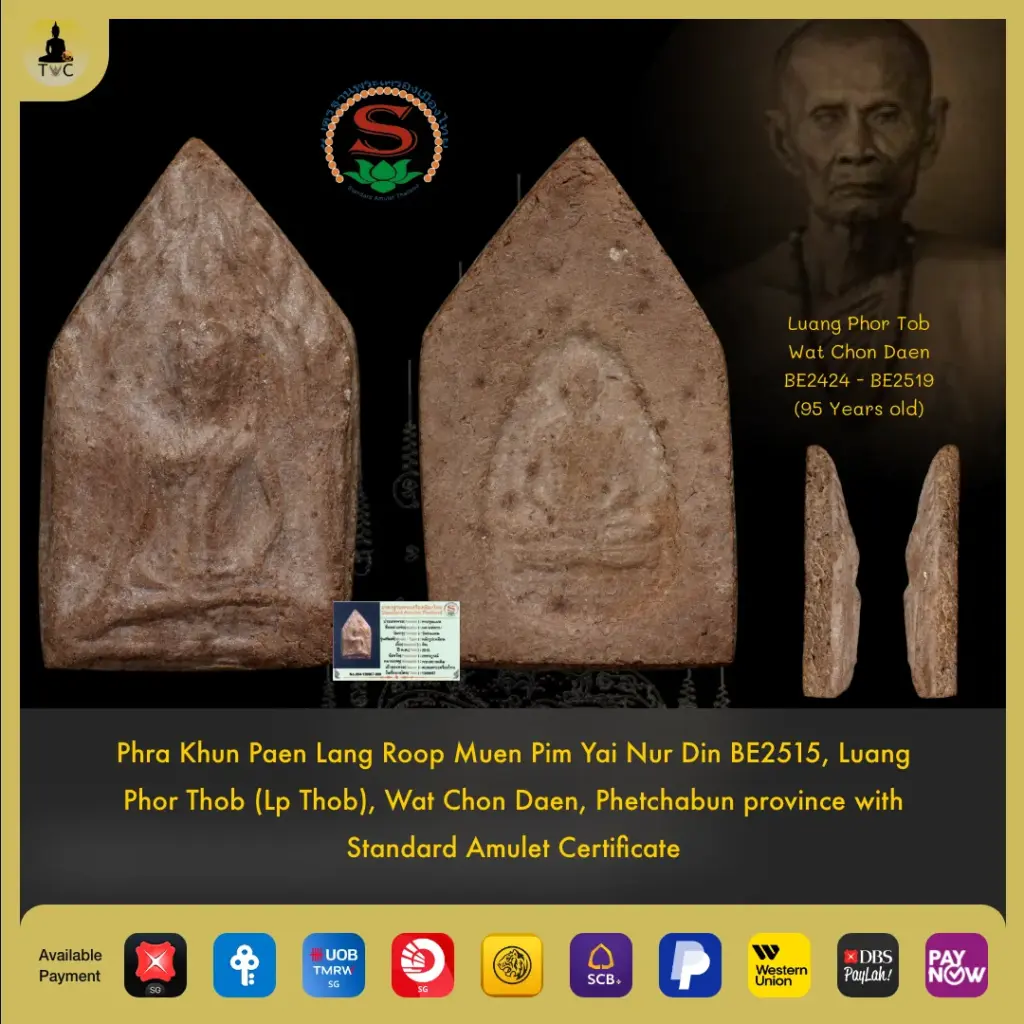
Phra Khun Paen Lang Roop Muen Pim Yai Nur Din BE2515, Luang Phor Tob (Lp Tob / Thob), Wat Chon Daen, Phetchabu
| Type | Phra Khun Paen |
| Monk | Luang Phor Tob |
| Temple | Wat Chon Daen |
| B.E. Year | 2515 |
| Material | Din |
| SKU | TAC-0492 |
Authentic Phra Khun Paen Luang Phor Tob, Wat Chon Daen BE 2515. Din, pim yai format. Standard certificate.
What is the Phra Khun Paen Luang Phor Tob from Wat Chon Daen, BE 2515?
The Phra Khun Paen Luang Phor Tob, pressed in BE 2515 (1972) at Wat Chon Daen in Phetchabun Province, is a din (sacred baked clay) amulet in the large pim format. The front shows the Buddha seated in meditation on a multi-tiered throne; the back carries a likeness of Luang Phor Tob in meditative posture. Measuring approximately 3.5 cm x 5.0 cm, it was made to mark a significant temple occasion.
Luang Phor Tob and what he built at Wat Chon Daen
Luang Phor Tob served as abbot of Wat Chon Daen and was known across Phetchabun for his discipline and deep grounding in Buddhist teachings. His standing among local devotees made any amulet produced under his hand something people actively sought to keep. In 1972 he initiated this Phra Khun Paen series specifically to commemorate a significant event at the temple.
The back image — LP Tob himself seated in meditation — is not decorative. It is a deliberate design choice that ties the object directly to his presence and the blessings he was believed to carry. That detail is one reason collectors consider this pim (the mould collectors authenticate against) a distinct piece within the broader Khun Paen category. For context on how this fits into the wider Thai Buddhist amulet tradition, the Wikipedia overview covers the role of the monk’s image in authenticating regional editions.
Nuea, pim, and how the piece was consecrated
The nuea (material/substance) here is din — sacred baked clay — blended from soil taken from sacred sites and temple grounds, crushed remnants of ancient votive tablets, and herbal powders alongside other sanctified materials. This kind of muan sarn (sacred powder blend) was standard practice for a Phetchabun monk working in the early 1970s, but the specific combination matters because it is what authenticators check against known reference pieces.
The consecration ceremony — phutthaphisek — was held at Wat Chon Daen under LP Tob’s direction, with continuous chanting and extended meditation sessions to complete the pluk sek (ritual empowerment). The natural earthy tones that collectors see on surviving pieces come directly from the clay composition; there is no lacquer or added finish to account for.
What collectors look for and how this piece is certified
Authenticating a BE 2515 Wat Chon Daen piece starts with the pim itself. The large-format mould has specific proportions — roughly 3.5 cm x 5.0 cm — and the surface texture of genuine din from this batch shows the grain and micro-cracking that 50-plus years of age produces naturally. Fakes pressed from modern clay read differently under close examination.
- Front: Buddha on multi-tiered throne — check the throne layering and the line definition around the seated figure.
- Back: LP Tob image in meditative posture — the relief depth and facial detail are reference points against known niyom (collector-standard reference) pieces.
- Clay body: natural earthy tones, no artificial colouring or surface treatment.
- Size: pim yai format, approximately 3.5 cm x 5.0 cm.
This piece comes with a standard amulet certificate. Collectors should cross-reference the certificate against the physical characteristics above before purchase.
This Phra Khun Paen Luang Phor Tob from Wat Chon Daen is one of the more grounded pieces we carry from the BE 2515 period — din nuea, large pim, with LP Tob's own image pressed into the back, which makes the authentication straightforward for collectors who know the reference points. We at TAC consider LP Tob's Phetchabun editions underappreciated relative to their age and the quality of the consecration behind them.
Attributes reflect Thai Buddhist devotional tradition and are not measurable claims.