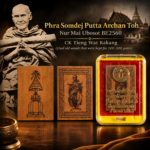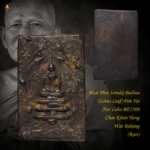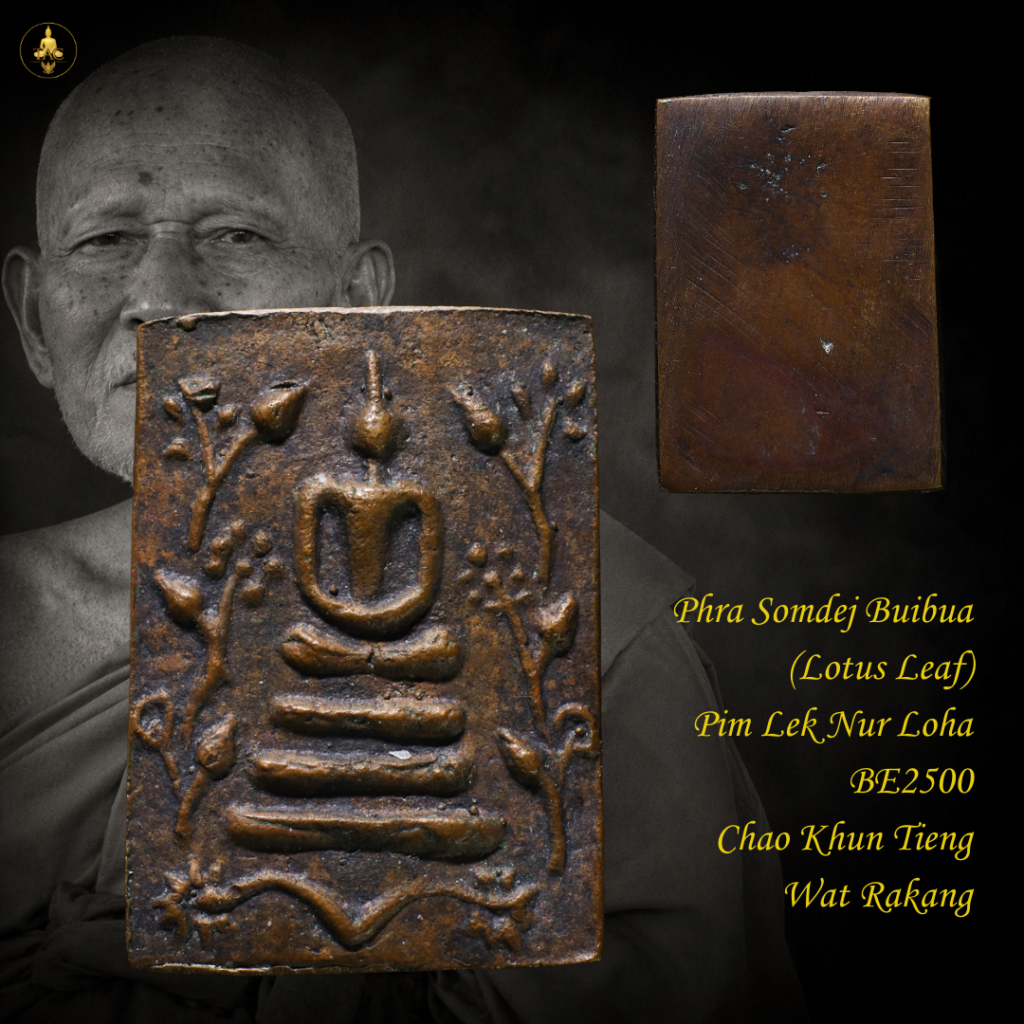
Phra Somdej Buibua (Lotus Leaf) Pim Lek Nur Loha BE2500 Chao Khun Tieng Wat Rakang
| Type | Phra Somdej Buibua (Lotus Leaf) Pim Lek |
| Monk | Chao Khun Tieng (CK Tieng) (Phra Thammathirat Ratchamuni) Wat Rakang Kositaram |
| Temple | Wat Rakang |
| B.E. Year | 2500 |
| Material | Nur Loh |
| Condition | Excellent |
| SKU | TAC-PhraSomdejBuibua(LotusLeaf)PimLek-ChaoKhunTieng-001 |
Authentic Phra Somdej Buibua (Lotus Leaf) Pim Lek by Chao Khun Tieng, Wat Rakang, BE 2500. Pressed in Nur Loh. Singapore dealer TAC.
What is the Phra Somdej Buibua Pim Lek by Chao Khun Tieng from Wat Rakang?
The Phra Somdej Buibua (Lotus Leaf) Pim Lek Chao Khun Tieng is a small-mould Somdej pressed in Nur Loh (metal alloy) and produced at Wat Rakang in BE 2500 — a year that corresponds to the 2,500th anniversary of the Buddha’s parinibbana, making it a genuinely significant moment in the Thai Buddhist calendar.
Chao Khun Tieng and why the name matters
Chao Khun Tieng held senior ecclesiastical rank and operated within Wat Rakang’s tradition at a time when the temple was still producing amulets with the same rigour it had maintained since the era of its most celebrated abbots. Senior rank in the Thai Sangha is not ceremonial — it means the monk had spent decades in Vinaya discipline, was recognised by the ecclesiastical hierarchy, and was considered qualified to lead or co-lead consecration rites. That standing matters when you are evaluating whether a piece received a proper pluk sek (consecration ceremony) rather than a rushed blessing.
BE 2500 was not a year temples treated lightly. Across Thailand, the semi-centennial of the Buddhist era prompted major ceremonies, and Wat Rakang — already one of Bangkok’s most historically grounded temples — marked the occasion accordingly. Amulets produced in that year carry that context whether or not every collector stops to think about it.
Nur Loh and what the pim tells you
Most Somdej amulets are pressed in nuea (material) based on phong (sacred powder). A Nur Loh piece is different — the base is a blessed metal alloy rather than a powder-and-binder compound. That changes everything about how you read the surface. You are looking at cast or pressed metal, so the lines of the pim (mould) hold differently. The lotus-leaf throne detail on the Buibua pim — the feature that gives this model its name — should read clearly against the field of the piece. Wear on a metal nuea piece tends to be even and gradual rather than the flaking or powder-loss you watch for on a chalk-based Somdej.
On a genuine example from this period, the relief of the seated Buddha figure above the lotus base will carry the proportions characteristic of the Wat Rakang aesthetic: composed, centred, with a recognisable throne line. If the throne detail is muddy or the figure sits off-centre relative to the frame, that is worth pausing on. These are the reference points a serious collector checks before anything else.
What to look for in authentication, in brief:
- Clarity of the lotus-leaf throne detail — the defining feature of the Buibua pim
- Even metal patina consistent with age from BE 2500
- Proportions of the Buddha figure matching the Wat Rakang pim standard
- Frame and reverse consistent with known Nur Loh production from this temple and period
Where Wat Rakang sits in the broader tradition
Wat Rakang Kositaram in Bangkok is one of the reference temples in the Thai Buddhist amulet tradition. Its association with Phra Somdej amulets goes back to the nineteenth century, and that lineage gives any genuinely produced piece from the temple a baseline credibility that collectors across Southeast Asia and Greater China recognise. A BE 2500 piece from Wat Rakang enters the market with a provenance that does not need to be invented.
Devotees in Singapore, Malaysia and Thailand have long regarded Somdej amulets from this temple as appropriate for daily carry — associated in tradition with protection, clarity of mind, and the kind of steady fortune that collectors sometimes describe as the Somdej’s particular niyom (collector-preferred) quality. That is the tradition; each collector weighs it according to their own practice.
This is a Phra Somdej Buibua Pim Lek from Chao Khun Tieng at Wat Rakang, pressed in Nur Loh and dated to BE 2500 — the 2,500th anniversary year, which gives it a context that serious collectors immediately recognise. The Nur Loh nuea sets it apart from the standard phong-based Somdej and narrows the field of comparable pieces considerably. For a collector building a Wat Rakang holding or focused on Golden Era metal-nuea Somdej, this is a period piece worth examining closely.
Attributes reflect Thai Buddhist devotional tradition and are not measurable claims.