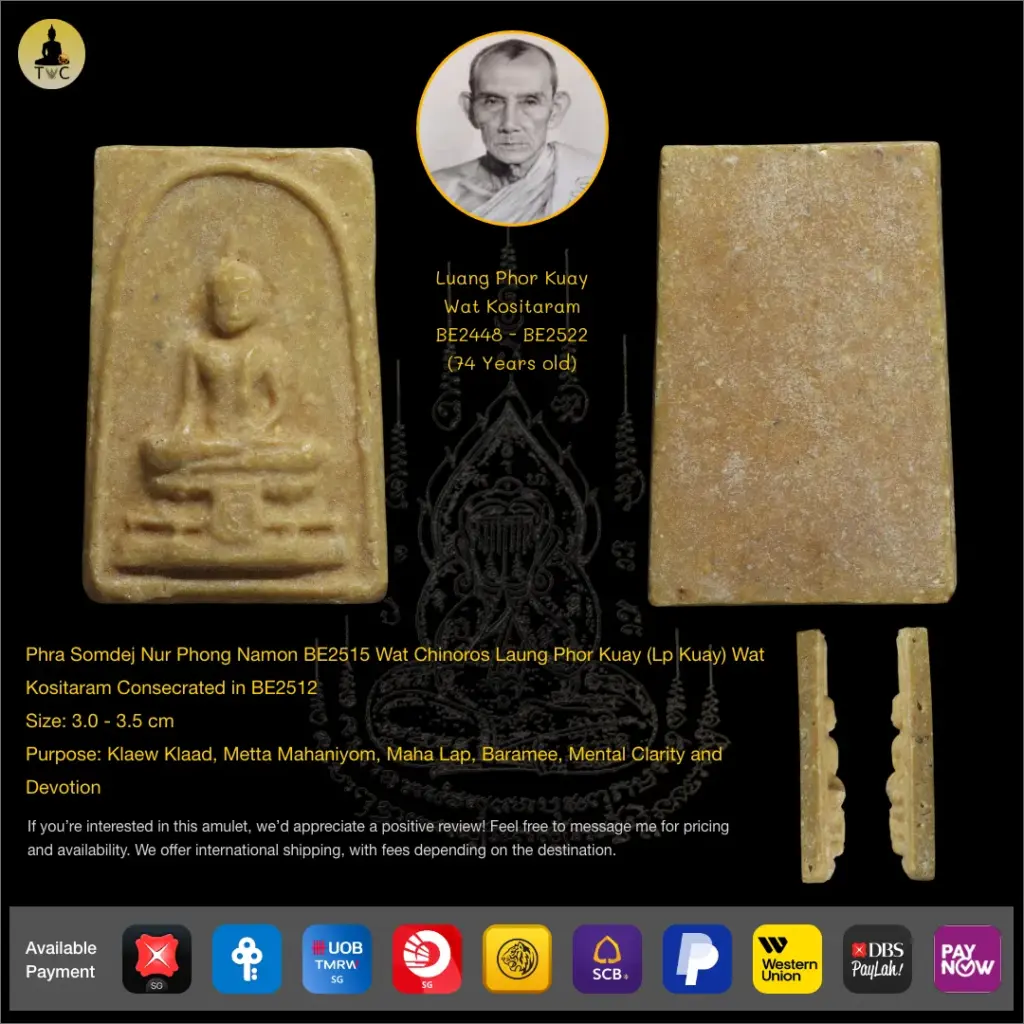
Phra Somdej Nur Phong Namon BE2515 Wat Chinoros Laung Phor Kuay (Lp Kuay) Wat Kositaram Consecrated in BE2512
| Type | Phra Somdej |
| Monk | Luang Phor Kuay Wat Kositaram |
| Temple | Wat Kositaram |
| B.E. Year | 2515 |
| Material | Phong Namon |
| SKU | TAC-0119 |
Authentic Phra Somdej Luang Phor Kuay Wat Kositaram, BE2515. Phong Namon, consecrated Wat Chinoros. Highly regarded LP Kuay edition.
What is the Phra Somdej Luang Phor Kuay Wat Kositaram pressed in BE 2515?
The Phra Somdej Luang Phor Kuay Wat Kositaram in BE 2515 is a sacred powder amulet pressed from phong namon (holy-water-infused powder) and consecrated at Wat Chinoros, Bangkok. The phutthaphisek (consecration ceremony) was a two-stage process: initial powder empowerment at Wat Chinoros in BE 2512, with the final grand blessing completed in BE 2515 under the direct hand of Luang Phor Kuay of Wat Kositaram, Chainat Province.
The monk behind this piece — and why that matters
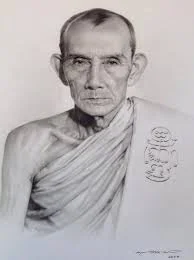
Luang Phor Kuay of Wat Kositaram is one of the most respected masters in twentieth-century Thai Buddhist history. His standing rests on documented jhana-level meditation practice and a reputation for ritual precision that drew senior monks from Bangkok and Central Thailand to ceremonies he led. Pieces bearing his empowerment carry serious weight in the collector market precisely because his involvement was selective and ceremonially exacting.
For this particular project, LP Kuay served as chief consecrator at the final grand pluk sek held at Wat Chinoros during a royal-sanctioned Buddhist occasion in 1972 (BE 2515). He personally empowered the batch in a sitting meditation posture, supported by paritta chanting over several days and a fire ceremony invoking protective deities. That depth of ceremony — across three years and two temples — is what separates this edition from a routine Somdej release of the same era.
What goes into the phong namon and how the piece was made
The nuea (material/substance) here is phong namon — sacred powder bound and cured with holy water drawn from multiple temple rites. This gives the muan sarn (the sacred powder blend) a density and tactile firmness that distinguishes it from standard chalk-based Somdej. The colour runs light beige to pale brown, and under close inspection you can often spot organic inclusions — flower pollen, incense ash, fragments of old ceremony.
The powder formula draws on several distinct components, consistent with the Thai Buddhist amulet tradition of layering materials for cumulative ritual effect:
- Phong Itthijay, Maharaj, and Trinisinghe — powders produced through recitation of key protective mantras
- Phong Bailan — ash of palm-leaf Buddhist scriptures
- Flower pollen, incense ash, and remnants from earlier sacred ceremonies
- Holy water (namon) from royal and temple rites, used both in mixing and in the final blessing
- Powdered fragments of ancient amulets from Wat Chinoros and surrounding temples
- Powder personally blessed by LP Kuay and senior monks of the region
The front of the pim (the mould collectors authenticate against) shows the Buddha seated on a tiered base in the classic Somdej posture — earth-touching, subduing Mara. The reverse is plain or lightly textured, with some pieces carrying a temple stamp depending on the specific mould. The overall size is compact and wearable, suited for pendant casing.
The production timeline matters. Powder was collected, blessed, and initially consecrated at Wat Chinoros in BE 2512. The moulds were not pressed and released publicly until BE 2515, after the final phutthaphisek. That extended three-year empowerment cycle is a factual point collectors cite when discussing why this run commands attention.
What collectors look for — and where certification stands
Authenticating a piece from this edition starts with the nuea itself. Genuine phong namon from this period has a firm, slightly dense feel — not chalky or brittle. The surface tone is consistent: light beige to pale brown, sometimes with faint organic matter visible to the naked eye. Pieces that have aged poorly or been artificially treated tend to show uneven colouring or surface cracking inconsistent with the original powder composition.
Collectors also note that surviving pieces in clean condition are limited. The powder composition absorbs moisture over time, and fifty-plus years of handling takes a toll. A piece with intact surface detail and stable colour is genuinely harder to find than the edition’s original numbers might suggest.
No third-party certificate is currently listed with this piece. For a release of this age and origin, experienced collectors typically cross-reference against known niyom (collector-standard reference pieces) documented in Thai amulet publications and veteran dealer records. Provenance documentation from the original issuing temple or a respected Thai authentication house adds further confidence.
We at TAC are carrying this Phra Somdej Luang Phor Kuay Wat Kositaram from the BE 2515 Wat Chinoros edition — a piece that stands out for the dual-temple consecration process and LP Kuay's direct role as chief consecrator at the final phutthaphisek. For collectors building a LP Kuay holding or looking for a ceremonially substantive Somdej at a more accessible price point than his Khun Paen or takrut output, this edition is worth serious consideration.
Attributes reflect Thai Buddhist devotional tradition and are not measurable claims.