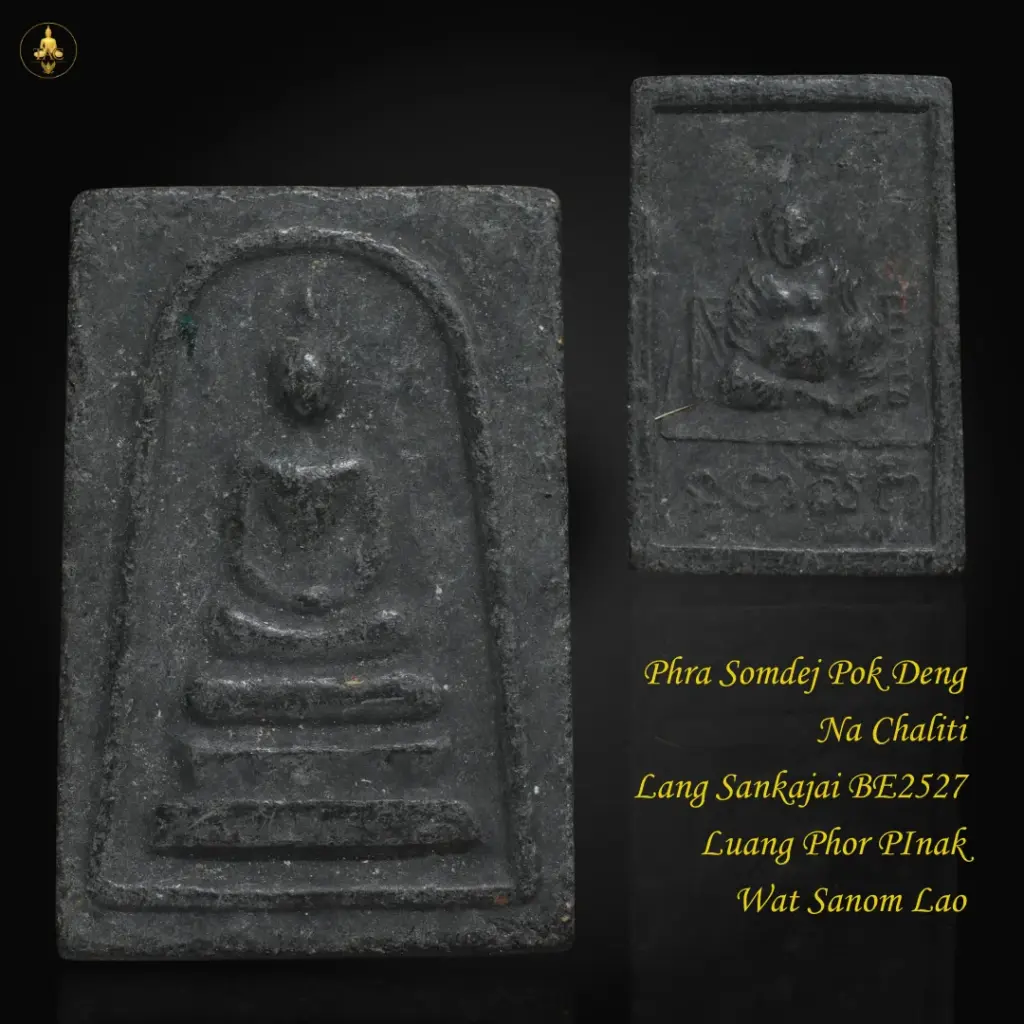
Phra Somdej Pok Deng Na Chaliti Nur Phong Dam BE2527 Luang Phor Pinak Wat Sanom Lao
| Type | Phra Somdej |
| Monk | Luang Phor Pinak |
| Temple | Wat Sanom Lao |
| B.E. Year | 2527 |
| Material | Phong Dam |
| SKU | TAC-0364 |
Authentic Phra Somdej Luang Phor Pinak, Wat Sanom Lao BE 2527, pressed in Phong Dam. Pok Deng Na Chaliti variant. Available from TAC Singapore.
What is the Phra Somdej Pok Deng Na Chaliti by Luang Phor Pinak from Wat Sanom Lao?
The Phra Somdej Luang Phor Pinak (Piyatharo) from Wat Sanom Lao (also known as Wat Thai Ngam), Saraburi, was pressed in BE 2527 from nuea (material/substance) Phong Dam — a dark sacred-powder blend. Collectors associate this “Pok Deng Na Chaliti” line with metta and fortune-timing themes rooted in temple-based consecration practice.
Luang Phor Pinak and the Wat Sanom Lao connection
Luang Phor Pinak (Piyatharo) is widely documented as a Dhammayut monk and the abbot of Wat Sanom Lao. His ordination is recorded at BE 2481, and he passed on 15 October BE 2545. That gives him more than six decades in robes — a span collectors pay attention to, because it speaks to depth of practice, not just title.
His reputation in collector circles is framed around wandering ascetic practice, ธุดงค์ (thudong — forest wandering), and a consistent emphasis on merit and restraint over spectacle. Pieces from his temple are typically discussed in that same tone: practice first, amulet second. That framing carries through to how devotees describe carrying his Somdej in daily life.
Wat Sanom Lao itself has roots linked to the Ayutthaya period — Thai cultural-heritage sources place its origins around the reign of King Borommatrailokkanat, roughly BE 2020 to 2030. The temple later fell into disrepair and was restored, which is a narrative collectors find meaningful: an amulet tied to a place that was brought back adds a layer of story that a purely commercial edition rarely has. For broader context on how temple lineage shapes collector value, see the Thai Buddhist amulet tradition overview on Wikipedia.
The nuea Phong Dam — what it is and what to look for
Phong Dam translates literally as “black powder.” In Somdej traditions, phong (sacred powder blend) is typically a combination of devotional residues, binders, and prepared powders that are pressed into a mould — the pim — then consecrated through chanting. The dark tone of this particular muan sarn can come from the specific powder composition, aging, or botanical components added at the time of preparation.
When examining a piece like this, collectors focus on a few consistent markers.
- Surface tone: an even, mature dark colouration with natural variation — not a flat, uniform “painted” look that suggests later alteration.
- Compression feel: genuine powder-pressed pieces carry subtle mould marks and a soft edge profile from the pressing and curing process.
- Mould clarity: the seated Buddha on the tiered base should show clean, consistent detail across the face and robe lines — not blurred or smeared.
- Reverse detail: listings for this BE 2527 group commonly describe a Sangkajai (สังกัจจายน์) reverse — a popular symbol in Thai-Chinese collector culture for abundance and resilience. Verify the reverse matches this description.
Aging cues matter most. Natural wear along contact points and consistent patina across recessed areas both support authenticity. Uneven or localised darkening is a flag worth stopping on.
What the “Pok Deng Na Chaliti” designation means to a collector
“Pok Deng” — พกแดง — directly references a Thai card game, and in collector vocabulary it functions as a shorthand for good timing, smooth flow, and fortune in transactions. Shops and collector notes for this line commonly describe it in terms of โชคลาภ (chok lap — luck and fortune) and an ease in negotiation or decision moments. That is a cultural reading, not a claim.
“Na Chaliti” — นะชาลิติ — points to a specific yant (sacred inscription) designation used by the maker’s circle, distinguishing this face or marking within the broader Somdej Pok Deng group. It matters for authentication: if the front inscription or designating mark does not correspond to the Na Chaliti specification, the piece is either a different variant or mislabelled.
In collector writing, this naming combination — Pok Deng Na Chaliti — is what differentiates a specific pim within the BE 2527 output from Wat Sanom Lao. Getting the variant right is the first step before any conversation about condition or value.
We at TAC are offering this Phra Somdej Pok Deng Na Chaliti in Phong Dam from Wat Sanom Lao, BE 2527 — tied to Luang Phor Pinak (Piyatharo), a Dhammayut abbot with over six decades of practice and a documented thudong background. For collectors interested in a daily-life Somdej with a specific fortune-timing cultural framing and a temple lineage that goes back to the Ayutthaya period, this piece sits in a genuine and honest part of the market.
Attributes reflect Thai Buddhist devotional tradition and are not measurable claims.