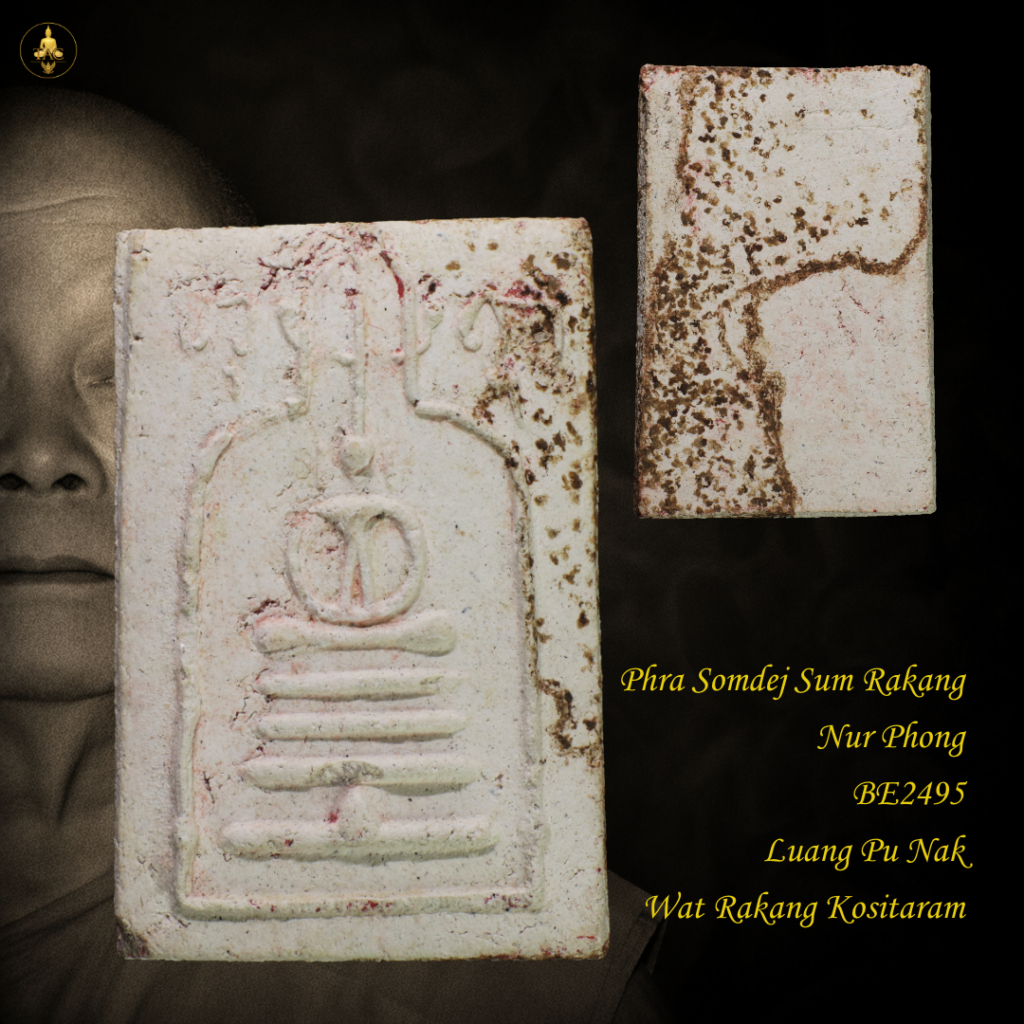
Phra Somdej Sum Rakang Pim Yai Nur Phong BE2495 Luang Pu Nak Wat Rakang
| Type | Phra Somdej |
| Monk | Luang Pu Nak Wat Rakang Kositaram |
| Temple | Wat Rakang |
| B.E. Year | 2495 |
| Pim / Mold | Sum Rakang |
| Condition | Good |
| SKU | TAC-0257 |
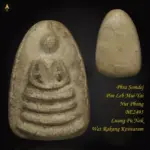
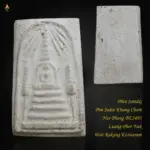
Authentic Phra Somdej by Luang Pu Nak Wat Rakang Kositaram, Wat Rakang BE 2495, nuea phong. No certificate.
What is the Phra Somdej Luang Pu Nak Wat Rakang Kositaram in Sum Rakang Pim Yai format, BE 2495?
The Phra Somdej Luang Pu Nak Wat Rakang Kositaram is a powder-based (nuea phong) amulet pressed in the Sum Rakang Pim Yai mould at Wat Rakang Kositaram, Bangkok, dated BE 2495. The piece features a seated Buddha framed within the signature bell-arch silhouette and carries no external certification document.
Why collectors treat a Wat Rakang Somdej as a foundation piece
Among collectors in Singapore, Malaysia, and the broader Chinese-speaking market, a Somdej from the Wat Rakang lineage occupies a specific position — not flashy, not rare in concept, but culturally grounded and immediately legible to any serious collector. The temple’s consistency across generations of master monks is precisely what gives the lineage its standing. When a collector references a “Somdej standard,” they are almost always describing the clean geometry and devotional restraint that Wat Rakang has produced repeatedly and recognisably.
The Sum Rakang format takes its name from the bell-arch (ซุ้มระฆัง, sum rakang) that frames the seated Buddha. That arch is not decoration — it defines the visual field, creates a contained composition, and is one of the first things an experienced eye reads when assessing pim (mould) accuracy. The Pim Yai (พิมพ์ใหญ่, large mould) produces a fuller form in the hand, with proportions that collectors read as a unified whole rather than isolating any single line. This broader Thai Buddhist amulet tradition of pressing sacred powder into fixed moulds and consecrating them in ceremony is one of the most extensively studied areas of Theravada devotional culture.
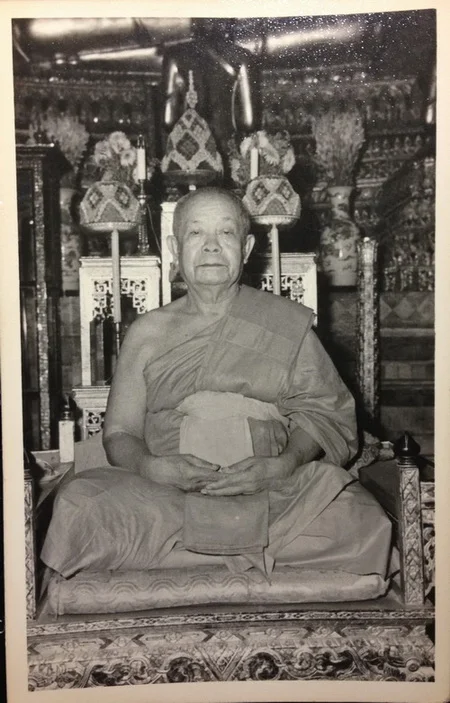
Luang Pu Nak Wat Rakang Kositaram is the attributed monk for this piece. In collector practice, that attribution is treated as a documented listing claim — meaning the physical amulet itself, its pim reading and nuea (material/substance) character, remains the primary basis for evaluation alongside the stated lineage. The BE 2495 date places production in an active period of amulet work at Wat Rakang Kositaram.
Nuea phong — what the material tells you and what to look for
This is a nuea phong (เนื้อผง) piece — powder-based, which is the classical medium for the Somdej category. The muan sarn (sacred powder blend) in pieces of this type typically draws on a combination of sacred phong powders, which may include pong wit (วิเศษผง), dried floral components, and other consecrated materials pressed into the mould and bound together. The resulting surface, when genuinely aged, develops a matte, settled quality that collectors describe as ความเก่าแบบธรรมชาติ — natural ageing — rather than the even, worked surface of a processed piece.
What separates a convincing example from a questionable one is consistency. Ageing differences should appear at edges and in recesses in a way that reads as accumulation over time, not forced contrast. A well-read Sum Rakang Pim Yai holds together across front, back, and edge — the pim lines read cleanly, the Buddha figure sits centred within the arch, and the base proportions hold. Collectors describe this overall coherence as ดูทรงรวม — reading the whole form — rather than chasing a single diagnostic mark.
- Pim accuracy: mould lines on the Sum Rakang arch and seated figure should align with documented Pim Yai reference examples for this period.
- Nuea character: naturally matured nuea phong shows matte, settled surface ageing — not processed, not artificially darkened.
- Edge and recess consistency: ageing should read as accumulation across the whole piece, front and back.
- Certification: this piece carries no external certificate. Evaluation rests on the physical reading of pim and nuea against known reference pieces from the BE 2495 period.
Market rarity for this listing is best understood as rarity by encounter — how often a well-preserved Sum Rakang Pim Yai attributed to BE 2495 actually appears in active circulation. Such examples are not commonly seen in consistent condition, which sustains collector interest across Singapore, Malaysia, Hong Kong, Taiwan, and China.
What collectors associate this piece with
In Thai amulet tradition, the Phra Somdej Luang Pu Nak Wat Rakang Kositaram is associated with metta (เมตตา, loving-kindness), personal protection (คุ้มครอง), and a stabilising quality useful across work and daily life. The Wat Rakang devotional context emphasises steady presence and grounded conduct alongside the more commonly cited social and material benefits. Devotees typically wear this category of Somdej when seeking calm, composed energy — professional settings, meetings, travel.
Collectors across the region associate the piece with three broadly recognised focuses: metta for easing social interactions and reducing friction in relationships; protection (แคล้วคลาด) for safe passage and steadiness during daily movement; and support for business and work environments, which is consistent with how Somdej pieces are worn commercially across Singapore and Malaysia. These associations are part of the living tradition around this category — not promises, but the reasons people have carried pieces like this for generations.
We at TAC are listing this Phra Somdej Luang Pu Nak Wat Rakang Kositaram in Sum Rakang Pim Yai format, dated BE 2495, as a nuea phong piece with no accompanying certification document — which is reflected honestly in the pricing. What draws collector interest here is the pim reading itself: a well-proportioned Sum Rakang arch from this period, evaluated on its physical merits against BE 2495 reference material, is not something that surfaces in consistent condition regularly.
Attributes reflect Thai Buddhist devotional tradition and are not measurable claims.