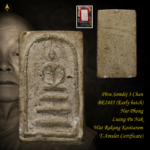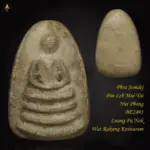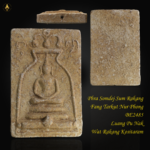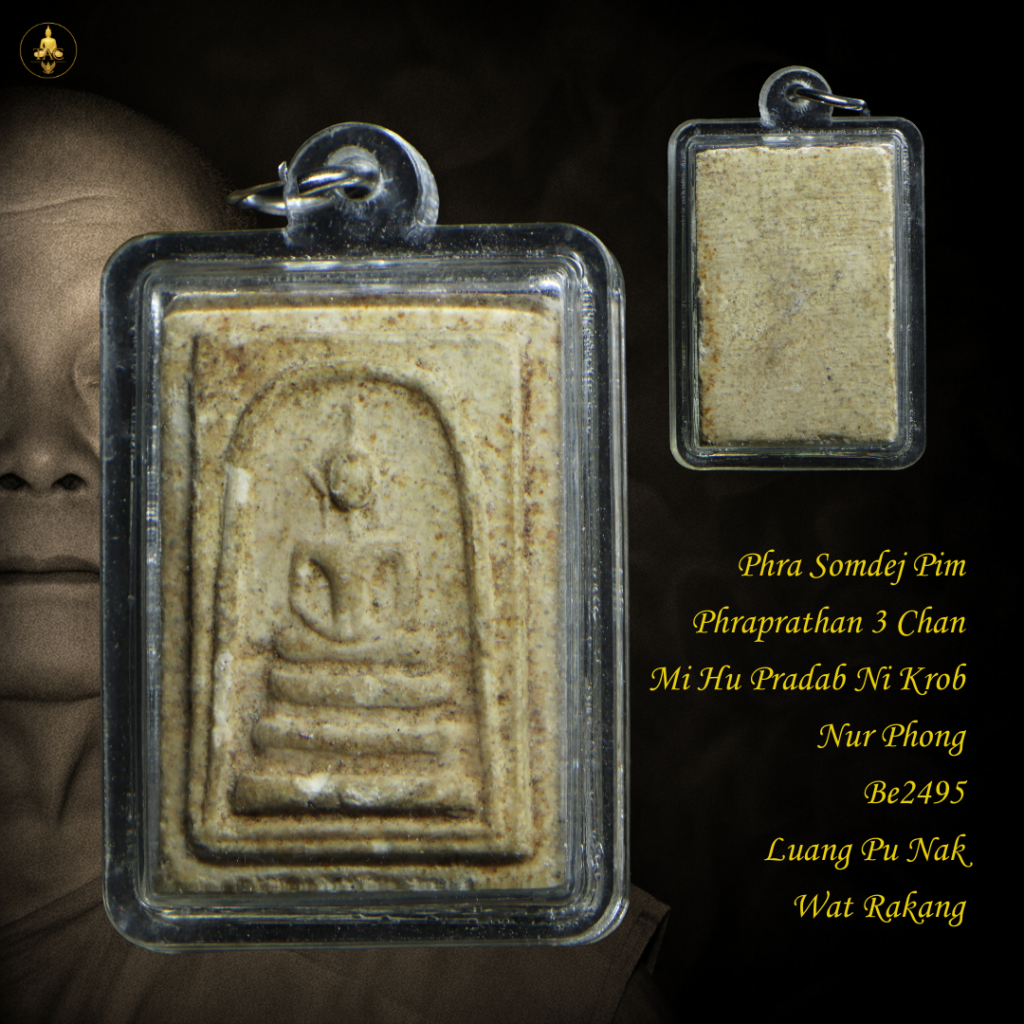
Phra Somdej Pim Phraprathan 3 Chan Mi Hu Pradab Ni Krob Nur Phong Be2495 Luang Pu Nak Wat Rakang (Rare)
| Type | Phra Somdej Pim Phraprathan 3 Chan Mi Hu Pradab Ni Krob |
| Monk | Luang Pu Nak Wat Rakang Kositaram |
| Temple | Wat Rakang |
| B.E. Year | 2495 |
| Material | Nur Phong |
| Pim / Mold | Phraprathan 3 Chan Mi Hu Pradab Ni Krob |
| Condition | Good |
| SKU | TAC-PhraSomdejPimPhraprathan3ChanMiHuPradabNiKrob-LpNak-001 |
Authentic Phra Somdej Pim Phraprathan 3 Chan Mi Hu Pradab Ni Krob Luang Pu Nak, Wat Rakang BE 2495. Nur Phong. Trusted Singapore dealer.
What is the Phra Somdej Pim Phraprathan 3 Chan Mi Hu Pradab Ni Krob amulet by Luang Pu Nak?
The Phra Somdej Pim Phraprathan 3 Chan Mi Hu Pradab Ni Krob Luang Pu Nak is an authentic Thai amulet produced at Wat Rakang in BE 2495, crafted from sacred Nur Phong powder. This three-tiered Phra Somdej mould features distinctively adorned ears (Mi Hu Pradab Ni Krob), marking it as a highly distinguished and collectible classical-era piece.
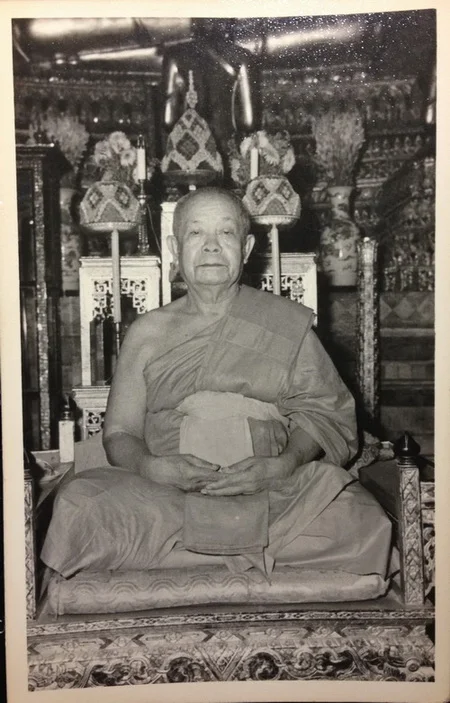
Luang Pu Nak was a venerated monk whose association with Wat Rakang lent deep spiritual authority to the amulets produced under his guidance. His reputation for strict monastic discipline and mastery of sacred Buddhist sciences made him a highly respected figure among devotees and collectors alike.
The Luang Pu Nak amulet series from BE 2495 represents a significant chapter in the classical Phra Somdej tradition. Collectors regard pieces from this period as embodying both historical importance and profound sacred energy accumulated through decades of veneration.
The Phra Somdej Pim Phraprathan 3 Chan Mi Hu Pradab Ni Krob Luang Pu Nak continues to attract serious collectors across Singapore, Malaysia, Thailand, and Greater China who seek genuine classical-era Thai amulets with documented temple provenance.
Phra Somdej Pim Phraprathan 3 Chan Mi Hu Pradab Ni Krob and Wat Rakang Heritage
Wat Rakang, formally known as Wat Rakang Kositaram, is located in Bangkok’s Thonburi district and stands as one of the most historically significant temples in the Thai Buddhist amulet tradition. The temple has been a centre of sacred Phra Somdej craftsmanship for generations, deeply rooted in classical Rattanakosin-era religious practice.
The Phra Somdej Pim Phraprathan 3 Chan Mi Hu Pradab Ni Krob Wat Rakang pieces are regarded by collectors as exemplars of this temple’s rich amulet heritage. Wat Rakang’s long-standing tradition of producing consecrated powder amulets using meticulously sourced sacred ingredients has established its reputation as a premier origin temple. For further context on the broader significance of this tradition, see the authoritative overview of the Thai Buddhist amulet tradition on Wikipedia.
Amulets bearing the Wat Rakang provenance are consistently among the most sought-after by discerning collectors in the Thai amulet Singapore market. The temple’s historical prestige adds measurable cultural and spiritual weight to every piece associated with its consecration ceremonies.
Nur Phong Phra Somdej Pim Phraprathan 3 Chan Mi Hu Pradab Ni Krob — Composition and Craftsmanship
The Nur Phong Phra Somdej Pim Phraprathan 3 Chan Mi Hu Pradab Ni Krob is composed of sacred powder (phong) that typically incorporates a blend of consecrated white chalk, aromatic flower pollens, dried herbal compounds, and powdered relics accumulated through generations of Buddhist practice. This composition is central to the amulet’s identity and spiritual potency as understood within collector tradition.
The Nur Phong material produces a characteristic pale, fine-textured surface that is one of the key identification markers for authenticating this amulet type. Experienced collectors and certifiers examine the powder’s density, surface porosity, and ageing patina to confirm genuine BE 2495 Wat Rakang provenance.
The craftsmanship of the three-tiered (3 Chan) throne and the distinctively decorated ear details (Mi Hu Pradab Ni Krob) reflects the high level of artisanal precision applied during production. These mould characteristics are considered definitive design features that distinguish this pim (mould type) from other Phra Somdej variants produced in the same era.
Spiritual Benefits of Phra Somdej Pim Phraprathan 3 Chan Mi Hu Pradab Ni Krob by Luang Pu Nak
Devotees and collectors traditionally associate the Phra Somdej Pim Phraprathan 3 Chan Mi Hu Pradab Ni Krob Luang Pu Nak with a range of protective and auspicious qualities rooted in classical Phra Somdej veneration. This amulet type is regarded by its wearers as a source of spiritual fortification and karmic benefit accumulated through sincere devotion.
The following qualities are among those most commonly attributed to this amulet within collector and devotee tradition:
- Protective Blessing: Traditionally venerated for shielding the wearer from misfortune, harm, and negative influences in daily life.
- Authority & Leadership: Collectors associate this amulet with enhanced personal presence, commanding respect, and supporting those in positions of responsibility.
- Spiritual Growth: Long regarded by devotees as a support for deepening one’s Buddhist practice, mindfulness, and meritorious conduct.
Phra Somdej Pim Phraprathan 3 Chan Mi Hu Pradab Ni Krob BE 2495 — Authentication and Collector Value
The Phra Somdej Pim Phraprathan 3 Chan Mi Hu Pradab Ni Krob BE 2495 is considered a classical-era piece, placing it within one of the most prized periods of Thai amulet production. Pieces from this era are authenticated through careful examination of mould characteristics, powder composition, surface ageing, and provenance documentation by qualified certifiers.
Collectors seeking an authentic Thai amulet from this period are advised to source from reputable dealers who can provide clear provenance records and access to third-party certification where available. The Mi Hu Pradab Ni Krob ear ornamentation detail is one of the specific mould markers that specialists examine closely during the authentication process.
Demand for genuine Luang Pu Nak amulet pieces from BE 2495 has remained strong across the Thai amulet Singapore market and among collectors in Malaysia, Taiwan, Hong Kong, and Mainland China. The combination of Wat Rakang’s heritage, the classical BE 2495 production year, and the distinctive Pim Phraprathan mould type positions this amulet as a meaningful long-term addition to any serious classical-era collection.
Attributes reflect Thai Buddhist devotional tradition and are not measurable claims.