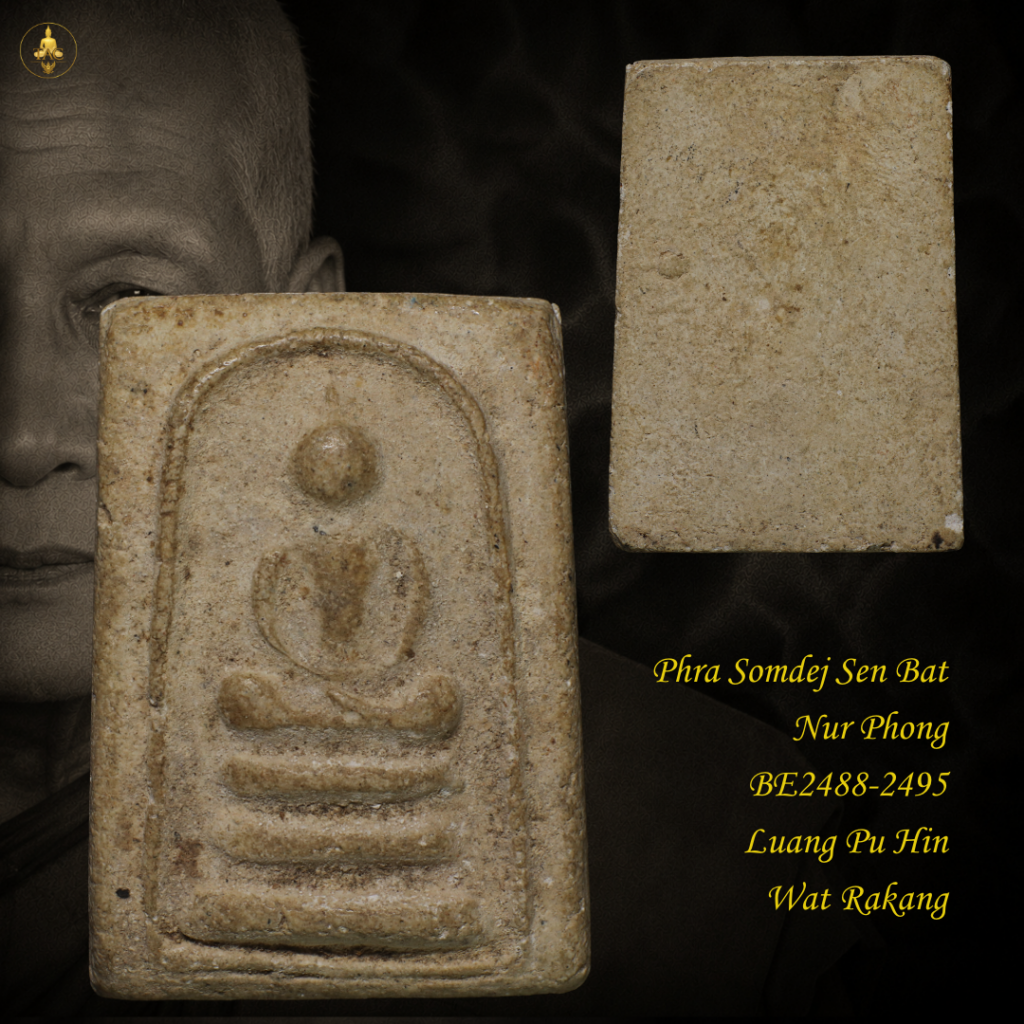
Phra Somdej Sen Bat Nur Phong BE2488-2495 Luang Pu Hin Wat Rakang
| Type | Phra Somdej Sen Bat |
| Monk | Luang Pu Hin Wat Rakang Kositaram |
| Temple | Wat Rakang |
| B.E. Year | 2488 |
| Material | Nur Phong |
| Size | 35 x 23 mm |
| Condition | Good |
| SKU | TAC-PhraSomdejSenBat-LpHin-001 |

Adds this amulet and the offer at the bundle price — ready at checkout. Or mention it when you enquire on WhatsApp.
Authentic Phra Somdej Sen Bat Luang Pu Hin, Wat Rakang, BE 2488–2495. Pressed in nur phong. A classical-era piece from one of Bangkok's most significant amulet temples.
What is Phra Somdej Sen Bat Luang Pu Hin, and where does it come from?
The Phra Somdej Sen Bat Luang Pu Hin is a classical-era phong amulet pressed at Wat Rakang in Bangkok, produced across the period BE 2488–2495. The nuea (substance) is nur phong — a composition of sacred powders that places this piece firmly within Wat Rakang’s established tradition of Somdej-form amulets. For collectors, that combination of monk, temple and era is what matters first.
Luang Pu Hin and why his name carries weight at Wat Rakang
Luang Pu Hin was associated with Wat Rakang during a period when the temple was actively producing amulets in the lineage of its most celebrated abbots. Wat Rakang’s position in the Somdej tradition is well established — it is the temple most closely linked to the origin of the Phra Somdej form in Thailand, and monks who worked there during the mid-twentieth century were operating in that direct line of practice.
BE 2488–2495 covers the years immediately after World War Two, a time when temple amulet production in Bangkok was resuming in earnest. Pieces from this window are genuinely classical-era work. You will not find this material in every collection. Collectors who focus on the Thai Buddhist amulet tradition treat mid-century Wat Rakang pieces as a serious reference point.
The nuea, the pim, and what to look at first
The material here is nur phong — sacred powder pressed into the Somdej Sen Bat form. Phong compositions at Wat Rakang have always been central to what collectors value: the muan sarn (the blend of powders and sacred ingredients) is worked into a dense, dry-looking surface with a patina that settles over decades, not months. That ageing in the nuea is one of the first things an experienced eye checks.
The Sen Bat pim (mould type) refers to the robe-line design — the way the lines of the seated Buddha’s robe are rendered across the surface. What you want to look at first is the clarity and consistency of those lines, the sharpness of the base, and the overall compression of the pressing. Pieces from this era were hand-pressed, so there is natural variation; the question is whether the variation is consistent with the period. Hold it and you can feel the density in a well-preserved piece.
- Check the robe lines (sen bat) — clarity and depth consistent with the pim
- Surface patina — natural drying and micro-texture built up over decades, not artificially aged
- Compression and weight — nur phong from this era has a characteristic density
- Base and reverse — look for period-consistent finishing, no tool marks inconsistent with mid-century production
TAC is a Singapore-based dealer that has been handling authenticated Thai amulets since 2015. When a piece like this comes through, the nuea condition and pim alignment are what we look at before anything else.
What is this Phra Somdej Sen Bat traditionally carried for?
Collectors and devotees associate this piece primarily with metta, personal authority and protection from harm. The four qualities most commonly connected to a Wat Rakang Somdej of this era are:
- Metta — loving-kindness and goodwill; traditionally carried by those whose work depends on how people receive them — meetings, negotiations, daily dealings with strangers and colleagues alike
- Maha Saneh — charm and likeability; devotees carry this when they need people to warm to them quickly, whether in business introductions, job interviews or social situations
- Baramee — composure and earned standing; the quality that makes others listen before you speak, associated with those who carry responsibility or lead teams
- Klaew Klaad — escaping harm and adverse circumstances; traditionally worn by people who travel frequently or work in unpredictable environments
How collectors wear this today
A piece like this suits daily wear for anyone whose working life runs on relationships — sales, management, client-facing roles, or anyone who regularly has to build trust quickly with people they have just met. The metta and maha saneh associations make it a natural choice for that kind of work. Those who carry responsibility — team leaders, business owners, people managing others — often gravitate toward the baramee quality. For meditation practitioners, a classical Wat Rakang Somdej form is traditionally regarded as supportive of calm and concentration during practice. As with all amulets, these are matters of tradition and personal belief; what you are holding is a carefully made piece from a significant temple in a significant period, and that is what gives it its standing in any serious collection.
This is a nur phong Phra Somdej Sen Bat from Luang Pu Hin at Wat Rakang, dated BE 2488–2495 — genuine classical-era material from one of Bangkok's most significant Somdej-producing temples. For collectors building a serious mid-century Wat Rakang holding, this is the period and the pim combination worth acquiring.
Attributes reflect Thai Buddhist devotional tradition and are not measurable claims.