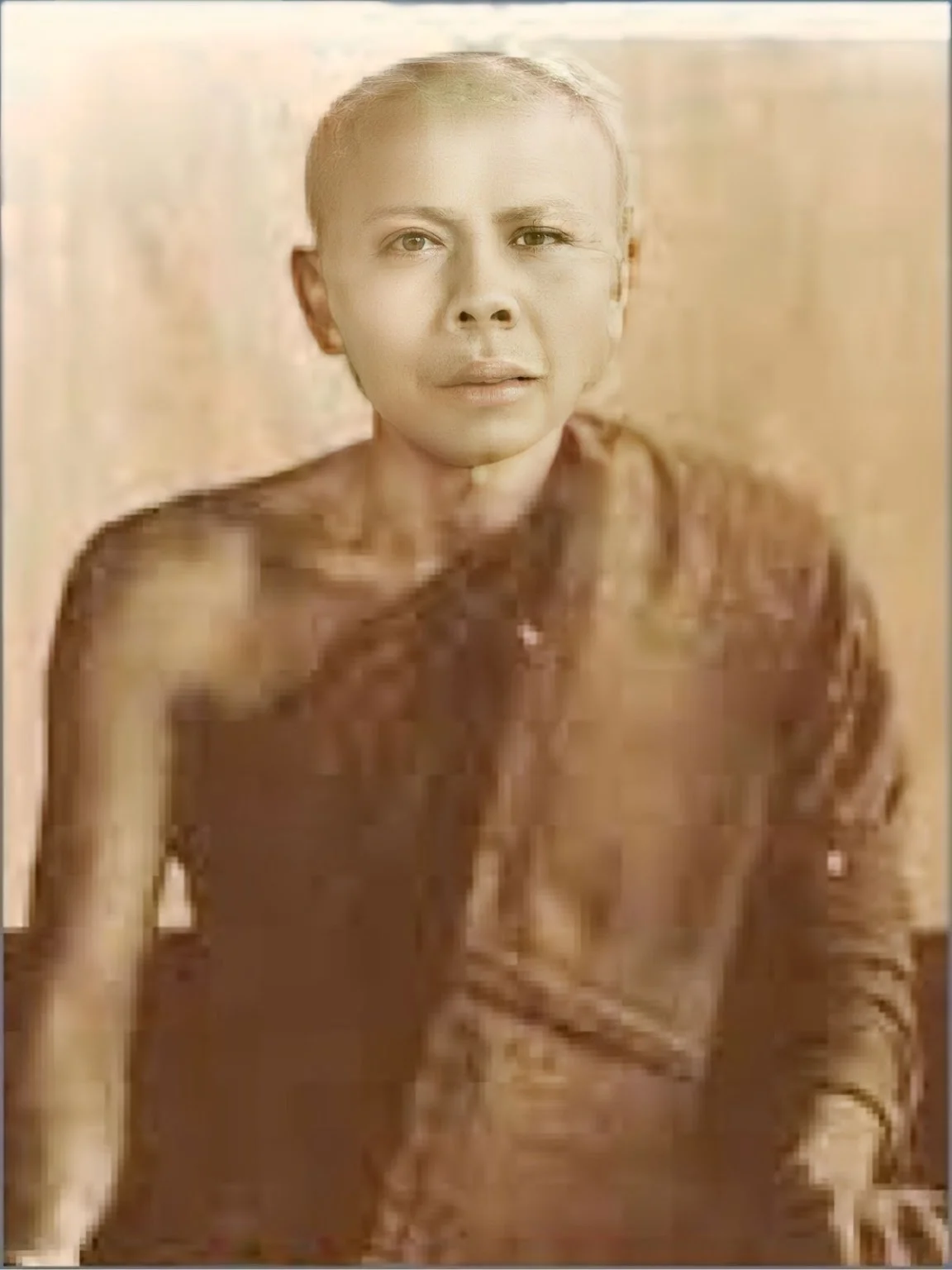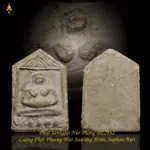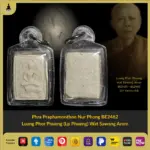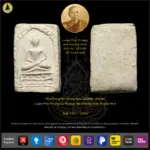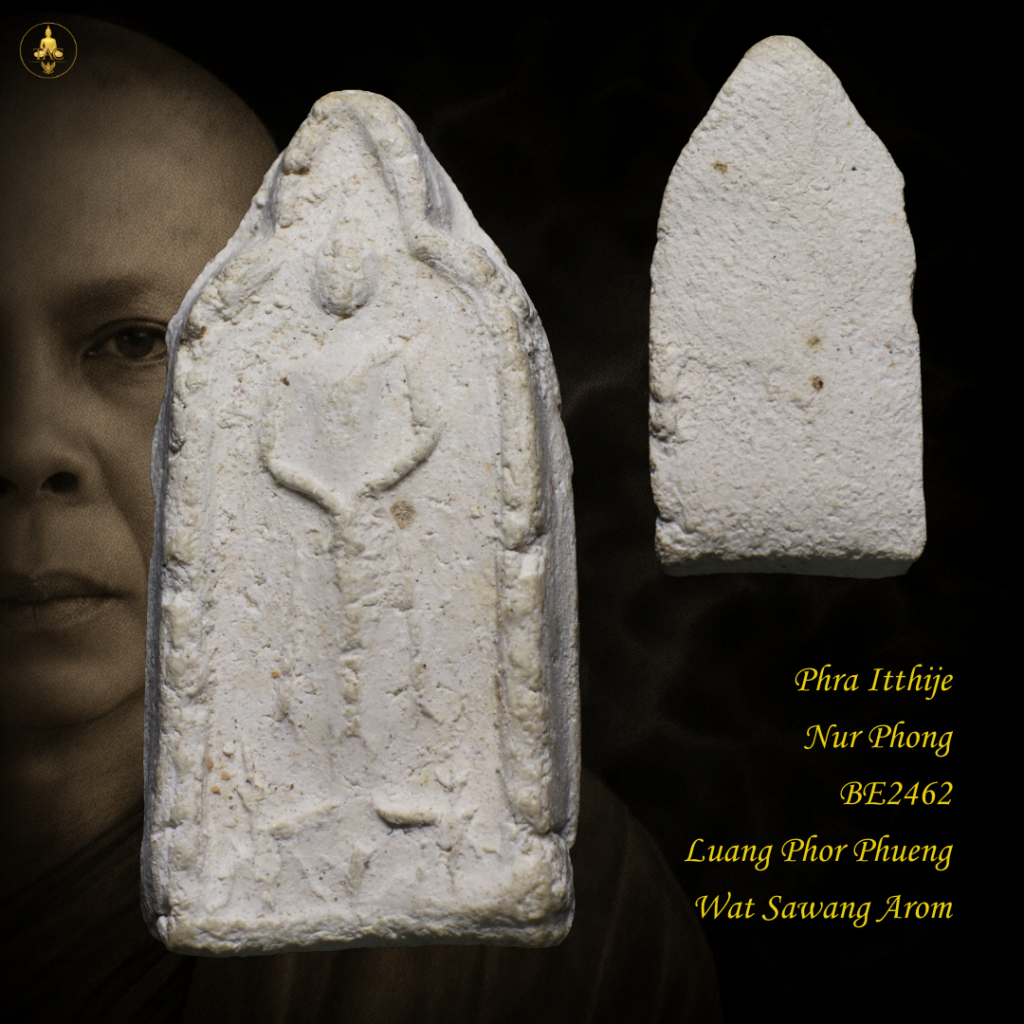
Phra Itthije Nur Phong BE2462 Luang Phor Phueng Wat Sawang Arom
| Type | Phra Itthije |
| Monk | Luang Phor Phueng (Lp Phueng) Wat Sawang Arom, Supan Buri |
| Temple | Wat Sawang Arom |
| B.E. Year | 2462 |
| Material | Nur Phong |
| Condition | Good |
| SKU | TAC-PhraItthije-LpPhueng-001 |
Authentic Phra Itthije by Luang Phor Phueng (Lp Phueng) Wat Sawang Arom, Supan Buri. BE 2462, Nur Phong, no certificate. Over a century old.
What is the Phra Itthije by Luang Phor Phueng (Lp Phueng) Wat Sawang Arom, Supan Buri?
The Phra Itthije Luang Phor Phueng (Lp Phueng) Wat Sawang Arom, Supan Buri is an authentic Thai amulet pressed in BE 2462 at Wat Sawang Arom, Song Phi Nong District, Suphan Buri Province. Made from nuea phong — sacred powder accumulated by the monk over many years — it ranks among the earliest and most carefully made powder amulets from the Suphan Buri tradition. No certificate accompanies this piece.
Who was Luang Phor Phueng, and why does his background matter to collectors?
Luang Phor Phueng (Lp Phueng) Wat Sawang Arom, Supan Buri was born in 1883 in Ban Phai Mu, Ton Tan Subdistrict, Song Phi Nong District, Suphan Buri. His family were farmers; after his parents separated, he lived with his mother and began farming from a young age. She later arranged for him to study with Luang Pho Saeng at Wat Khlong Madan, where he learned Thai and Khmer scriptures, Buddhist prayers, and the reading and writing skills that would underpin his monastic career.
He was ordained at Wat Song Phi Nong, with Phra Palat Bunyang as preceptor, Luang Pho Niang Inthochoto as karma-vachariya, and Luang Pho Nong Inthawanno as anusasana-acharya. After ordination he travelled to study Vipassanā meditation under Luang Pho Pluem at Wat Khao Yai, Tha Maka District, Kanchanaburi Province. That training shaped the depth of practice he brought back to Suphan Buri.
For collectors, this biography is not background noise. Moral purity and meditative depth are the two pillars the Thai Buddhist amulet tradition places at the centre of a monk’s consecrative authority. Luang Phor Phueng’s documented lineage and rigorous training are part of what makes amulets from his hand worth studying seriously.
Wat Sawang Arom and how these amulets came to be pressed
Luang Phor Phueng arrived at Wat Sawang Arom, Ban Kum Subdistrict, Song Phi Nong District, on 13 May 1919. The send-off included Luang Pho Nong, Luang Pho Sod, and Luang Pho Hom — a gathering that signals how well-regarded he already was among his peers. On arrival, he led the community in constructing the temple: digging a moat, planting coconut trees along the embankments, building the mounds for the main chapel. The amulets he distributed to villagers who helped build the temple were an early sign of the bond between his practice and the lay community at Sawang Arom.
The nuea phong (sacred powder blend) used in the Phra Itthije BE 2462 was accumulated through an unusual method. Luang Phor Phueng would write sacred symbols on a slate board in chalk and then erase them, collecting the powder and storing it across many containers over the course of years. By the time the amulets were formally pressed, the muan sarn — the sacred powder blend — carried decades of continuous practice behind it.
The pressing itself followed strict ceremony. Luang Phor Phueng encircled the amulet-making area with 108 strands of sacred thread. All participants observed the five moral precepts and purified themselves before joining. Once the amulets were finished, they were placed in the temple’s main hall for a three-month pluk sek (consecration period), with monks chanting every morning, evening, and night. After that, Luang Phor Phueng performed a solo phutthaphisek through to the end of the third quarter — an unusually prolonged and rigorous process by any standard.
One external data point collectors cite: in 1950, Luang Pho Sod of Wat Pak Nam personally requested a portion of Luang Phor Phueng’s nuea phong to incorporate into his own amulets. That detail alone tells you how the material was regarded within the tradition.
What collectors look for — and what to know about certification
The Phra Itthije BE 2462 carries no certificate. For a piece of this age — now well over a century old — that is not unusual, and experienced collectors generally rely on physical evidence rather than paper alone. Surface patina consistent with aged nuea phong, the pim (mould profile collectors authenticate against), and documented provenance are the primary benchmarks.
- Nuea phong consistency: Look for surface texture and colour ageing that matches known reference pieces from Luang Phor Phueng’s productions from this era.
- Pim accuracy: The mould profile should correspond to documented examples of the Phra Itthije type from Wat Sawang Arom. Cross-reference against specialist reference materials on his known amulet types.
- Provenance trail: Any documentation linking the piece to Wat Sawang Arom or to collectors who acquired it closer to that period adds confidence.
- Specialist opinion: Given Luang Phor Phueng’s range — he also pressed Praphamandal, Chiang Saen, Ok Rong, 7-Layer, Sanghati, and Chinnarat types — a dealer with reference materials on his specific productions is worth consulting before committing.
Collectors from Singapore, Malaysia, Thailand, and Greater China associate the Phra Itthije type with protection, personal metta (loving-kindness and goodwill from others), and auspiciousness for wealth and business. These are traditional associations the collector community attributes to the category, not claims this listing makes on the piece’s behalf.
We at TAC are offering this Phra Itthije Luang Phor Phueng (Lp Phueng) Wat Sawang Arom, Supan Buri from BE 2462 — a piece that, given its age and the documented rigour behind its making, deserves careful attention from any collector with an interest in early Suphan Buri powder amulets. The nuea phong methodology — years of accumulated chalk-board powder, a three-month communal pluk sek, and a solo phutthaphisek by the monk — sets this edition apart from more routine productions, and the 1950 request by Luang Pho Sod of Wat Pak Nam for the same powder is a useful reference point when speaking with informed buyers. No certificate accompanies this piece; we recommend buyers consult our reference materials on Luang Phor Phueng's known productions before purchase.
Attributes reflect Thai Buddhist devotional tradition and are not measurable claims.