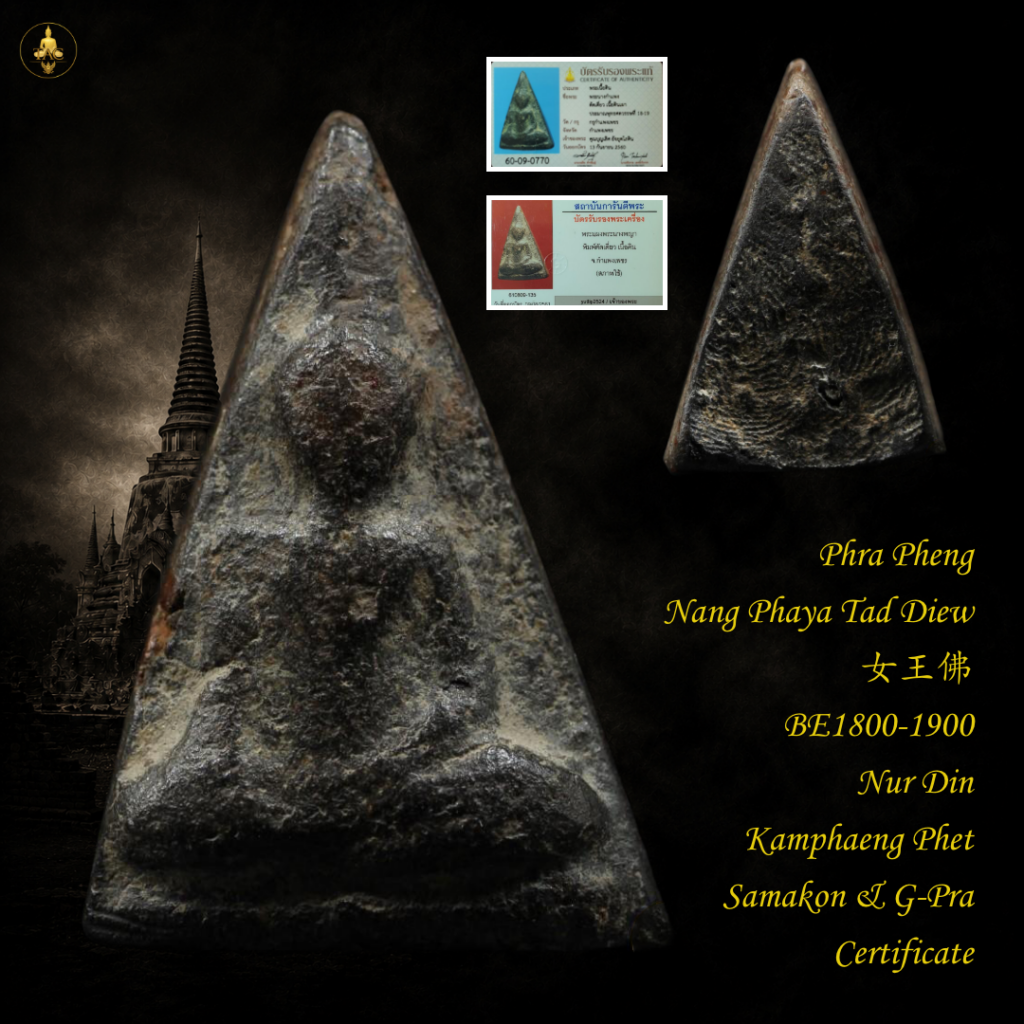
Phra Pheng Nang Phaya Tad Diew 女王佛 BE1800-1900 Nur Din Kamphaeng Phet
| Type | Phra Pheng Nang Phaya Tad Diew 女王佛 |
| Temple | Kamphaeng Phet |
| B.E. Year | 1800-1900 |
| Material | Nur Din |
| Pim / Mold | Nang Phaya |
| Condition | Very Good |
| Certificate | Samakom #G-Pra |
| SKU | TAC-PhraPhengNangPhayaTadDiew女王佛--001 |
Authentic Phra Pheng Nang Phaya Tad Diew 女王佛 from Kamphaeng Phet, BE 1800-1900. Nur Din material. Certified by Samakon & G-Pra. Trusted Singapore Thai amulet dealer.
What is the Phra Pheng Nang Phaya Tad Diew 女王佛 from Kamphaeng Phet?
The Phra Pheng Nang Phaya Tad Diew 女王佛 is a classical Thai amulet produced at Kamphaeng Phet province during the BE 1800–1900 period, crafted from Nur Din (sacred earthen clay). It is regarded by devotees as one of the most historically significant single-image Queen Buddha amulets of the early-to-mid Rattanakosin era, treasured for its refined artistry and spiritual resonance.
The Phra Pheng Nang Phaya Tad Diew 女王佛 belongs to a distinguished lineage of Nang Phaya-style amulets that have long been associated with Kamphaeng Phet, a province with deep roots in Thai Buddhist heritage. The term “Tad Diew” refers to the single-sided composition, which is a defining characteristic that collectors and authentication experts use to classify and identify this piece.
This amulet is considered a rare and authentic Thai amulet from a period when sacred craftsmanship in the northern-central Thai provinces reached remarkable heights. Collectors across Singapore, Malaysia, and Greater China prize it for both its antiquity and the depth of devotional tradition it embodies.
Phra Pheng Nang Phaya Tad Diew 女王佛 and Kamphaeng Phet Heritage
Kamphaeng Phet has long been regarded as one of Thailand’s most historically layered provinces, home to ancient temples and sacred sites that date back centuries before the Rattanakosin period. The region’s Buddhist artisans were known for producing amulets of exceptional quality, using locally sourced sacred earth and traditional pressing techniques passed down through generations.
The Phra Pheng Nang Phaya Tad Diew 女王佛 Kamphaeng Phet tradition draws directly from this rich local heritage. Amulets produced in this province during the BE 1800–1900 era were typically consecrated through extended ceremonial rites conducted by respected senior monks and temple communities, imbuing each piece with layers of sacred intention.
For collectors seeking to understand the broader context of Thai sacred objects, the Thai Buddhist amulet tradition offers a well-documented framework within which Kamphaeng Phet amulets occupy a respected classical position. The province’s output from the BE 1800–1900 period is consistently cited by experts as exemplifying the transitional golden age of Thai amulet craftsmanship.
Nur Din Phra Pheng Nang Phaya Tad Diew 女王佛 — Composition and Craftsmanship
The Nur Din Phra Pheng Nang Phaya Tad Diew 女王佛 is crafted from Nur Din, a sacred earthen clay material that has been used in Thai Buddhist amulet production for centuries. Nur Din is typically composed of consecrated soil gathered from spiritually significant locations, including temple grounds, ancient ruins, and auspicious natural sites, which is then blended and pressed into precise moulds.
The use of Nur Din as a primary material is significant because it is believed by devotees to carry the accumulated spiritual energy of the sacred earth from which it is drawn. This material gives the amulet its characteristic matte, earthy surface texture and contributes to its aged appearance — a quality that experienced collectors regard as a mark of genuine antiquity.
Amulets of the BE 1800–1900 Kamphaeng Phet era made from Nur Din are especially valued because the raw materials and production methods of that period were entirely traditional and uninfluenced by modern additives. The fine-grained, dense clay composition of authentic pieces from this era is one of the key physical markers used during professional authentication.
Spiritual Benefits of Phra Pheng Nang Phaya Tad Diew 女王佛
The Phra Pheng Nang Phaya Tad Diew 女王佛 is traditionally venerated for a range of spiritual qualities that devotees associate with the Nang Phaya Buddha archetype. Collectors across Singapore and Southeast Asia regard this amulet as a powerful object of devotion, particularly for those seeking personal protection, good fortune, and spiritual clarity.
Among the qualities most commonly associated with this amulet by the collector community are:
- Protective Blessing — devotees traditionally venerate this amulet for shielding the wearer from harm and misfortune in daily life.
- Charisma & Influence — collectors associate the Nang Phaya feminine Buddha archetype with enhanced personal magnetism and social grace.
- Spiritual Growth — the amulet is regarded by devotees as a support for deepening one’s Buddhist practice and inner cultivation.
Phra Pheng Nang Phaya Tad Diew 女王佛 BE 1800–1900 — Authentication and Collector Value
The Phra Pheng Nang Phaya Tad Diew 女王佛 BE 1800–1900 offered through our platform carries dual certification from Samakon and G-Pra, two of the most respected amulet authentication bodies recognised by collectors across Thailand, Singapore, Malaysia, Taiwan, and Hong Kong. Samakon certification is issued by Thailand’s national amulet association and is widely regarded as the gold standard for classical-era pieces.
G-Pra certification provides an additional layer of specialist verification, particularly valued by collectors in Greater China and Southeast Asia who require documented provenance before acquisition. Together, these two certifications significantly enhance both the credibility and the market value of any classical Thai amulet.
As a Thai amulet Singapore dealer with an established reputation across the region, we source only pieces with verifiable certification and clear provenance. The rarity of authentic Phra Pheng Nang Phaya Tad Diew 女王佛 examples from the BE 1800–1900 Kamphaeng Phet period means that well-certified specimens are increasingly sought after by serious collectors and are rarely available on the open market.
Attributes reflect Thai Buddhist devotional tradition and are not measurable claims.