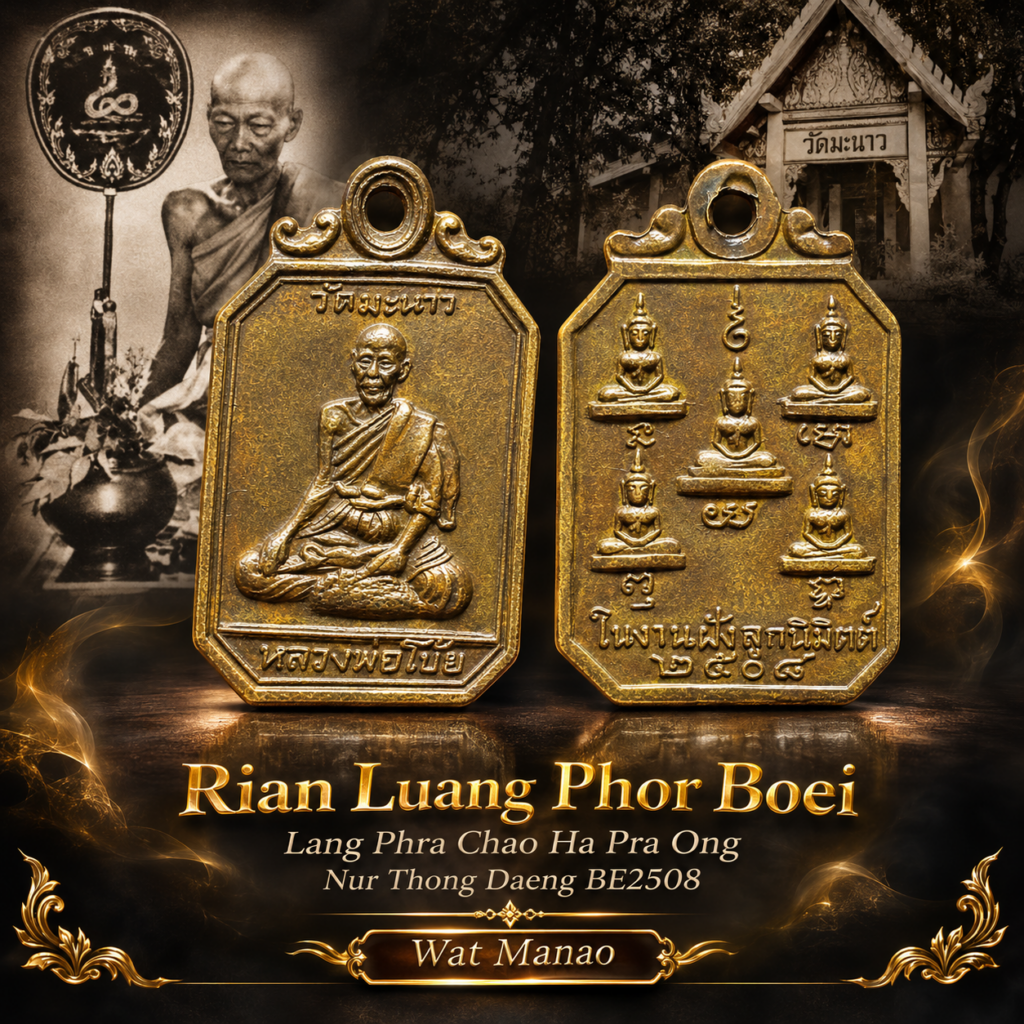
Rian Luang Phor Boei Lang Phra Chao Ha Pra Ong Nur Thong Daeng BE2508 Wat Manao
| Type | Rian Luang Phor Boei Lang Phra Chao Ha Pra Ong |
| Monk | Luang Phor Boey (Lp Boi) |
| Temple | Wat Manao |
| B.E. Year | 2508 |
| Material | Nur Thong Daeng |
| Condition | Very Good |
| SKU | TAC-RianLuangPhorBoeiLangPhraChaoHaPraOng-LpBoei-001 |
Authentic Rian Luang Phor Boei Lang Phra Chao Ha Pra Ong by Luang Phor Boei, Wat Manao, BE 2508. Nur Thong Daeng. Singapore dealer TAC.
What is the Rian Luang Phor Boei Lang Phra Chao Ha Pra Ong from Wat Manao?
Rian Luang Phor Boei Lang Phra Chao Ha Pra Ong Nur Thong Daeng Wat Manao is a coin-form amulet issued in BE 2508 by Luang Phor Boei of Wat Manao. Cast in nur thong daeng (red copper), it carries a reverse relief of Phra Chao Ha Pra Ong — the Five Buddhas. A classic mid-era rian from a temple with a quiet but solid following among serious collectors.
Luang Phor Boei and why Wat Manao still matters
Luang Phor Boei is not the kind of monk who appears in every auction catalogue, and that is part of what makes pieces from his temple worth attention. Monks like him operated within their communities, building merit through practice rather than public ceremony, and the amulets they produced were made for devotees — not for the market. That context tends to produce amulets with genuine muan sarn (the sacred blend of materials pressed into the piece) rather than high-volume runs made to satisfy collector demand.
Wat Manao sits within this same tradition. The temple’s output in the mid-BE 2500s was modest in scale, which means surviving pieces from this period are not common. A BE 2508 rian from this temple predates the era when Thai amulet collecting became commercialised, and that alone makes the provenance relevant to a sien (an experienced collector) who cares about what was behind the making.
For a broader grounding in this tradition, the Thai Buddhist amulet tradition has shaped monastic practice and lay devotion across Thailand for centuries — the rian format, in particular, carries deep roots in both royal and regional temple lineages.
Reading the nuea — what nur thong daeng tells you about this piece
Nur thong daeng, red copper, is one of the older and more trusted metals in Thai amulet making. It holds detail well, ages with a distinct patina, and carries associations with strength and protection in the Thai Buddhist tradition. For a rian cast in BE 2508, you would expect the surface to show natural oxidation consistent with over sixty years of age — not a polished, cleaned surface, but a settled one.
The reverse face of this rian depicts Phra Chao Ha Pra Ong, the Five Buddhas — a design that carries strong symbolic weight, representing the Buddhas of the five directions and traditionally associated with comprehensive protection. The pim (mould) detail on older thong daeng rianfrom this period tends to be crisp at issue but softens slightly with age; what you are looking for is consistency between the relief depth, the metal colour, and the expected wear pattern for the stated era.
Key points a collector should examine on this piece:
- Patina tone and depth consistent with nur thong daeng aged from BE 2508
- Sharpness of the Five Buddhas relief on the reverse face — the pim lines should read cleanly even with age
- Even casting without modern tool marks or resurfacing
- Overall weight and feel — older thong daeng rianfrom this era have a density that later reproductions rarely replicate
What collectors carry this rian for
Devotees traditionally carry rianfeaturing Phra Chao Ha Pra Ong for protective blessing and as a symbol of the five directions of merit. The Five Buddhas format is one that Thai and Chinese collectors alike recognise — it translates across both Theravada and broader Buddhist visual language, which gives pieces like this cross-regional appeal among collectors in Singapore, Malaysia, and the Chinese-speaking markets.
TAC handles pieces like this because the combination of a genuine mid-era monk, a temple with limited output, and a clearly defined nuea makes authentication a tractable problem. There is no certificate listed for this piece — collectors should assess it on the physical evidence, and that is a conversation we are happy to have directly.
This is a BE 2508 nur thong daeng rian from Luang Phor Boei of Wat Manao — a mid-era piece with the Phra Chao Ha Pra Ong (Five Buddhas) reverse, which is not a design you see on every temple's output from this period. What draws us to pieces like this at TAC is the combination of a defined nuea, a specific temple with limited surviving output, and a design that has genuine meaning behind it rather than just market appeal. No certificate accompanies this piece, so we recommend collectors examine the physical evidence carefully — we are happy to discuss comparison points directly.
Attributes reflect Thai Buddhist devotional tradition and are not measurable claims.