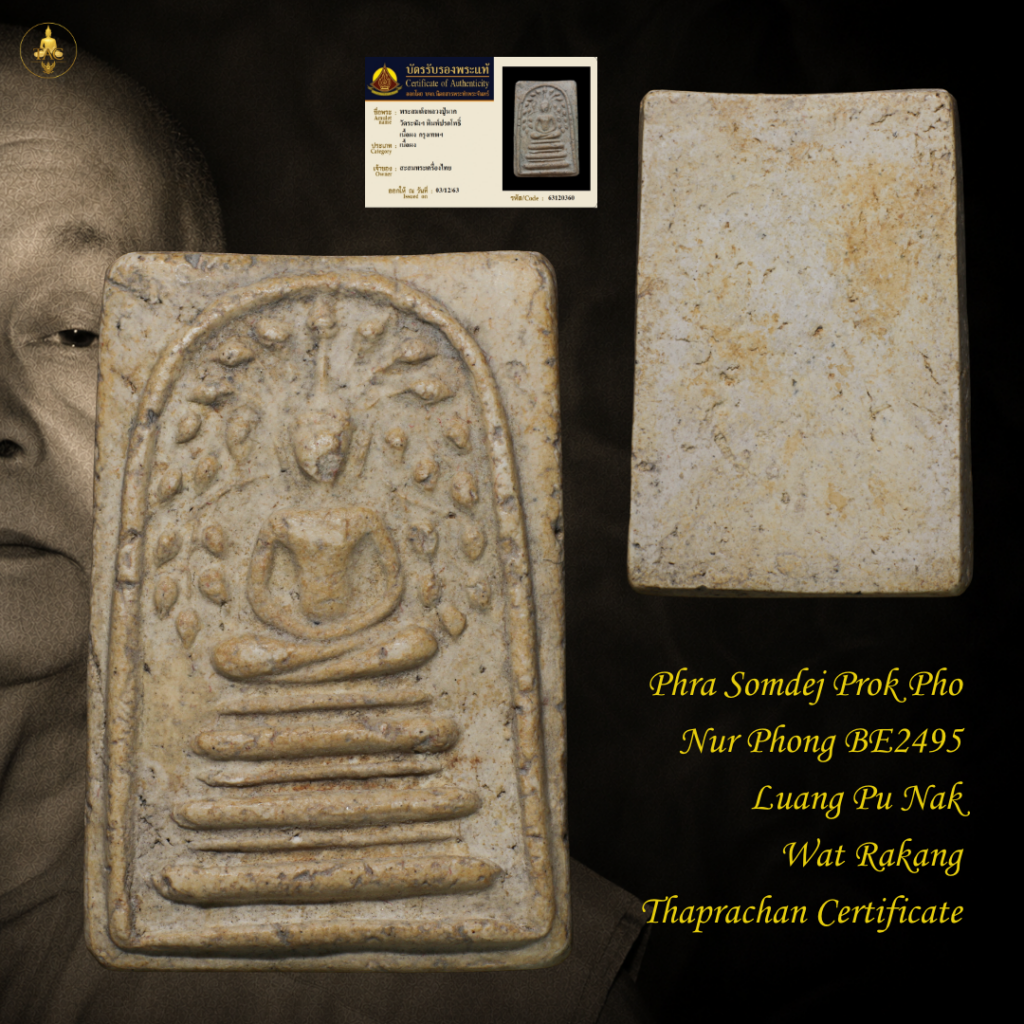
Phra Somdej Prok Pho Nur Phong BE2495 Luang Pu Nak Wat Rakang
| Type | Phra Somdej Prok Ph |
| Monk | Luang Pu Nak Wat Rakang Kositaram |
| Temple | Wat Rakang |
| B.E. Year | 2495 |
| Material | Nur Phong |
| Pim / Mold | Prok Pho |
| Size | 35 x 20 mm |
| Condition | Good |
| Certificate | Thaprachan #63120360 |
| SKU | TAC-PhraSomdejProkPh-LpNak-001 |
Authentic Phra Somdej Prok Ph Luang Pu Nak, Wat Rakang BE 2495. Pressed in Nur Phong. Certificate 63120360. Singapore dealer TAC.
What is the Phra Somdej Prok Pho Luang Pu Nak from Wat Rakang BE 2495?
Phra Somdej Prok Pho Nur Phong BE2495 Luang Pu Nak Wat Rakang — a period firmly within what collectors regard as the golden era of Thai Buddhist amulet making. Certificate number 63120360 accompanies this piece, providing a documented reference point for authentication.
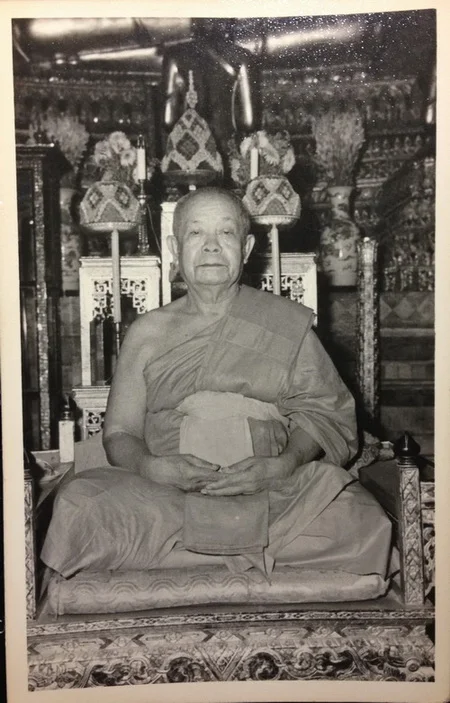
Luang Pu Nak and why his pieces from this period still matter
Luang Pu Nak was a senior monk whose connection to Wat Rakang placed him at the centre of one of Thailand’s most historically significant amulet-producing temples. BE 2495 falls in the early 1950s — a time when the craftsmanship, muan sarn (the blend of sacred powders and temple materials pressed into the piece) and consecration ceremonies were conducted with a seriousness that later decades rarely matched.
Pieces from this era were not produced for commercial scale. The phong used was typically drawn from temple-held sacred materials with direct lineage to the temple’s own tradition. For collectors, that provenance matters as much as the pim (the mould form) itself.
The nuea — what this piece is pressed from
Nur Phong refers to a dry powder-based nuea (the material and substance of the amulet), typically comprising a blend of sacred phong types that may include chalk, dried floral offerings, and other temple-consecrated substances. Without the lacquer-and-gold overlay of long rak pit thong, the raw surface texture and colour of a Nur Phong piece from this period becomes one of the primary authentication markers — along with the clarity and definition of the pim.
At roughly seven decades old, a genuine BE 2495 Nur Phong piece will show age in the patina and surface character that simply cannot be replicated. This is what a collector’s eye is trained on before anything else.
Wat Rakang’s place in this tradition
Wat Rakang — formally Wat Rakhang Khositaram — sits on the Thonburi bank of the Chao Phraya River in Bangkok. Its name is inseparable from the Phra Somdej tradition in Thai amulet collecting, rooted in the legacy of Somdej Phra Phutthachan Toh, who produced his celebrated amulets there in the nineteenth century. Any Somdej-type piece produced at Wat Rakang carries that temple association, and collectors worldwide understand what that context means within the broader Thai Buddhist amulet tradition.
Luang Pu Nak’s BE 2495 production sits well downstream of those original nineteenth-century pieces, but Wat Rakang’s continued role as a site of serious consecration ceremonies — pluk sek (the empowerment ritual conducted by assembled monks) — gives pieces from this period their own standing in the collector community.
Reading the certificate and what to check on the piece
Certificate 63120360 is the reference number to verify when evaluating this amulet. For any BE 2495 Nur Phong Somdej from Wat Rakang, authentication rests on a combination of the certificate, the pim definition, and the nuea’s natural age characteristics. No single element alone is sufficient — a sien (experienced collector) will look at all three together.
- Pim definition: the pressed image should retain crisp detail consistent with the original mould, not signs of a re-strike or cast reproduction.
- Nuea character: surface texture, colour depth and the micro-structure of aged Nur Phong differ markedly from modern pressed powder.
- Certificate match: certificate number 63120360 should correspond to the issuing record — verify with the certifying body directly if in doubt.
This is a Phra Somdej Phok Pho Nur Phong BE2495 from Wat Rakang — Luang Pu Nak's piece, with certificate 63120360 on file. For a collector who wants a mid-twentieth-century Wat Rakang Somdej with documented certification, this is worth a careful look.
Attributes reflect Thai Buddhist devotional tradition and are not measurable claims.