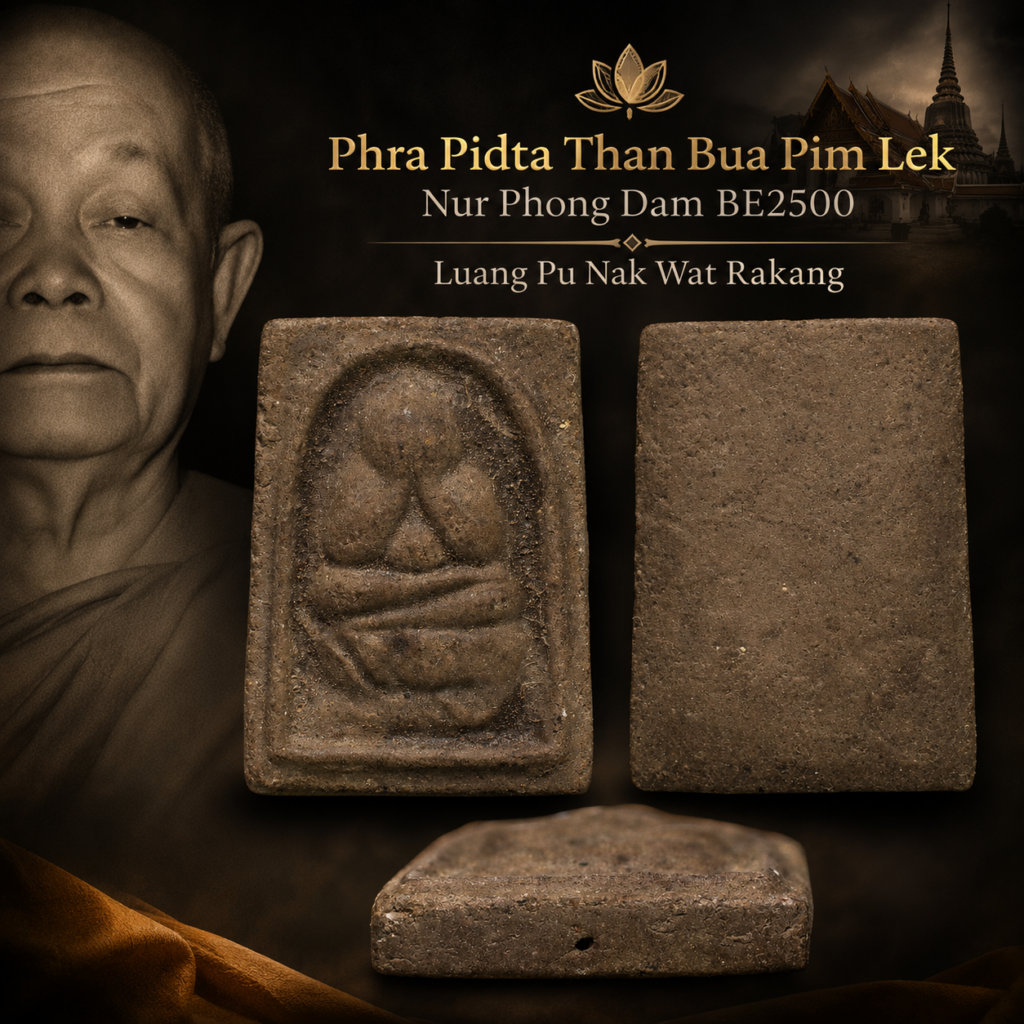
Phra Pidta Than Bua Fang Tarkut Pim Lek Nur Phong Dam BE2500 Luang Pu Nak Wat Rakang (Rare)
| Type | Phra Pidta Than Bua Pim Lek |
| Monk | Luang Pu Nak Wat Rakang Kositaram |
| Temple | Wat Rakang |
| B.E. Year | 2500 |
| Material | Nur Phong Dam |
| Condition | Good |
| SKU | TAC-PhraPidtaThanBuaPimLek-LpNak-001 |
Authentic Phra Pidta Than Bua Fang Tarkut Pim Lek Luang Pu Nak, Wat Rakang BE 2500. Pressed in Nur Phong Dam. A classical-era Pidta from one of Bangkok's most significant temples.
What is the Phra Pidta Than Bua Fang Tarkut Pim Lek by Luang Pu Nak, and why does BE 2500 matter to collectors?
The Phra Pidta Than Bua Pim Lek Luang Pu Nak is a small-mould (pim lek) Pidta amulet produced at Wat Rakang in BE 2500, pressed from Nur Phong Dam — a black sacred-powder blend. BE 2500 marks the 2,500th year of the Buddhist Era, a ceremonial milestone that made consecrations from that year significant in the eyes of both monks and collectors across the region.
Luang Pu Nak and the weight that name carries at Wat Rakang
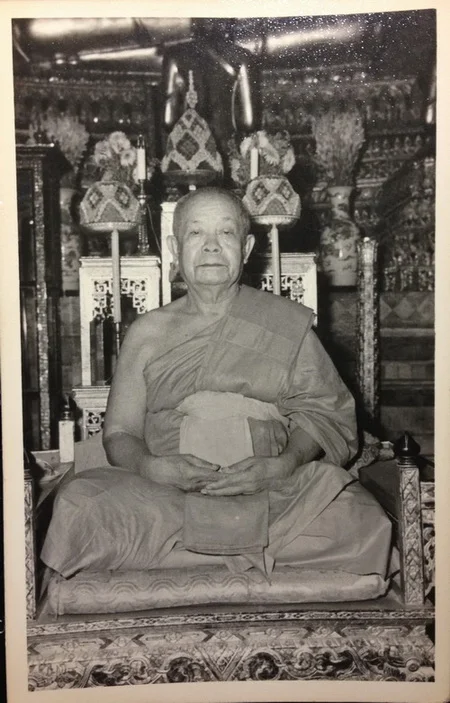
Luang Pu Nak was among the senior monks who presided over amulet production at Wat Rakang during the mid-twentieth century. Wat Rakang — formally Wat Rakhang Khositaram — sits on the Thonburi bank of the Chao Phraya and has been central to Thai Buddhist practice since the Rattanakosin period. Its name carries immediate recognition among serious collectors because of the layered tradition of both monk practice and amulet making that the temple sustained over generations. For more background on how Thai temple amulets fit into this broader devotional tradition, see the Thai Buddhist amulet tradition on Wikipedia.
What matters for a piece like this is understanding that production at Wat Rakang was not casual. Senior monks of standing were involved in the pluk sek (consecration ceremony), and the muan sarn — the blend of sacred powders, relics and temple materials pressed into each piece — was assembled with care. A piece from BE 2500, associated with a monk of Luang Pu Nak’s seniority, sits in a tier that collectors treat as classical-era material.
Reading the nuea — what Nur Phong Dam tells you about this piece
Nur Phong Dam, the black powder nuea used here, is a dry-pressed sacred material. In older pieces from this period, the powder composition typically includes consecrated phong, charcoal and other temple-blessed ingredients worked into a firm, dense press. Aged Nur Phong Dam develops a characteristic surface quality — collectors look at the compression, the edge definition on the pim, and the way the surface has matured without crumbling or artificially darkening.
The pim lek designation tells you this is the smaller mould variant. For this type, the relief detail on the lotus-throne base (than bua) and the closed-eye Pidta figure itself are the key reference points. A genuine piece from this period holds crisp detail on the raised areas and shows natural age consistent with seven decades of handling. That is what a sien (experienced collector) checks first — not the story, but what the pim actually shows.
Condition, authentication and what to expect without a certificate
No third-party certificate accompanies this piece. That is not unusual for amulets of this age — formal certification bodies, and their graded slabs, became more systematic in later decades. For a BE 2500 piece from Wat Rakang, authentication rests on physical examination against known niyom examples:
- Pim geometry and mould detail consistent with the Than Bua Pim Lek standard
- Nuea compression and surface patina appropriate to aged Nur Phong Dam
- Base and reverse details that match reference material from the same temple and era
Collectors who want a certificate can submit the piece to a recognised Thai amulet committee. At TAC, we present the piece as-is — the amulet details are stated accurately, and what you see in the photos is what ships.
What collectors and devotees traditionally associate with Phra Pidta
Phra Pidta — the closed-eyes Buddha figure — is traditionally associated with protection and the blocking of misfortune. Devotees across Thailand, Malaysia and Singapore have long carried Pidta amulets in the belief that the figure’s closed eyes shield the wearer from harm and negative influences. A lotus-throne (than bua) base in the design is read as an elevation of the figure’s sacred status. These are matters of tradition and devotee belief, passed across generations of practice, not claims we make about outcomes.
This is a classical-era Pidta from Wat Rakang — BE 2500, pressed in Nur Phong Dam, pim lek mould. The year alone puts it in a category most collectors understand without explanation; the 2,500th year of the Buddhist calendar is not a production run you can replicate. No certificate accompanies the piece, so the photos need to do the work — make sure the than bua base and the face of the figure are well-lit and in focus.
Attributes reflect Thai Buddhist devotional tradition and are not measurable claims.