Luang Phor Sothon, Wat Sothon Wararam Worawihan, Chachoengsao Province, for building the Ubosot BE2535 (with original temple box)
S$10
S$18save S$8 (44%)
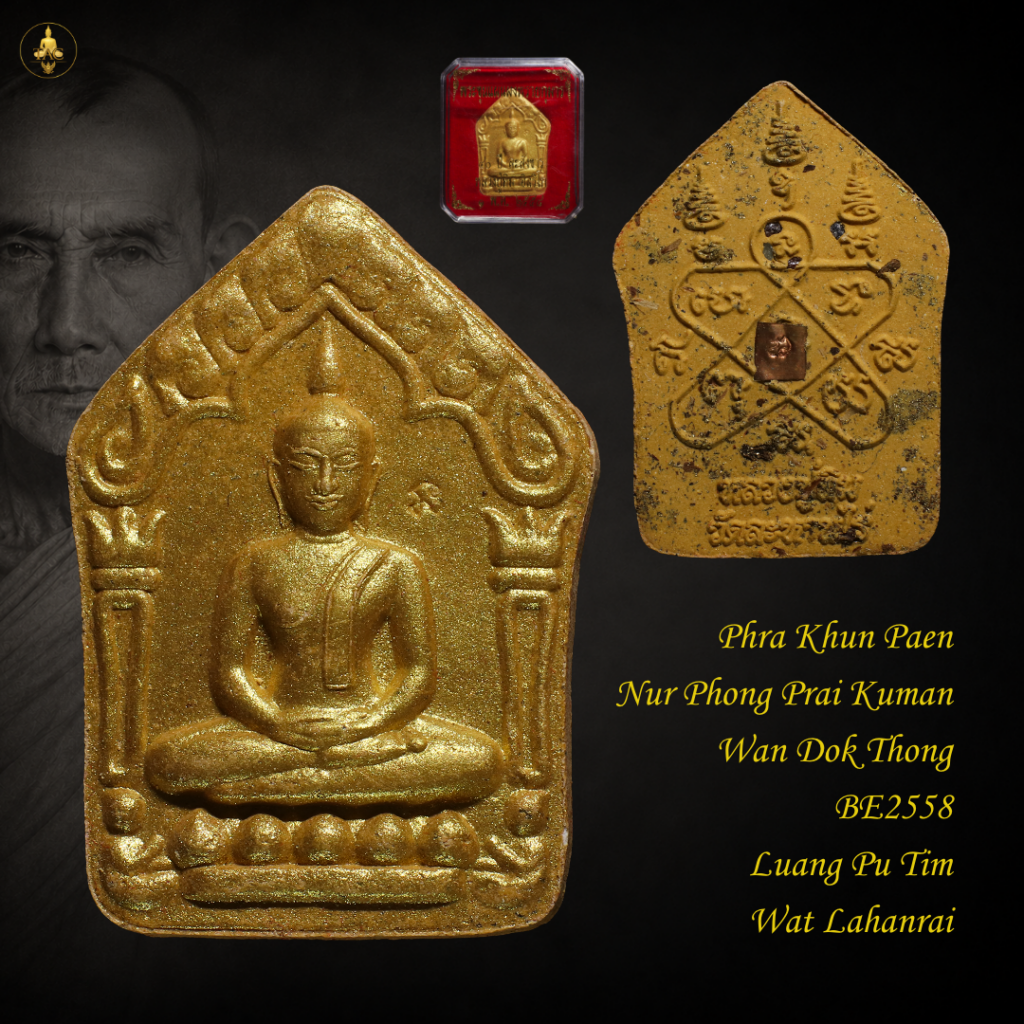
| Type | Phra Khun PaenPhra Khun Paen Nur Phong Prai Kuman Wan Dok Thong |
| Monk | Luang Pu Kaew Wat Lahanrai, Rayong |
| Temple | Wat Lahanrai |
| B.E. Year | 2558 |
| Material | Nur Phong Prai Kuman |
| Pim / Mold | Pim Yai (Big) |
| Condition | Excellent |
| SKU | TAC-PhraKhunPaenPhraKhunPaenNurPhongPraiKumanWanDokThong-LpTim-001 |
Luang Phor Sothon, Wat Sothon Wararam Worawihan, Chachoengsao Province, for building the Ubosot BE2535 (with original temple box)
 Phra Luang Pu Thuad (Lp Thuad) Nur Wahn BE2550 Wat Kongkha Liap (Tha Sak), Nakhon Si Thammarat (425 Years Anniversary, 9 Days & 9 Grand Ceremonies)
 Phra Pang Umbat (Wednesday Buddha) BE2512 Luang Phor Tae (Lp Tae) Khongthong Wat Sam Ngam
 Phra Lp Thuad 龙婆托 (Shenzhen Version) Pim Lek (RED) BE2539 Phor Than Wan Apiyo Wat Saba You Blessed by Archan Nong Wat Sai Khao
 Phra Mahesuan Nur Tarkut BE2552 Luang Phor Tad (Lp Tad) Wat Chaina with original temple box
Each adds this amulet plus the offer at the bundle price — ready at checkout, or mention it when you enquire on WhatsApp.
Phra Khun Paen Nur Phong Prai Kuman Wan Dok Thong by Luang Pu Tim, Wat Lahanrai BE 2558. 40th anniversary edition. Pong Prai Kuman bone powders, Pong Puttakun yantra powders. Singapore dealer.
This is the Phra Khun Paen Nur Phong Prai Kuman Wan Dok Thong by Luang Pu Tim, Pim Yai model, released at Wat Lahanrai in BE 2558 to mark the 40th anniversary of Luang Pu Tim’s passing. The nuea (material) is Nuea Chompoo Bad Tong — a blend of Pong Prai Kuman bone powders and Pong Puttakun yantra powders pressed into the Pim Yai form.
Luang Pu Tim of Wat Lahanrai is considered one of the foremost masters of Phra Khun Paen and Prai Kuman amulets in the modern era. His expertise in preparing muan sarn (the blend of sacred powders and ingredients inside each piece) set a standard that later makers still reference. BE 2558 — forty years after his passing — was chosen deliberately. The temple used it as the occasion to release a commemorative edition that draws directly on the formulas he left behind.
That framing matters to collectors. A run tied to a significant anniversary tends to involve more careful attention to the original muan sarn formula. What you want to check first is whether the nuea carries the characteristic Chompoo (pale pink-blush) tone against the gold-leaf finish — that is the visual signature of this batch’s Nuea Chompoo Bad Tong.
Nuea Phong Prai Kuman is not a generic powder mix. Pong Prai Kuman refers specifically to powders prepared from ritual ingredients associated with Kuman Thong rites — traditionally including bone-derived materials consecrated under strict ceremony. Combined here with Pong Puttakun (yantra-inscribed sacred powders empowered through Buddhist chant), the muan sarn in this Pim Yai carries both the Prai (spirit-power) and the Puttakun (Buddha-blessing) currents. That dual composition is a hallmark of Wat Lahanrai‘s Khun Paen tradition.
The Thai Buddhist amulet tradition treats the quality of muan sarn as the primary determinant of a piece’s standing — not the outer finish. A rough surface with correct nuea will always outrank a polished piece with diluted material, in the eyes of serious collectors.
Pim Yai means the larger of the standard Khun Paen moulds used at Wat Lahanrai. For this 40th anniversary edition, authentication focuses on a few key areas:
Khun Paen amulets in the Wat Lahanrai line are primarily associated with Maha Saneh and Metta. This batch, with its Prai Kuman muan sarn, also draws associations with fortune-drawing and authority.
People in sales, negotiation, client-facing roles or any work where rapport matters tend to reach for a Khun Paen piece first. The Maha Saneh quality is the main draw for that group. For business owners, the Kaa Khaay association makes it a natural daily-wear choice — worn around the neck or kept in a pocket wallet with other pieces in a set.
Those who sit in leadership or management find the Baramee aspect useful alongside the charm qualities — it is not just about being liked, but about being taken seriously. Meditation practitioners occasionally carry Pong Puttakun pieces for the settled mental quality associated with yantra-empowered powders, though that is a quieter, more personal use than the social qualities this piece is best known for.
This is the Pim Yai from the 40th anniversary commemorative run at Wat Lahanrai — released in BE 2558 specifically to mark forty years since Luang Pu Tim's passing, using Nuea Chompoo Bad Tong with Pong Prai Kuman bone powders and Pong Puttakun yantra powders. That is the combination collectors look for in this line: dual muan sarn carrying both the Prai current and the Puttakun layer. For collectors focused on Maha Saneh and Metta qualities from a verifiable Wat Lahanrai anniversary batch, this is a straightforward piece to recommend.
Attributes reflect Thai Buddhist devotional tradition and are not measurable claims.