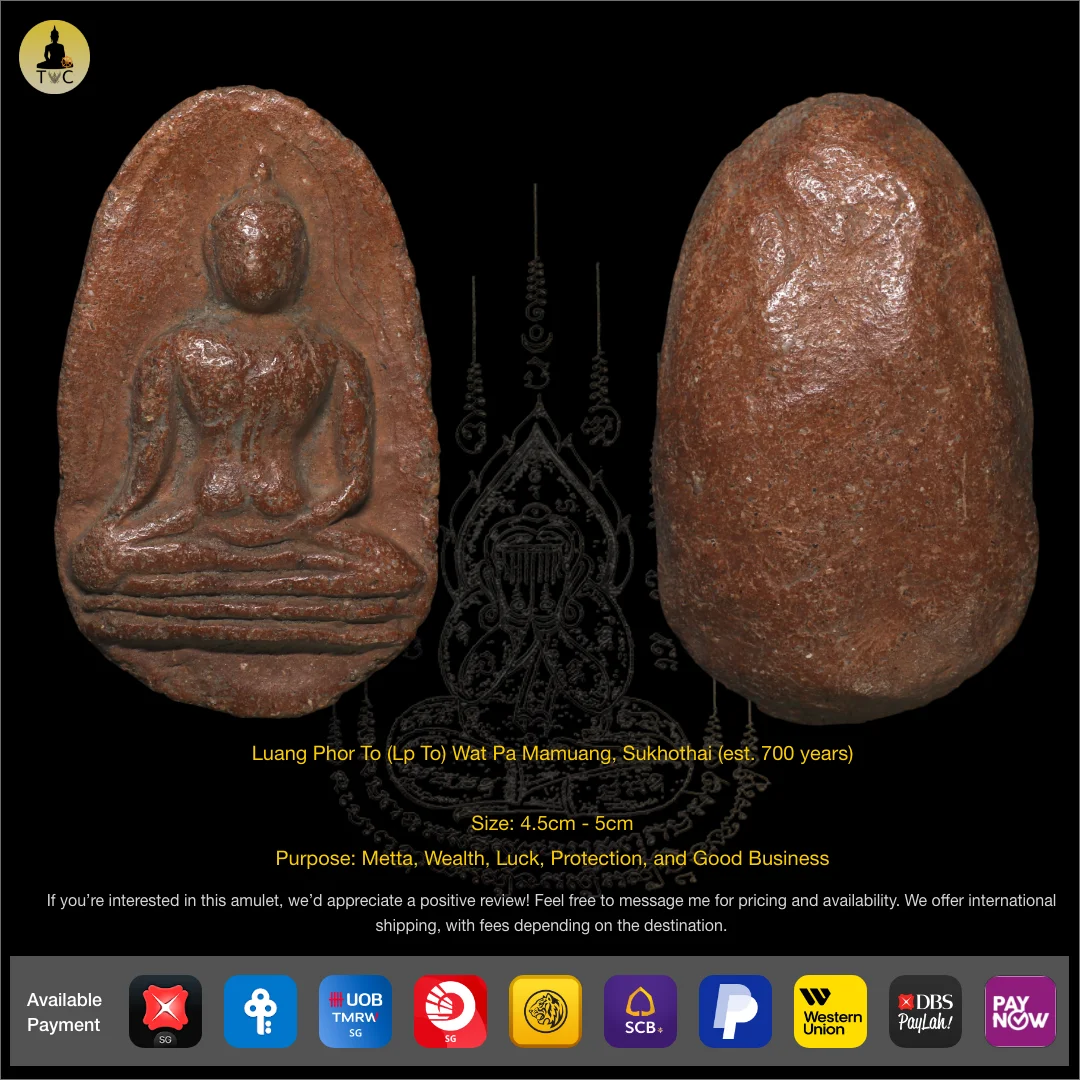
Rian Phra Luang Phor To (Lp Toh) Wat Phanan Choeng (三寶宮) BE2504
| Monk | Luang Phor To (Lp To) Wat Pa Mamuang, Sukhothai (est. 700 years) |
| Temple | Wat Phana Choeng |
| B.E. Year | 2504 |
| SKU | TAC-0218 |
Authentic Rian Phra Luang Phor To (Lp Toh) Wat Phanan Choeng (三寶宮) BE2504 by Luang Phor To (Lp To) Wat Pa Mamuang, Sukhothai (est. 700 years).
What is the Rian Phra Luang Phor To (Lp Toh) Wat Phanan Choeng (三寶宮) BE2504 by Luang Phor To (Lp To) Wat Pa Mamuang, Sukhothai (est. 700 years)?
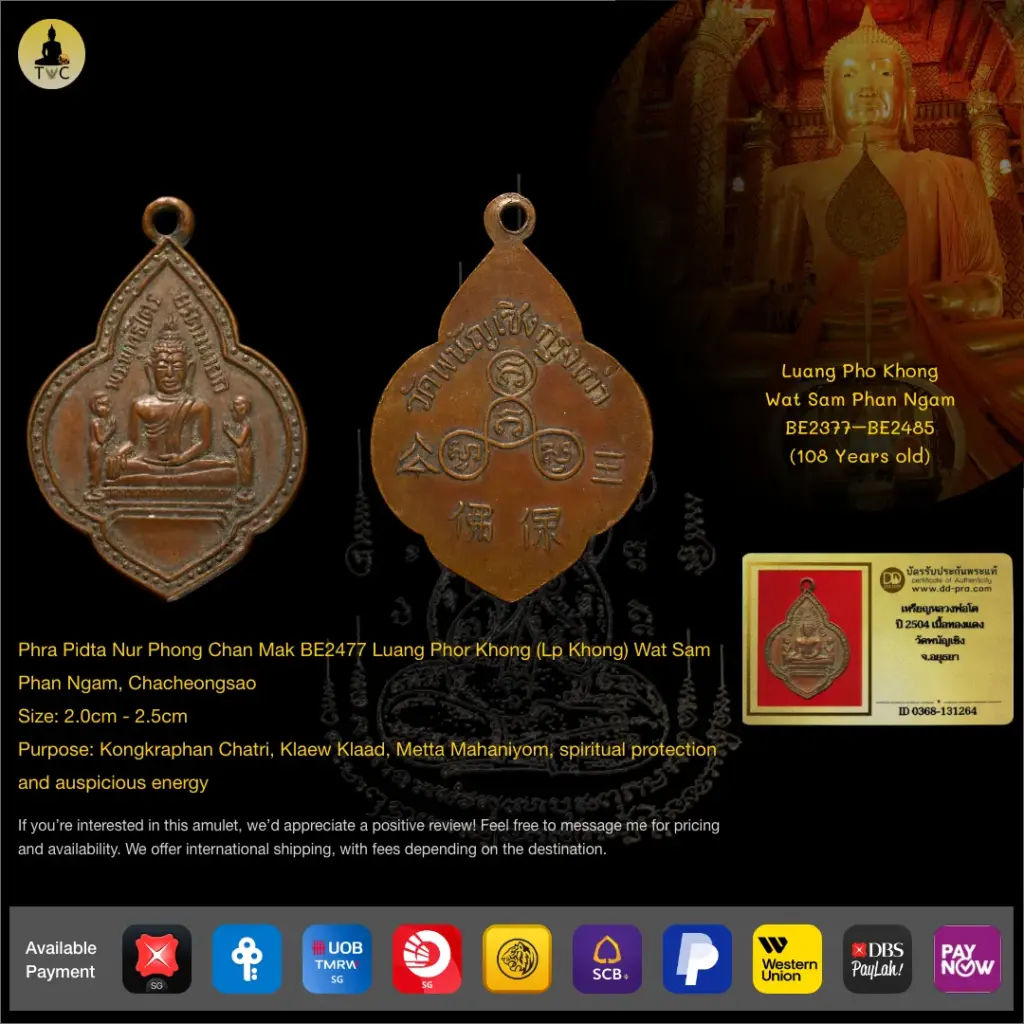
The Rian Phra Luang Phor To (Lp Toh) Wat Phanan Choeng (三寶宮) BE2504 by Luang Phor To (Lp To) Wat Pa Mamuang, Sukhothai (est. 700 years) is a copper medallion (rian — เหรียญ, a struck commemorative coin-form amulet) issued in BE2504 (CE1961) by Wat Phana Choeng, Ayutthaya. It centres on the principal seated image, Luang Pho To (Phra Phuttha Trai Rattana Nayok), and carries the Thai-Chinese cultural identity of Sam Po Kong (三寶公 / 三寶宮). A DD-Pra certificate is shown in the listing.
Wat Phana Choeng, Sam Po Kong, and where this rian sits in collector history
Wat Phana Choeng is traditionally dated to BE1867 (CE1324), which places it before the founding of Ayutthaya itself. Its principal image — Luang Pho To, formally titled Phra Phuttha Trai Rattana Nayok — has drawn devotees along the Chao Phraya river routes for centuries, particularly those engaged in trade and travel. Among Thai-Chinese communities, the temple is known as Sam Po Kong (三寶宮), and the image as Sam Po Kong (三寶公), reflecting a Mahayana framing of the Three Jewels: Buddha, Dhamma, Sangha.
That dual identity — Thai temple tradition and Thai-Chinese devotional culture — is exactly what makes a BE2504 rian from this temple meaningful to collectors across Singapore, Malaysia, Hong Kong, and Taiwan. The year 2504 (CE1961) sits in the early modern period of Thai temple production, before mass commercial runs became common. Within the broader Thai Buddhist amulet tradition, period-dated pieces from temples with continuous living devotion tend to hold their collector relevance better than generic issues.
The listing notes this as a commemorative temple issue. The full consecration (phutthaphisek — พุทธาภิเษก, the formal blessing ceremony) roster is not specified, which is typical for rian issued through Sangha-organised ceremonies rather than a named master-monk commission. Collectors treat this as “not specified” and work from what the documentation does confirm: the BE year, the temple, and the DD-Pra certificate.
Nuea, pim, and what to look at on the piece itself
The nuea (นวะ — material/substance) for this piece is Thong Daeng (copper). Copper-family rian from major Ayutthaya temples in the BE2500s era typically develop a natural surface oxidation and patina (ผิวพรรณ) that is consistent with six-plus decades of age. That patina, rather than a bright or artificial finish, is one of the first things an experienced eye looks for.
The pim (พิมพ์ — the mould or design template collectors use for authentication comparison) centres on the seated Luang Pho To image. Some issues from this temple include Thai script on the reverse and, in certain batches, Chinese characters referencing Sam Po Kong (三寶公). The listing describes this as a temple-linked commemorative piece with the Sam Po Kong cultural identity emphasised. Beyond the iconography, collectors focus on:
- Relief sharpness — a well-struck piece holds fine detail at the image edges; worn dies produce softer lines
- Edge condition — consistent with period production and storage, not filed or re-cut
- Surface tone — natural copper oxidation, not re-polished or artificially aged
- DD-Pra certificate — used as a practical provenance anchor when the temple batch record is not available
What the listing does not specify: exact alloy class beyond copper, total release quantity, and the named ceremony roster. Responsible collecting means noting those gaps rather than filling them in.
What collectors associate this piece with, and how value is framed
Rian connected to Luang Pho To at Wat Phana Choeng are traditionally carried for safe passage and stable livelihood — especially by those who travel frequently or work in trade. In Thai devotional framing, this sits under merit, metta (เมตตา — goodwill), and the protective presence of the Three Jewels, not as a fixed-outcome claim. Collectors in Chinese-speaking communities particularly associate the Sam Po Kong (三寶公) identity with protection for travel and harmonious conditions for business.
Value for this piece is anchored in three practical factors: the clearly stated BE2504 dating, the sustained cross-cultural demand tied to Sam Po Kong devotion, and the presence of DD-Pra certification. Without a confirmed mintage figure or named run (roon — รุ่น, a specific batch release), rarity cannot be stated precisely. Condition, patina consistency, and the quality of the certificate image all feed into collector pricing discussions.
This BE2504 copper rian from Wat Phana Choeng is one of the earlier modern-period pieces we carry with a DD-Pra certificate on file — the Sam Po Kong (三寶公) dual identity makes it consistently relevant to collectors across the Chinese-speaking markets we serve. For a collector looking for a documented BE2504 temple piece with cross-cultural significance, the combination of period dating and certification makes this a straightforward addition to a focused Wat Phana Choeng holding.
Attributes reflect Thai Buddhist devotional tradition and are not measurable claims.