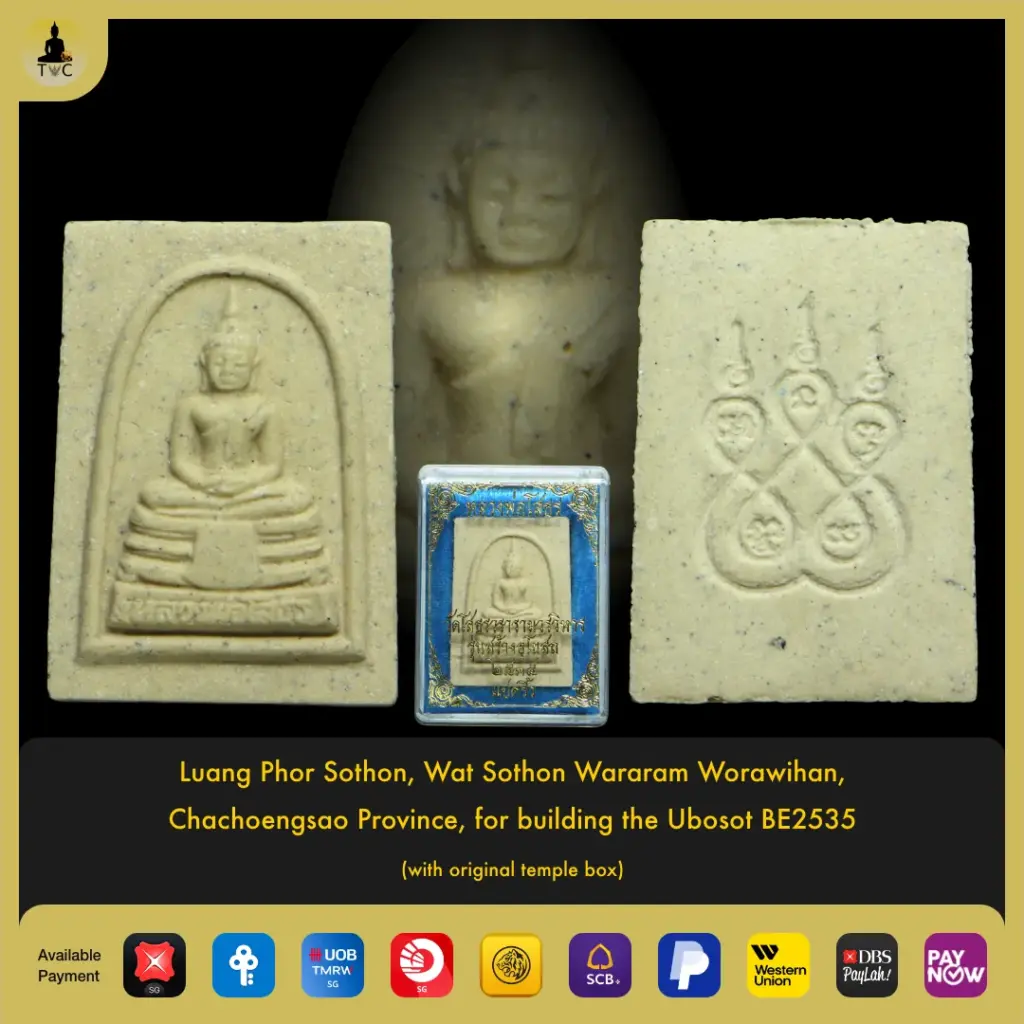
Luang Phor Sothon, Wat Sothon Wararam Worawihan, Chachoengsao Province, for building the Ubosot BE2535 (with original temple box)
S$10
S$18save S$8 (44%)
| Monk | Luang Phor Sothorn |
| Temple | Wat Sothorn |
| B.E. Year | 2535 |
| SKU | TAC-0294 |
Luang Phor Sothon, Wat Sothon Wararam Worawihan, Chachoengsao Province, for building the Ubosot BE2535 (with original temple box)
 Phra Luang Pu Thuad (Lp Thuad) Nur Wahn BE2550 Wat Kongkha Liap (Tha Sak), Nakhon Si Thammarat (425 Years Anniversary, 9 Days & 9 Grand Ceremonies)
 Phra Pang Umbat (Wednesday Buddha) BE2512 Luang Phor Tae (Lp Tae) Khongthong Wat Sam Ngam
 Phra Lp Thuad 龙婆托 (Shenzhen Version) Pim Lek (RED) BE2539 Phor Than Wan Apiyo Wat Saba You Blessed by Archan Nong Wat Sai Khao
 Phra Mahesuan Nur Tarkut BE2552 Luang Phor Tad (Lp Tad) Wat Chaina with original temple box
Each adds this amulet plus the offer at the bundle price — ready at checkout, or mention it when you enquire on WhatsApp.
Authentic Luang Phor Sothon, Wat Sothon Wararam Worawihan, Chachoengsao Province, for building the Ubosot BE2535 (with original temple box) by Luang Phor…
The Luang Phor Sothon, Wat Sothon Wararam Worawihan, Chachoengsao Province, for building the Ubosot BE2535 (with original temple box) by Luang Phor Sothorn is a special-edition amulet issued in BE 2535 (1992) by Wat Sothorn to raise funds for the construction of the temple’s grand ordination hall. Produced in multiple sub-series across materials including copper, brass, silver, and gold-plated and sacred-powder versions, each piece was distributed in an official temple-issued box and consecrated before the principal Buddha image.
Phra Phuttha Sothon — known to most devotees simply as Luang Phor Sothon — is the principal Buddha image at Wat Sothorn, a royal temple in Chachoengsao Province east of Bangkok. The image sits in the Mara Vichai posture, the hand-over-knee earth-touching gesture associated with the moment of the Buddha’s enlightenment. According to temple tradition, the image floated down the Bang Pakong River from the north during the Ayutthaya period, and came ashore only at the site where the temple now stands.
By the late 1980s the temple had outgrown its existing ordination hall. A major construction project was launched to build a new grand Ubosot capable of housing Luang Phor Sothon properly and accommodating the steady growth in devotees. The BE2535 batch was created specifically to fund that project — making it one of the more clearly documented purpose-built modern editions in the Thai Buddhist amulet tradition. Pieces from this run carry that provenance directly: the construction of the hall and the fundraising effort are part of the amulet’s recorded history.
The front of each piece carries an image of Luang Phor Sothon in the Mara Vichai posture, modelled on the principal image in the Ubosot. The reverse features either the temple emblem or a yant (sacred inscription), which varies by sub-series. Materials across the edition include copper, brass, silver, gold-plated finishes, and pressed sacred-powder versions — collectors refer to the material as the nuea (substance) of the piece, and matching nuea to the specific sub-series is a standard part of authentication.
The phutthaphisek (consecration ceremony) was a grand multi-day event held at Wat Sothorn. The abbot presided alongside senior monks drawn from surrounding provinces, with a large assembly of high-ranking monks from across Thailand participating in continuous chanting. Amulets were placed directly before the principal Luang Phor Sothon image throughout the ceremony. The rituals included invocations of protective katha, Metta Mahaniyom, and Klaew Klaad blessings. All pieces were then distributed in official temple-issued boxes — and it is those original boxes that matter most to collectors today.
Official temple code markings were applied for authenticity. Sharp detail on the face of Luang Phor Sothon, clear yant on the reverse, and intact temple marks are the three things a collector checks first on any specimen from this edition.
BE2535 is considered one of the more significant modern batches tied to a documented temple construction project. The original temple box is a key provenance marker — not just packaging, but confirmation the piece was distributed through official channels. A piece complete with its box carries more weight in the collector market than one without, all else being equal.
No external certificate is documented for this edition. Authentication rests on the physical characteristics of the piece and the original temple box.
This BE2535 piece is one of the more straightforward modern editions to place historically — it was issued specifically for the Ubosot construction at Wat Sothorn, so the provenance is documented, not assumed. What makes this example worth attention is the original temple box, which confirms official distribution and is increasingly difficult to find intact on the secondary market. For collectors building a Luang Phor Sothon reference set, a complete example with its original box is the version to hold.
Attributes reflect Thai Buddhist devotional tradition and are not measurable claims.