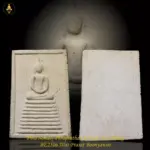
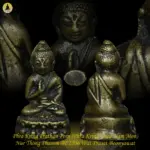
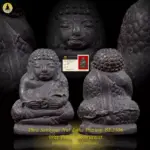
Phra Somdej Khanen Nur Phong BE2506 Wat Prasat Boonyawat Won 1st in competition
| Type | Phra Somdej |
| Temple | Wat Prasat |
| B.E. Year | 2506 |
| Material | Phong (Nur Phong) |
| Condition | Fair |
| Certificate | Competition |
| Competition | Won 1ST placing |
| SKU | TAC-0331 |
Phra Somdej Khanen Nur Phong BE 2506, Wat Prasat Boonyawat. First-place competition cert and box included. Authentic phong Somdej from Singapore dealer TAC.
What is the Phra Somdej Khanen Nur Phong from Wat Prasat Boonyawat, BE 2506?
The Phra Somdej Khanen Nur Phong BE 2506 is a sacred powder Somdej amulet from Wat Prasat Boonyawat, pressed in phong (sacred powder blend) and dated to BE 2506 / CE 1963. This specific example holds a first-place competition result, with the competition box and certificate included in the listing set — giving it a documented reference profile that most period pieces lack.
Why the competition certificate changes how collectors read this piece
In Thai amulet collecting, a competition result is not a guarantee of anything. What it does do is force a formal comparison environment — condition, pim (mould) identity, and presentation are placed side by side against other examples, and the piece either holds up or it does not. This one took first place. That record, backed by the physical box and certificate, means future collectors can read the piece faster and archive it more cleanly.
The broader Thai Buddhist amulet tradition has long used competition circuits as a secondary layer of reference alongside temple documentation. For a BE 2506 piece from Wat Prasat Boonyawat, that layer matters. The temple sits within a generation of sacred powder production that collectors find accessible — old enough to carry period character, recent enough to support organised comparison. A first-place result in that context is not decoration; it is a working reference point.
The phong body and what collectors actually look at
Nuea (material/substance) phong — a body formed from muan sarn (sacred powder blend) rather than metal — has its own reading discipline. You study surface maturity, how the mould detail has held, whether the edges have chipped or stayed coherent, and how the body has aged across front and back. It is a slower read than cast metal, and collectors who know phong pieces understand that consistency across the whole body is more telling than any single feature.
The Khanen designation is a naming distinction that helps identify the pim within the broader Somdej family from this temple. On the front, proportion matters — how the Buddha form sits within the layered base structure, and how composed the border spacing feels. The back gives you surface tone and body integrity. Together, front and back tell you whether the piece reads as coherent. On a competition-evaluated example, those details were already placed under scrutiny before the piece reached this listing.
- Surface maturity: Look for even ageing across the phong body, not localised discolouration.
- Mould clarity: The Khanen pim should show clean definition at the Buddha form and base layers.
- Edge condition: Structural stability at the borders is a standard check on any phong Somdej.
- Competition documentation: The box and certificate should be cross-referenced against the piece itself — they are part of the reference set, not separate from it.
Collectors associate Phra Somdej forms with calm protection, merit support, and mental steadiness — these are traditional beliefs within Thai devotional practice, not measurable claims. The Somdej format carries that meaning precisely because its visual language is restrained and composed rather than ornate.
We at TAC are listing this Phra Somdej Khanen in phong from Wat Prasat Boonyawat, BE 2506 — a piece that stands out specifically because of its first-place competition result, with the original competition box and certificate forming part of the set. For collectors working to build a documented reference collection, the combination of a named pim, a datable temple production period, and a formal competition record makes this a more archivable piece than most comparable listings at this price point.
Attributes reflect Thai Buddhist devotional tradition and are not measurable claims.