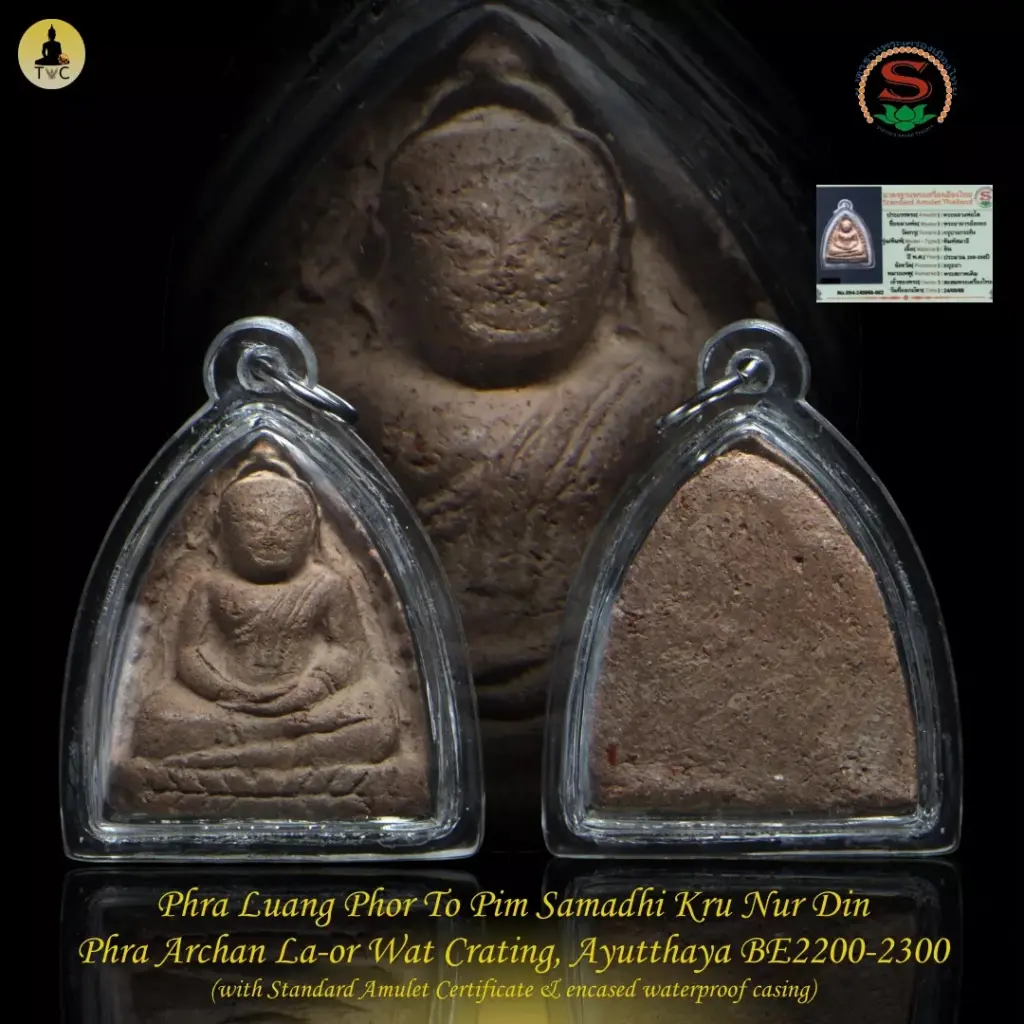
Phra Luang Phor To Pim Samathi Wat Bang Krathing Kru BE2100-2200
| Monk | Luang Phor To (Lp To) Wat Pa Mamuang, Sukhothai (est. 700 years) |
| Temple | Wat Bang Krathing |
| B.E. Year | 2100 |
| SKU | TAC-0474 |
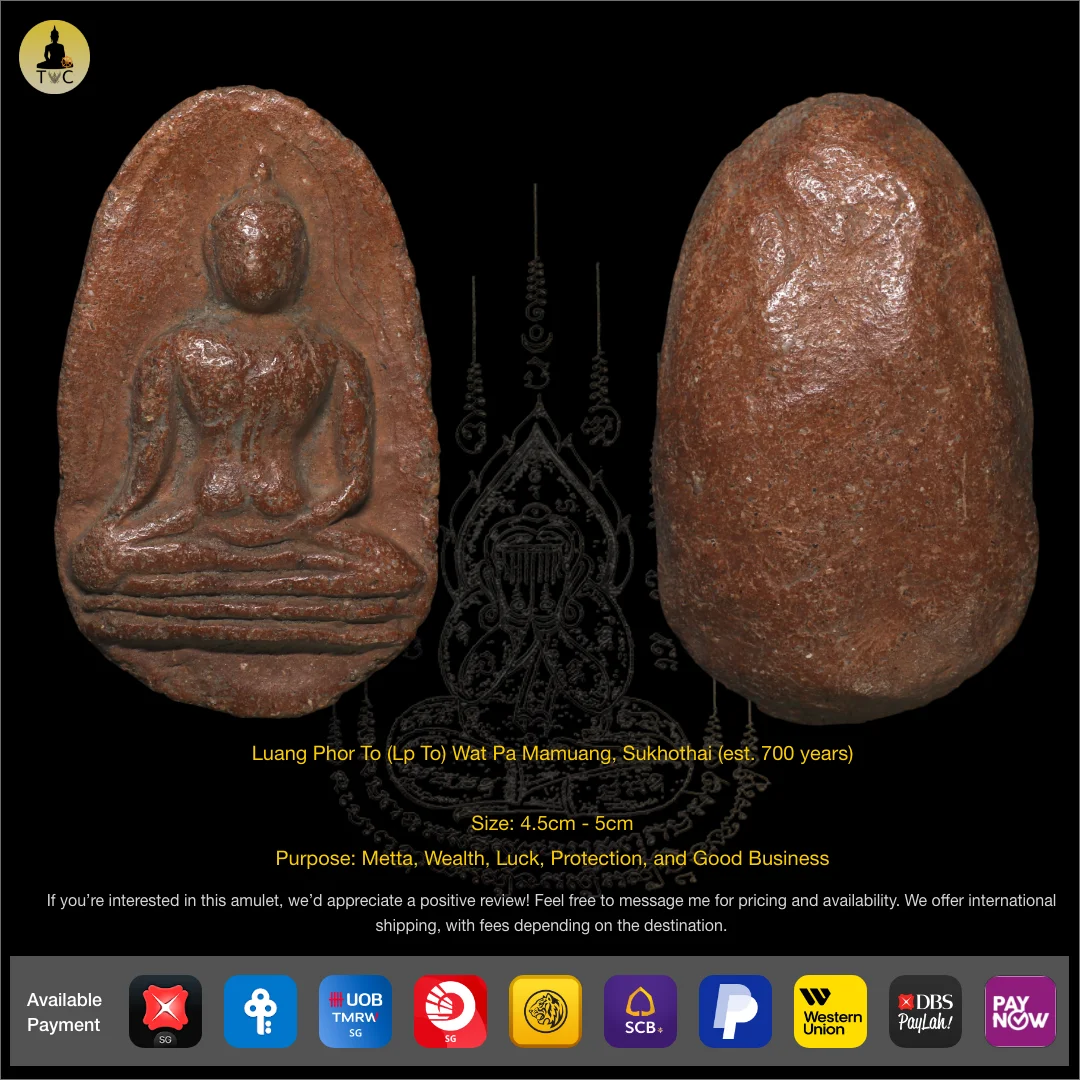
Authentic Phra Luang Phor To Pim Samathi Wat Bang Krathing Kru BE2100-2200 by Luang Phor To (Lp To) Wat Pa Mamuang, Sukhothai (est. 700 years).
What is the Phra Luang Phor To Pim Samathi Wat Bang Krathing Kru BE2100-2200 by Luang Phor To (Lp To) Wat Pa Mamuang, Sukhothai (est. 700 years)?
The Phra Luang Phor To Pim Samathi Wat Bang Krathing Kru BE2100-2200 by Luang Phor To (Lp To) Wat Pa Mamuang, Sukhothai (est. 700 years) is a late Ayutthaya-era amulet pressed in sacred earthen composite (nuea din — sacred clay matrix), finished with multiple lacquer passes and traces of gold leaf, and recovered from the kru (temple crypt) at Wat Bang Krathing, dated to approximately BE 2100–2200.
Wat Bang Krathing and where this piece comes from
Wat Bang Krathing carries a documented link to King Narai’s reign and the patronage of Phraya Siharat Dechochai. Local chronicles record stories of narrow escapes during conflicts with Burma — accounts that have long reinforced the temple’s standing as a site of protective sanctity. That reputation makes its kru finds significant beyond simple age.
The Pim Samathi pieces from this temple were enshrined in what collectors refer to as the Kru Nur Din — an earthen crypt beneath the principal Buddha image. Renovations around 1938 CE exposed original amulets together with their molds, giving scholars an unusually clear window into Ayutthaya consecration practice and workshop method. Subsequent thefts introduced stirred-hoard pieces into circulation, which is why differentiation between Ayutthaya originals and later Rattanakosin-period reissues matters so much to serious collectors. This is the kind of provenance complexity that sits at the heart of the broader Thai Buddhist amulet tradition.
Nuea, pim, and how this amulet was made
The matrix is a sacred earthen composite — nuea din — with visible micro-mineral inclusions. Natural shrinkage lines consistent with genuine age run across the body. That is one of the first things a collector checks: artificially aged pieces rarely replicate the organic pattern of those fissures.
The finish involved multiple lacquer passes over the clay body, with gold leaf applied selectively to recesses and high points. Over four centuries, the sheen has softened in the way lacquer does with genuine age — distinct from the brighter, more uniform surface on later reissues. The pim itself is the Samathi posture: Buddha in meditation, sometimes read within the Mara-Vijaya narrative. The base carries an inverted lotus profile typical of Ayutthaya workshop output.
The reverse bears what collectors call a betel-nut sheath impression — a distinctive back-mark widely read as either a workshop signature or a protective device. Authentic pieces show this mark with the same clay body and lacquer stratification as the obverse. Later reproductions tend toward smoother matrices, inconsistent reverse marks, and a lacquer sheen that reads as modern rather than aged.
What collectors look for and how this piece is certified
Authentication for a piece this old centres on physical evidence rather than paperwork alone. The key markers are consistent across the collector community:
- Earthen micro-fissures — organic, not uniform; pattern matches natural clay shrinkage over centuries
- Sintered edges — the rim shows crisp attrition from devotional handling, not mechanical damage
- Lacquer darkening — age-softened, stratified; later reissues show a brighter, more even coat
- Gold leaf retention — traces survive in protected recesses; high-point gilding worn but present
- Betel-sheath reverse mark — correctly formed, sharing the same material and patina as the face
- Iconometry — balanced torso, Ayutthaya-style facial abstraction; later pieces diverge on these proportions
Condition-wise, devotional wear is expected on any genuine kru piece. What commands a premium is intact iconometry and stable surface layers — not a pristine surface, which on a piece this age would itself be a red flag. No certificate is documented for this listing; authentication rests on material analysis and comparative study against known reference examples.
Collectors associate the Phra Luang Phor To Pim Samathi Wat Bang Krathing Kru BE2100-2200 with Klaew Klaad (aversion of danger) and Metta Mahaniyom (social grace and favour). These are the traditional attributions the temple and its lineage are known for, and they remain the primary reason collectors across the region pursue pieces from this kru.
We at TAC regard this Phra Luang Phor To Pim Samathi Wat Bang Krathing Kru BE2100-2200 as a meaningful piece for any collector with a serious interest in Ayutthaya-period earthenware amulets — the Kru Nur Din find at Wat Bang Krathing is one of the better-documented late Ayutthaya crypt recoveries, and pieces from it are increasingly hard to source with clear material integrity. No forensic certificate accompanies this piece, so the authentication commentary should stay grounded in the observable material markers described in the listing.
Attributes reflect Thai Buddhist devotional tradition and are not measurable claims.