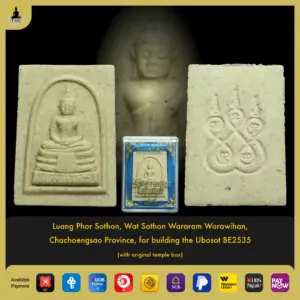
 Luang Phor Sothon, Wat Sothon Wararam Worawihan, Chachoengsao Province, for building the Ubosot BE2535 (with original temple box)
S$10
S$18save S$8 (44%)
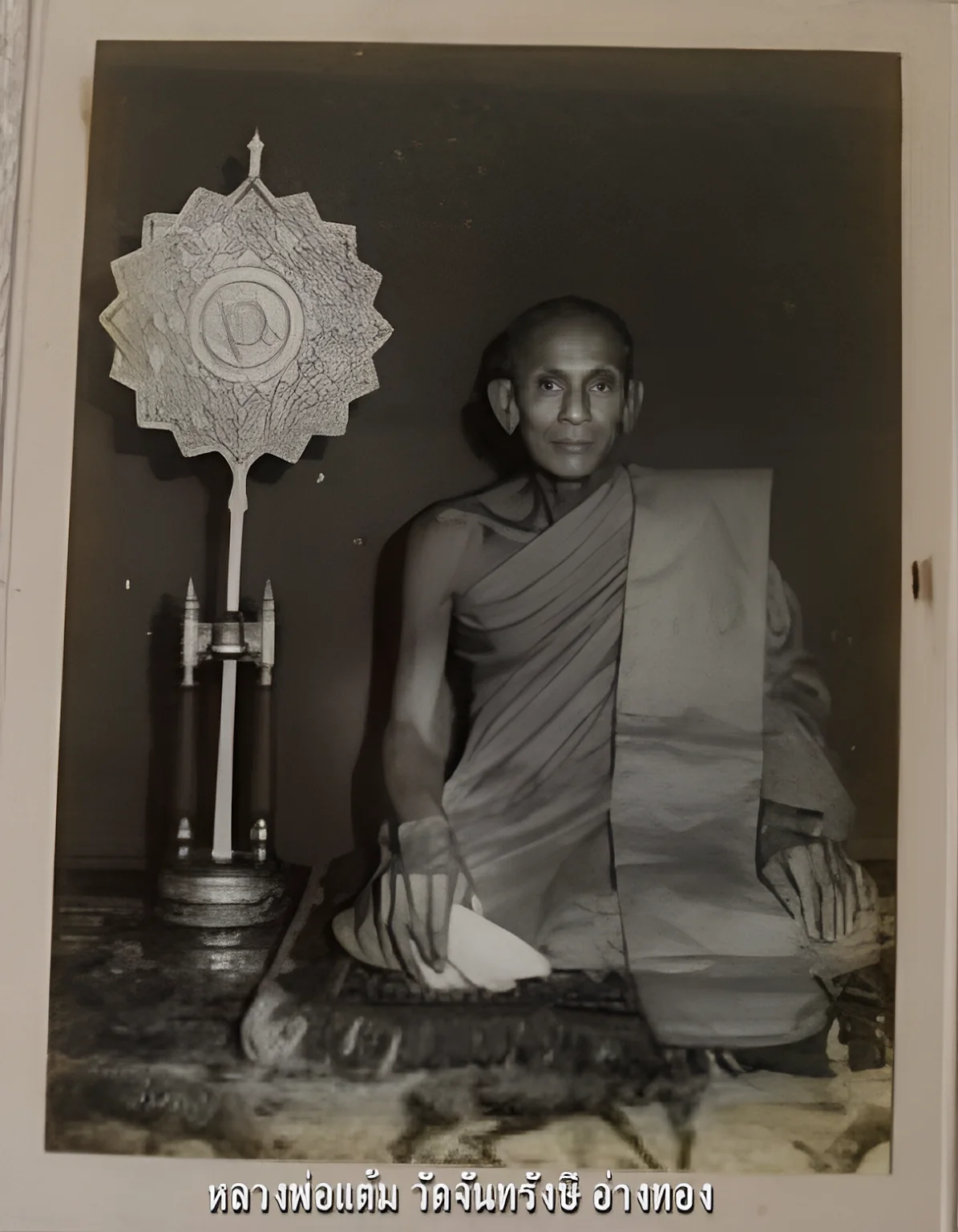
| Monk | Luang Phor Taem Wat Chanrangsi |
| Temple | Wat Sam Ngam |
| B.E. Year | 2509 |
| Material | Phong Namon |
| SKU | TAC-0054 |
Luang Phor Sothon, Wat Sothon Wararam Worawihan, Chachoengsao Province, for building the Ubosot BE2535 (with original temple box)
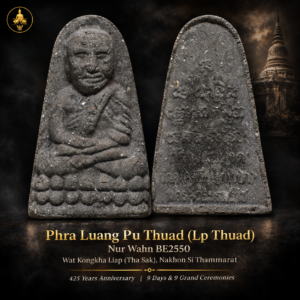 Phra Luang Pu Thuad (Lp Thuad) Nur Wahn BE2550 Wat Kongkha Liap (Tha Sak), Nakhon Si Thammarat (425 Years Anniversary, 9 Days & 9 Grand Ceremonies)
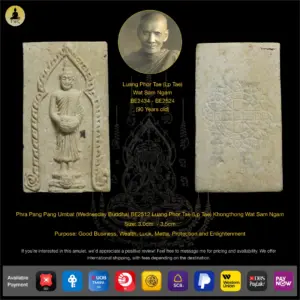 Phra Pang Umbat (Wednesday Buddha) BE2512 Luang Phor Tae (Lp Tae) Khongthong Wat Sam Ngam
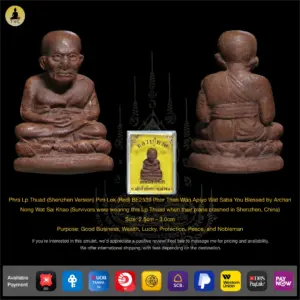 Phra Lp Thuad 龙婆托 (Shenzhen Version) Pim Lek (RED) BE2539 Phor Than Wan Apiyo Wat Saba You Blessed by Archan Nong Wat Sai Khao
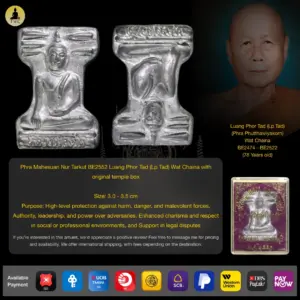 Phra Mahesuan Nur Tarkut BE2552 Luang Phor Tad (Lp Tad) Wat Chaina with original temple box
Each adds this amulet plus the offer at the bundle price — ready at checkout, or mention it when you enquire on WhatsApp.
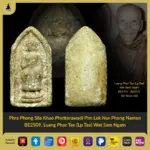
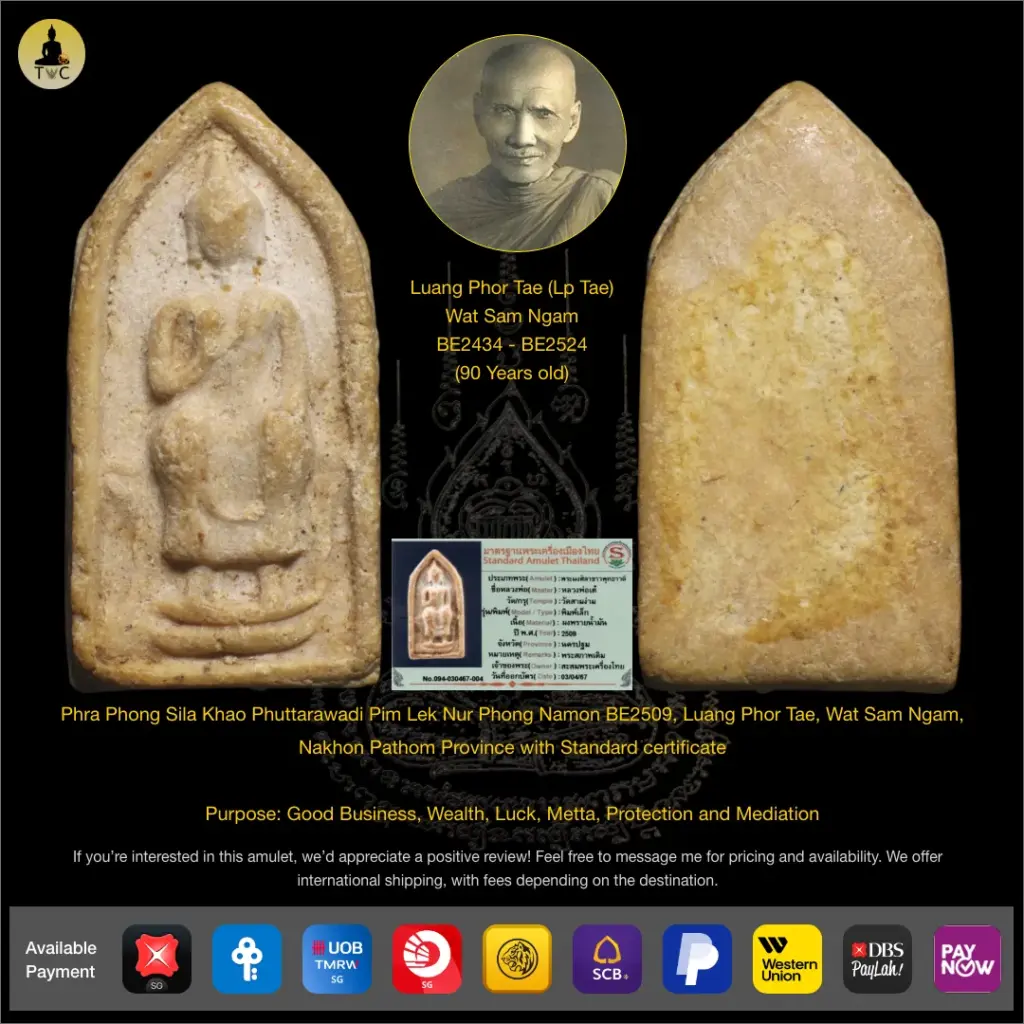
Authentic Phra Phong Sila Khao Phuttarawadi Pim Lek Nur Phong Namon BE2509, Luang Phor Tae, Wat Sam Ngam, Nakhon Pathom by Luang Phor Taem Wat Chanrangsi.
The Phra Phong Sila Khao Phuttarawadi Pim Lek Nur Phong Namon BE2509, Luang Phor Tae, Wat Sam Ngam, Nakhon Pathom by Luang Phor Taem Wat Chanrangsi is a compact sacred-powder amulet pressed in the small pim (mould) format, consecrated at Wat Sam Ngam in BE 2509 (1966 CE). The nuea — phong namon (sacred powder bound with oil) — gives the piece its characteristically smooth, slightly lustrous surface that collectors identify on sight.
“Sila Khao” carries a specific memory in Nakhon Pathom collector circles — a reference to an ancient Buddha image unearthed in the province, long associated with calm protection and stability. The Phuttarawadi, or Dvaravati-inspired, silhouette used here emphasises that same quality: upright, composed, teaching posture, nothing superfluous. In pim lek (small mould) format the piece sits comfortably under a casing for daily wear, which was the practical intention from the outset.
The nuea is phong namon — phong (sacred powder blend) mixed with namon (consecrated oil) as the binder rather than plain water. That oil content is what gives the surface a denser, slightly alive feel compared to a dry-pressed powder piece. Collectors who handle a lot of BE2509 Wat Sam Ngam material know to look for that characteristic tone: slightly warm, not chalky. It is one of the first tactile checks when assessing a piece from this run.
Luang Phor Taem Wat Chanrangsi brought a focused, methodical approach to pluk sek (consecration ceremony). He was known among contemporaries for assembling supportive monk lineages for major blessing sessions rather than conducting them in isolation — a practice that added weight to the ceremonies and is one reason pieces from his hand are still referenced in collector discussions today. The Thai Buddhist amulet tradition places considerable value on the abbot’s lineage and method, and Luang Phor Tae’s record at Wat Sam Ngam holds up to that scrutiny.
Wat Sam Ngam — formally Wat Aranyikaram — sits in Nakhon Pathom Province and has a consistent record in powder amulet production. The temple’s discipline around muan sarn (the sacred powder blend) preparation and consecration is part of why pieces from here circulate among serious collectors rather than staying at the casual end of the market. BE2509 pieces in particular are noted for their compact, field-ready format: made to be worn, not stored.
Authenticating a phong namon piece from this period comes down to a handful of physical markers. The powder grain should show consistency under magnification — not too coarse, not over-refined. Surface patina on a genuine BE2509 piece will have settled into a coherent tone rather than showing fresh-pressed edges. Edge integrity matters: the pim lek format has clean, defined borders when correctly struck, and those borders weather in a specific way over nearly sixty years.
This piece comes with a Standard Amulet Certificate for documentation reference. As with any certified piece, independent verification against physical references is always the collector’s best practice before acquisition.
We at TAC sourced this Phra Phong Sila Khao Phuttarawadi Pim Lek Nur Phong Namon BE2509 from Luang Phor Tae's Wat Sam Ngam line because BE2509 phong namon pieces in honest condition are genuinely harder to find than the market sometimes suggests. What appeals to me about this piece is the convergence of a disciplined consecrator, a temple with a real track record, and a nuea type that collectors can physically verify rather than take on faith. Priced at SGD 168 with a Standard Amulet Certificate included, it sits at a fair entry point for a dated powder piece with this lineage behind it.
Attributes reflect Thai Buddhist devotional tradition and are not measurable claims.