Phra Sum Thao Wan Kru BE2325 Luang Pu Thep Lok Udon, Wat Chana Songkhram
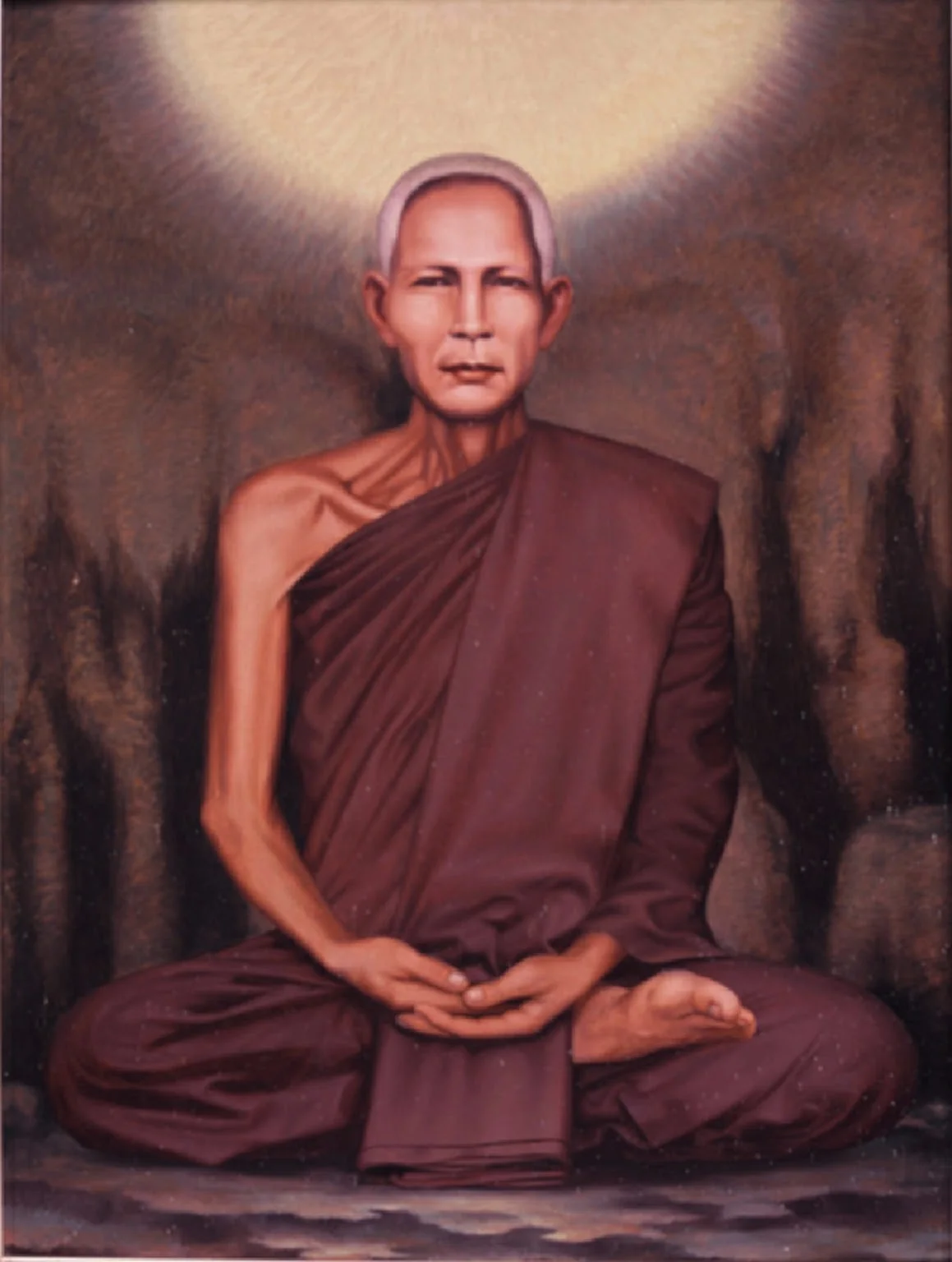
| Monk | Luang Pu Thep Lok Udon (Lp Thap) or Phra Uttara Thera, Wat Chana Songkhram |
| Temple | Wat Chanasongkram |
| B.E. Year | 2325 |
| SKU | TAC-0584 |
Authentic Phra Sum Thao Wan Kru BE2325 Luang Pu Thep Lok Udon, Wat Chana Songkhram by Luang Pu Thep Lok Udon (Lp Thap) or Phra Uttara Thera, Wat Chana…
What is the Phra Sum Thao Wan Kru BE2325 Luang Pu Thep Lok Udon, Wat Chana Songkhram by Luang Pu Thep Lok Udon (Lp Thap) or Phra Uttara Thera, Wat Chana Songkhram?
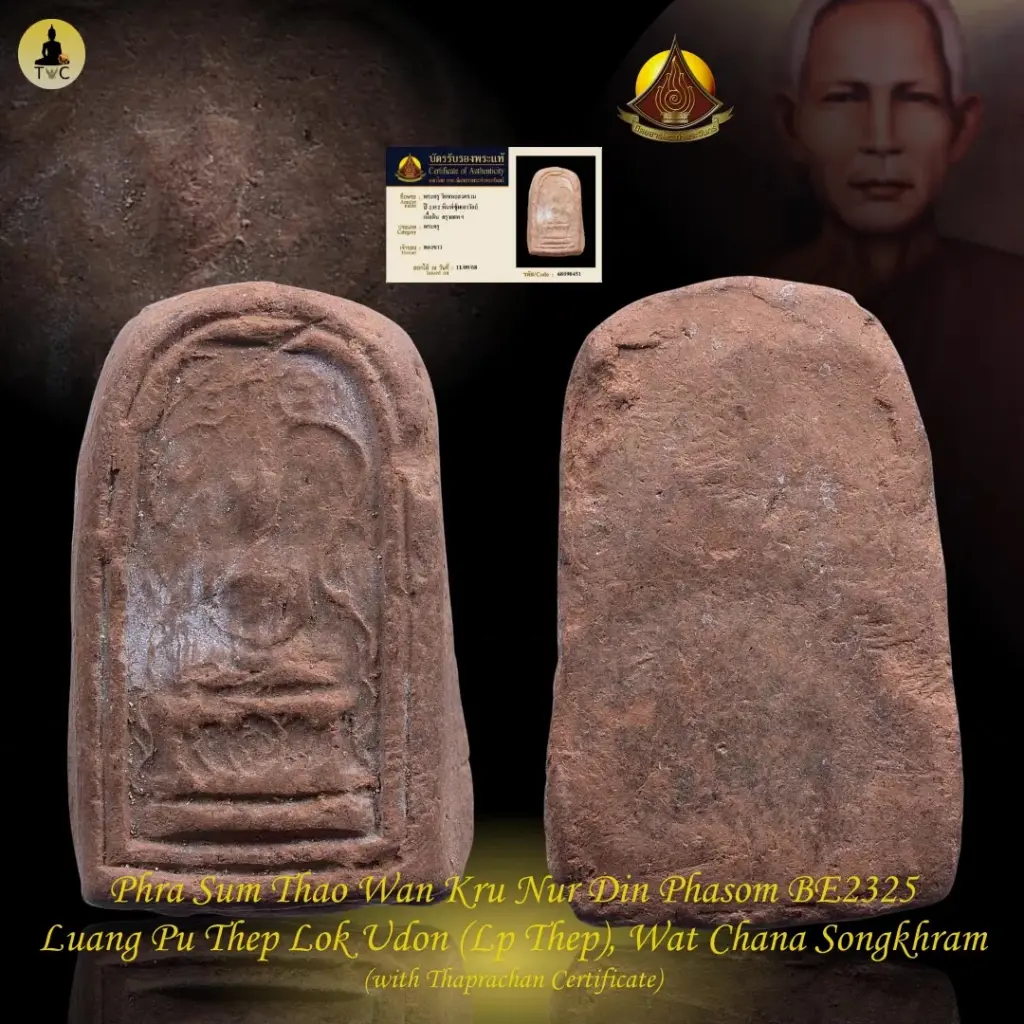
The Phra Sum Thao Wan Kru BE2325 Luang Pu Thep Lok Udon, Wat Chana Songkhram by Luang Pu Thep Lok Udon (Lp Thap) or Phra Uttara Thera, Wat Chana Songkhram is a hand-pressed earthen amulet in nuea (material/substance) Din Phasom — temple clay blended with sacred powders — produced at Wat Chanasongkram, Bangkok, circa BE 2325 (1782 CE), at the founding of the Rattanakosin era, and verified through Thaprachan certification.
Made at the start of the Rattanakosin period — why that matters
BE 2325 is 1782 CE, the very year King Rama I established Bangkok as the new capital. Amulets produced at that moment carry a specific weight for collectors: they predate standardised production, were made for immediate ritual and monastic use, and survive in genuinely small numbers. This piece comes from that precise window.
Wat Chanasongkram sat at the centre of the new capital’s monastic geography. It served as a refuge for clergy and a ritual seat for the incoming court, which means the sacred arts produced there in those early years were not peripheral workshop output — they were the temple’s core function. The Thai Buddhist amulet tradition traces many of its foundational forms back to exactly this kind of early Bangkok royal-monastery production.
The monk behind the piece and how it was made
Luang Pu Thep Lok Udon (Lp Thap) or Phra Uttara Thera, Wat Chana Songkhram upheld the ascetic and meditative discipline that defined the temple’s early character. His consecration work drew on wicha (esoteric method) that combined holy earth with relic dust — a formulation intended to produce amulets with lasting protective resonance rather than decorative appeal.
The nuea Din Phasom itself is an earthen composite: temple clay hand-blended with muan sarn (sacred powder blend) sourced from the monastery’s own ritual stores. Because the period predates high-temperature kiln firing, the body was shaped by hand and left to consolidate naturally. That process produces the subdued tone, soft tactile surface, and layered mineral inclusions that specialists now read as period markers. The pim (mould) follows the Sum Thao Wan Kru form — a meditative relief with symmetrical contour — and the phutthaphisek (Buddha-empowerment consecration) extended across multiple days under Luang Pu Thep Lok Udon’s direct supervision.
What collectors look at and how this piece is certified
Period pieces from this era are assessed differently from later pressed-powder editions. There is no lacquer finish, no takrut insert, no gammakan (committee) seal — authentication rests entirely on reading the material itself. Collectors and material specialists focus on a specific set of surface and structural characteristics.
- Consolidated body with no post-period repairs or fill
- Natural weathering consistent with early Bangkok earthen pieces along the edge profile
- Layered mineral inclusions visible on the reverse, typical of hand-prepared Din Phasom
- Faint period mold lines consistent with early Rattanakosin hand-pressing technique
- Subdued hue produced by natural consolidation rather than kiln firing
This example is verified through Thaprachan certification. Thaprachan is the recognised Bangkok market reference for early-period authentication, and its documentation here supports provenance for both private collectors and academic records. Classified as collector-grade early Rattanakosin artifact, examples in this state of preservation are seldom encountered in the open market.
We at TAC are offering this Phra Sum Thao Wan Kru BE2325 Luang Pu Thep Lok Udon, Wat Chana Songkhram — a hand-pressed nuea Din Phasom piece from the founding year of the Rattanakosin period, attributed to Luang Pu Thep Lok Udon (Lp Thap) of Wat Chanasongkram and verified through Thaprachan certification. For a collector focused on early Bangkok-era material, the combination of confirmed provenance, intact pim, and the historical moment this piece represents makes it genuinely difficult to replace.
Attributes reflect Thai Buddhist devotional tradition and are not measurable claims.