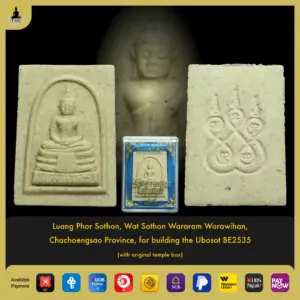
 Luang Phor Sothon, Wat Sothon Wararam Worawihan, Chachoengsao Province, for building the Ubosot BE2535 (with original temple box)
S$10
S$18save S$8 (44%)
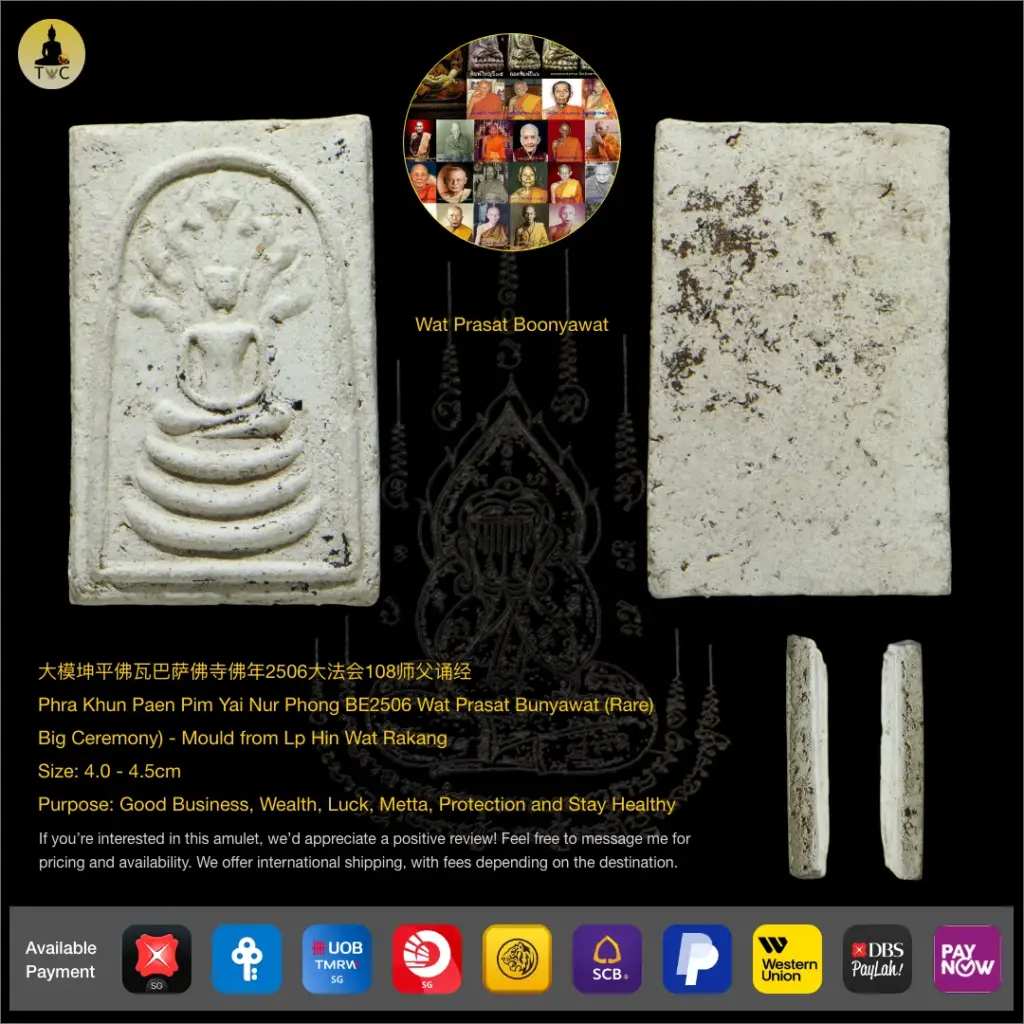
| Type | Phra Nak Prok |
| Monk | Luang Pu Hin Wat Rakang Kositaram |
| Temple | Wat Rakang |
| B.E. Year | 2506 |
| Material | Phong |
| SKU | TAC-0603 |
Luang Phor Sothon, Wat Sothon Wararam Worawihan, Chachoengsao Province, for building the Ubosot BE2535 (with original temple box)
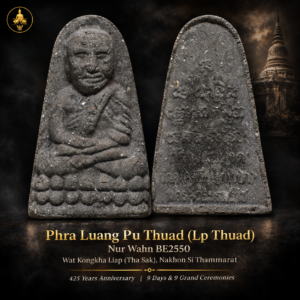 Phra Luang Pu Thuad (Lp Thuad) Nur Wahn BE2550 Wat Kongkha Liap (Tha Sak), Nakhon Si Thammarat (425 Years Anniversary, 9 Days & 9 Grand Ceremonies)
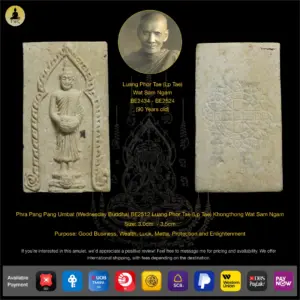 Phra Pang Umbat (Wednesday Buddha) BE2512 Luang Phor Tae (Lp Tae) Khongthong Wat Sam Ngam
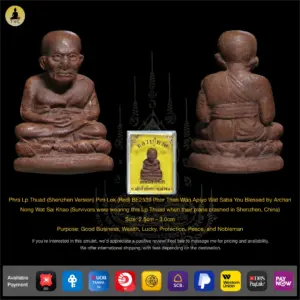 Phra Lp Thuad 龙婆托 (Shenzhen Version) Pim Lek (RED) BE2539 Phor Than Wan Apiyo Wat Saba You Blessed by Archan Nong Wat Sai Khao
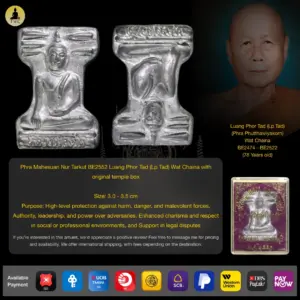 Phra Mahesuan Nur Tarkut BE2552 Luang Phor Tad (Lp Tad) Wat Chaina with original temple box
Each adds this amulet plus the offer at the bundle price — ready at checkout, or mention it when you enquire on WhatsApp.
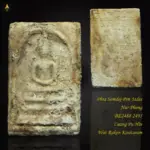
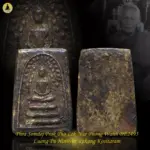
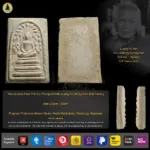
Authentic Phra Somdej Nak Prok (七龙佛) Nur Phong BE2506 Wat Prasat Boonyawat (Mould from Lp Hin Wat Rakang) by Luang Pu Hin Wat Rakang Kositaram. Phong.
The Phra Somdej Nak Prok (七龙佛) Nur Phong BE2506 Wat Prasat Boonyawat (Mould from Lp Hin Wat Rakang) by Luang Pu Hin Wat Rakang Kositaram is a phong (sacred powder) amulet pressed at Wat Prasat Boonyawat, Nakhon Sawan, in BE 2506. The pim (mould) was designed by Luang Pu Hin of Wat Rakang Kositaram, and the piece was consecrated in a grand multi-day phutthaphisek ceremony with senior monks from multiple regions.
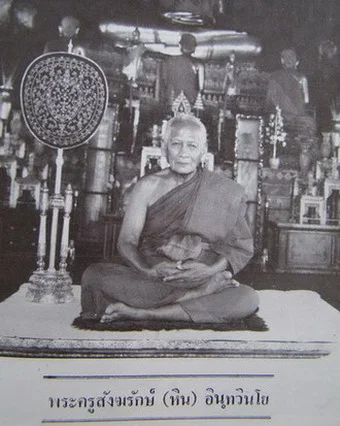
Luang Pu Hin Wat Rakang Kositaram was a monk at one of Bangkok’s most historically significant temples, known in collector circles for his mastery in classical amulet pim crafting. His involvement here was not merely nominal. He carved the mould used to press this batch, which is the detail that ties a Nakhon Sawan temple edition directly to the Wat Rakang lineage.
Wat Rakang carries substantial weight in the Thai Buddhist amulet tradition — it is the temple most associated with the classic Phra Somdej form. When a pim from Wat Rakang’s own monk is used at another temple’s ceremony, collectors pay attention. That crossover is precisely what distinguishes this piece from a standard provincial edition.
The nuea (material/substance) is phong — a blend of sacred powders known as muan sarn, incorporating Phong Wahn, broken old amulets, temple soil, and incense ash. The mixture was pressed using the Pim Yai (large mould) format. That size gives the image of the Nak Prok — the Buddha seated in meditation beneath a seven-headed naga — room to read clearly, and it is one of the points collectors check against reference pieces.
The phutthaphisek (consecration ceremony) was held at Wat Prasat Boonyawat in BE 2506. It ran across multiple days, with senior and guru monks from various regions participating in the chanting. The intent was metta (loving-kindness), protection, and spiritual fortification — the three qualities collectors most associate with the Nak Prok image type. Sacred chanting was conducted according to classical ritual practice throughout.
The Chinese-speaking collector community refers to this piece as 七龙佛, literally “Seven-Dragon Buddha.” The seven-headed naga sheltering the meditating Buddha is read as a symbol of fearlessness and protective power. That iconography resonates strongly with collectors in Singapore, Malaysia, Taiwan, Hong Kong, and mainland China — markets where this piece circulates regularly.
This is a limited-production batch from a single BE 2506 ceremony, and pieces from the LP Hin pim lineage do not surface often. The intersection of Wat Prasat Boonyawat provenance and a Wat Rakang-origin mould is the primary collector draw. Condition of the phong surface and sharpness of the Nak Prok image are the first things a serious buyer examines.
Key authentication points for this piece:
No certificate details are listed for this piece. Prospective buyers should verify authenticity through established collector networks or specialist grading services familiar with BE 2506 Nakhon Sawan editions.
This piece sits at an interesting crossover — a Nakhon Sawan temple edition pressed from a pim carved by Luang Pu Hin of Wat Rakang, which gives it relevance to two collector communities at once. At TAC we source LP Hin lineage pieces selectively, and the BE 2506 Wat Prasat Boonyawat batch comes up rarely in the market.
Attributes reflect Thai Buddhist devotional tradition and are not measurable claims.