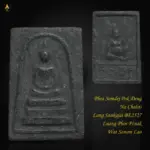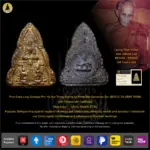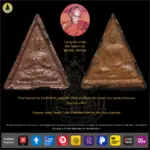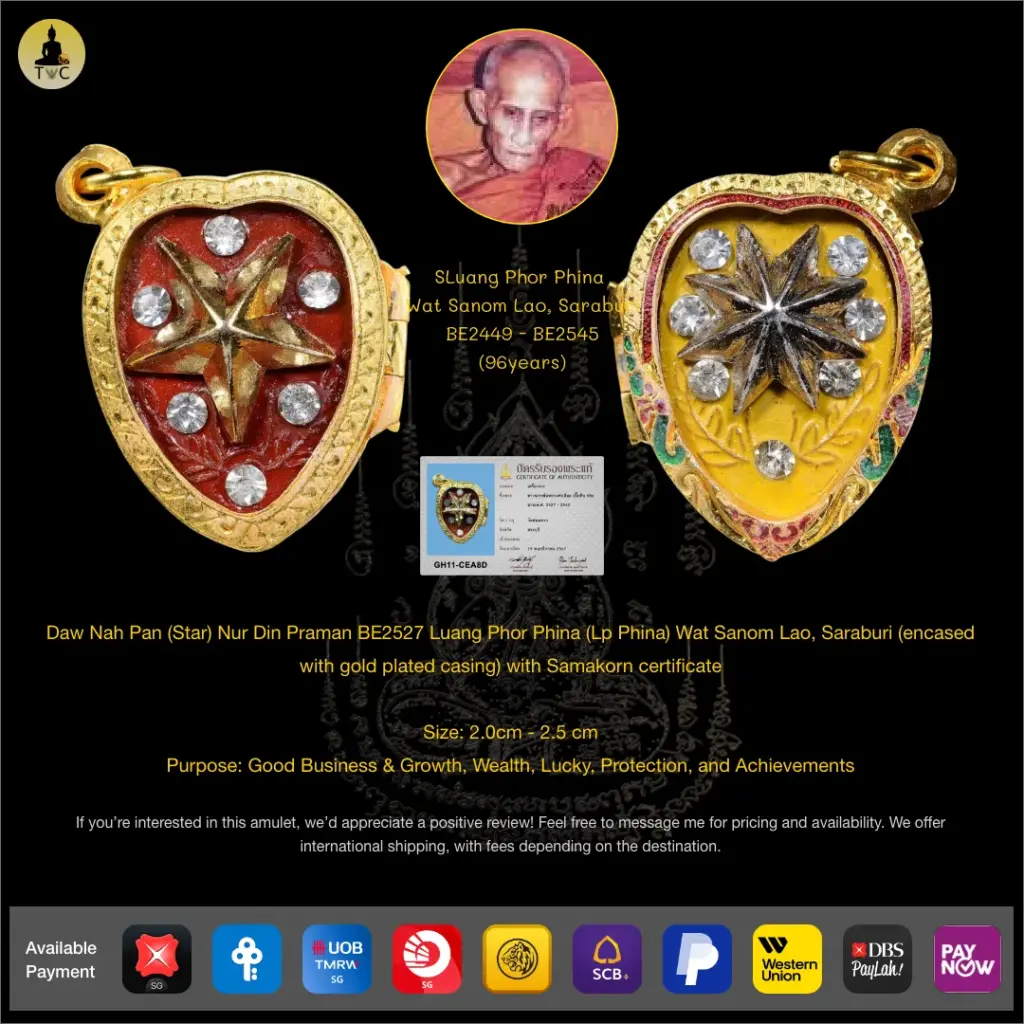
Daw Nah Pan (Star) Nur Din Praman BE2527 Luang Phor Phina (Lp Pinak) Wat Sanom Lao, Saraburi (encased with Italy Gold Casing)
| Monk | Luang Phor Phina (Lp Phina) Wat Sanom Lao, Saraburi |
| Temple | Wat Sanom Lao |
| B.E. Year | 2527 |
| Material | Din Praman |
| SKU | TAC-0666 |
Authentic Daw Nah Pan (Star) Nur Din Praman BE2527 Luang Phor Phina (Lp Pinak) Wat Sanom Lao, Saraburi (encased with Italy Gold Casing) by Luang Phor Phina (Lp…
What is the Daw Nah Pan (Star) Nur Din Praman BE2527 Luang Phor Phina (Lp Pinak) Wat Sanom Lao, Saraburi (encased with Italy Gold Casing) by Luang Phor Phina (Lp Phina) Wat Sanom Lao, Saraburi?
The Daw Nah Pan (Star) Nur Din Praman BE2527 Luang Phor Phina (Lp Pinak) Wat Sanom Lao, Saraburi (encased with Italy Gold Casing) is a star-form sacred clay amulet created by Luang Phor Phina (Lp Phina) Wat Sanom Lao, Saraburi in BE 2527 (1984). Pressed from nuea (material/substance) Din Praman — a sacred clay blend — at Wat Sanom Lao, Saraburi Province, it comes with a Samakorn certificate and is presented in an Italy Gold casing.
Luang Phor Phina Piyatharo and the line that produced this piece
Luang Phor Phina (Lp Phina) Wat Sanom Lao, Saraburi — full dhamma name Piyatharo — is the monk behind this edition. His amulet lines are closely identified with Wat Sanom Lao in Saraburi Province, and the Daw Nah Pan series sits among his more immediately recognisable creations. The star pim (mould form collectors authenticate against) is uncommon across Thai amulet output, which is part of why this line has maintained steady collector attention since the 1980s.
Luang Phor Phina stated three purposes when creating this edition: protection for devotees against harm and misfortune, support for wealth flow and opportunity, and funding for temple restoration and construction at Wat Sanom Lao. That dual function — devotional and practical — is standard for merit-based amulet editions of this period.
Din Praman nuea, the star form, and how this piece was made
Din Praman translates broadly as sacred or consecrated clay. In Luang Phor Phina’s Daw Nah Pan line, this nuea is described as a blend of clay sourced from auspicious locations, herbal powders selected for protective properties, holy ashes gathered from previous ceremonies, and pollen or flower powders used to strengthen metta mahaniyom (loving-kindness and social harmony) character. That combination gives the piece a distinctly earthy, grounded quality in hand — different from resin or metal runs.
The clay blend is pressed into the star-shaped pim, then consecrated through chanting and meditation under Luang Phor Phina’s supervision, with timing aligned to complete the blessing cycle. Within the broader Thai Buddhist amulet tradition, this kind of phutthaphisek (consecration ceremony) is what separates a ritual object from a decorative one in the eyes of serious collectors. The Italy Gold casing on this example preserves the clay surface and adds display presentation without altering the amulet itself.
What collectors look for and how this example is certified
The Daw Nah Pan pim is distinctive enough that an experienced collector can orient quickly: the star outline, the surface texture of the Din Praman nuea, and the detail work on the face side are the primary reference points. Condition of the clay edges matters — original press lines should still read clearly.
- Pim check: Star form should be sharply defined with no signs of modern re-pressing or surface restoration.
- Nuea character: Authentic Din Praman from this period shows consistent clay grain and aging appropriate to a 1984 piece.
- Certificate: This example carries a Samakorn (สมาคม) certificate — a recognised collector-assurance layer for this line.
- Casing: Italy Gold casing is fitted around the amulet; inspect that the casing does not obscure authentication details on reverse.
No certificate eliminates the need for hands-on assessment, but the Samakorn certificate here provides a documented reference point that most collectors in this region will accept as a credible starting position.
We at TAC are offering this Daw Nah Pan (Star) Nur Din Praman BE2527 by Luang Phor Phina Piyatharo of Wat Sanom Lao — a star-form piece that stands out within his line for its unusual pim and the consistent collector following it has built since 1984. The combination of a clearly identified monk, a documented Samakorn certificate, and the Italy Gold casing presentation makes this a straightforward piece to explain to both newer collectors and experienced buyers who already know the Wat Sanom Lao line.
Attributes reflect Thai Buddhist devotional tradition and are not measurable claims.