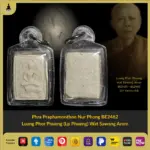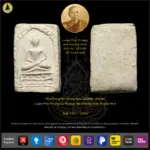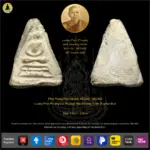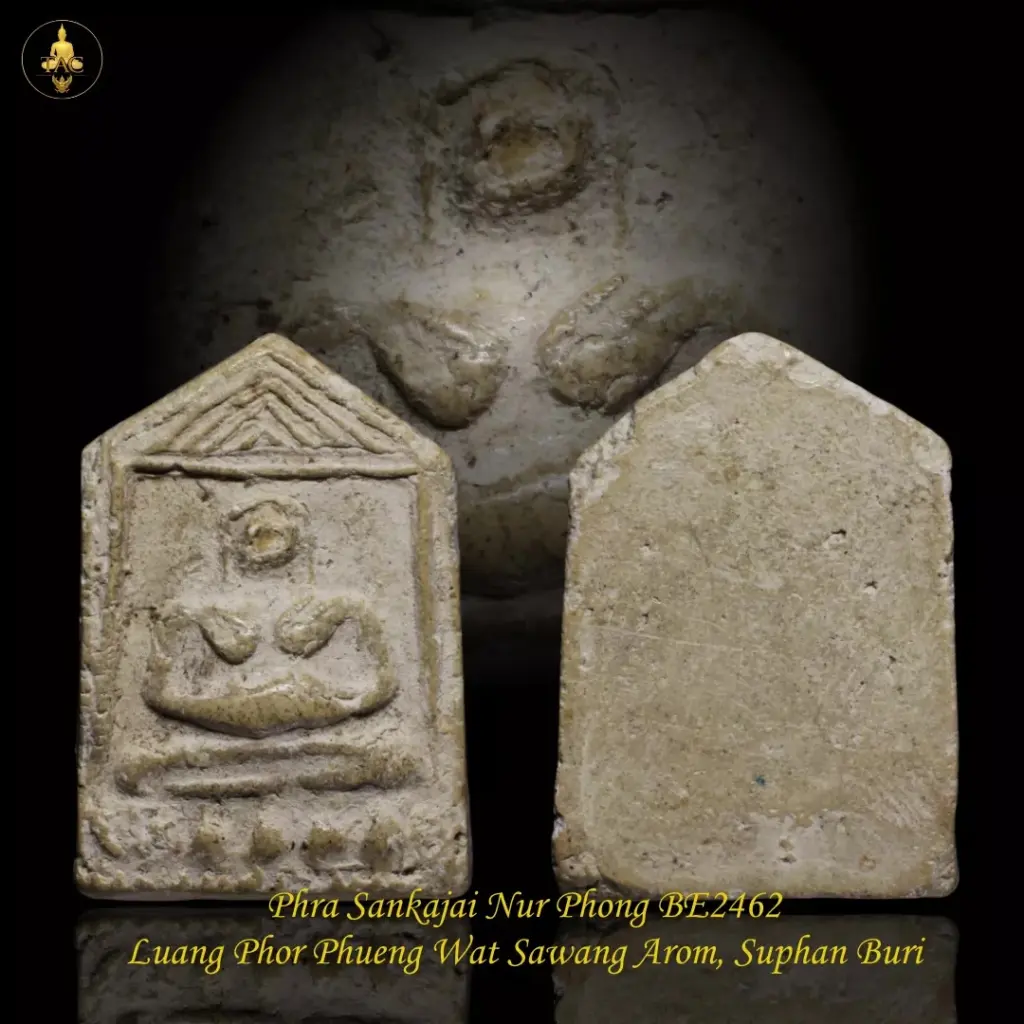
Phra Sankajai Nur Phong BE2462 Luang Phor Phueng Wat Sawang Arom, Suphan Buri
| Type | Phra Sankajai |
| Monk | Luang Phor Phueng (Lp Phueng) Wat Sawang Arom, Supan Buri |
| Temple | Wat Sawang Arom |
| B.E. Year | 2462 |
| Material | Phong |
| SKU | TAC-0677 |
Authentic Phra Sankajai by Luang Phor Phueng (Lp Phueng) Wat Sawang Arom, Supan Buri. Old-era phong, BE 2462, Song Phi Nong lineage. Available at TAC Singapore.
What is the Phra Sankajai by Luang Phor Phueng (Lp Phueng) Wat Sawang Arom, Supan Buri?
The Phra Sankajai Luang Phor Phueng (Lp Phueng) Wat Sawang Arom, Supan Buri is an old-era sacred powder amulet pressed in phong (nuea phong — sacred powder blend) and dated BE 2462. Attributed to Luang Phor Phueng (Lp Phueng) Wat Sawang Arom, Supan Buri of Wat Sawang Arom, Suphan Buri, it sits within the classical yantra-powder tradition and the Song Phi Nong lineage narrative that collectors associate with early 20th-century Suphan Buri sacred powder culture.
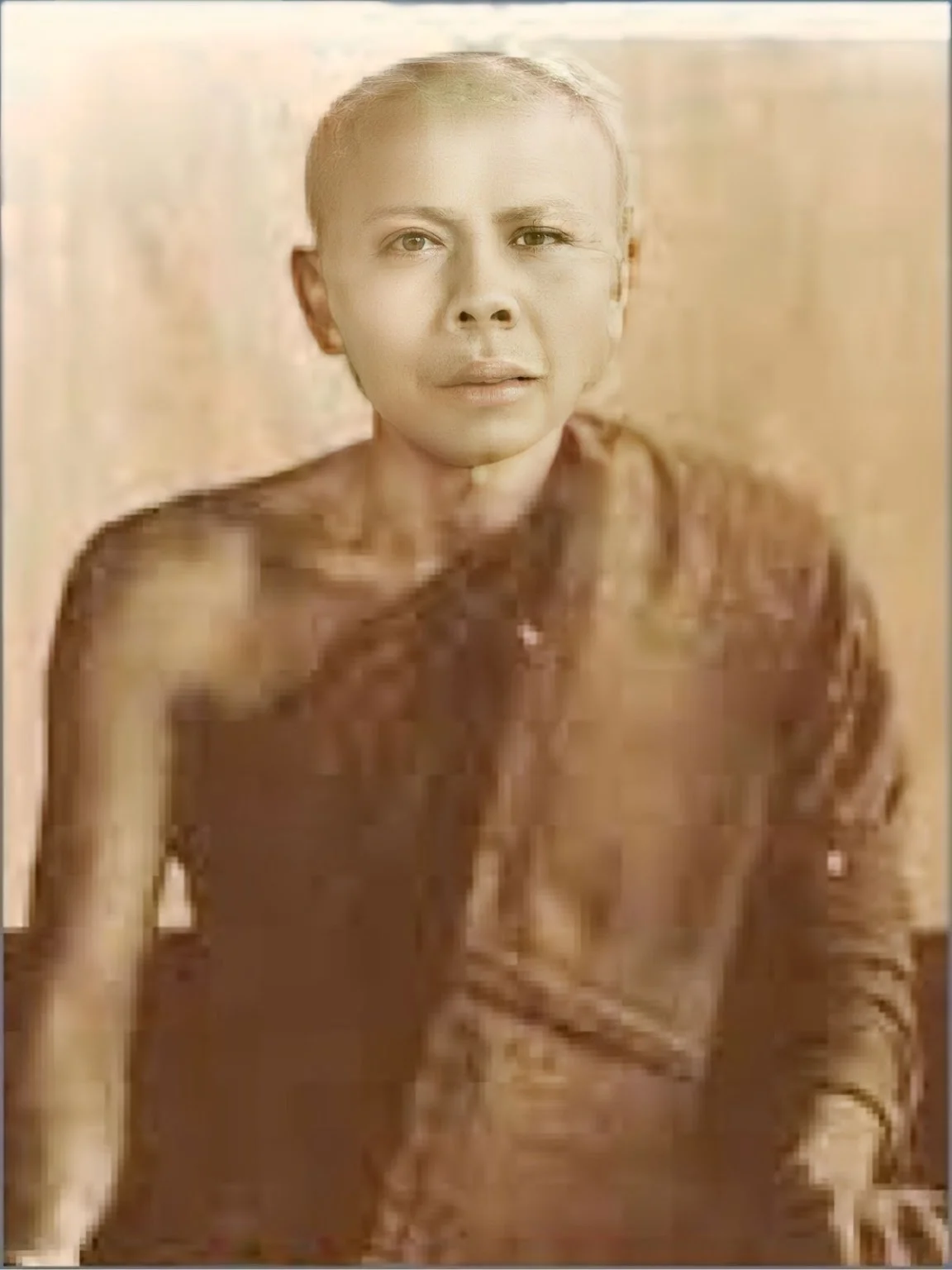
Luang Phor Phueng, Wat Sawang Arom, and the Song Phi Nong lineage
In collector circles, pieces attributed to Luang Phor Phueng are almost always discussed together with Amphoe Song Phi Nong, Suphan Buri — the area where his practice was rooted. The lineage narrative that circulates most widely places him in a shared training environment with Luang Phor Sod of Wat Paknam, including Vipassanā study under the same teacher and time spent in the same kuti. Whether or not every detail of that account can be independently verified, it frames Luang Phor Phueng as part of a rigorous meditation-and-powder discipline, not simply a provincial temple figure.
That context matters when you are reading a BE 2462 piece. The early 20th century was a period when sacred powder-making in Suphan Buri was practised under strict conditions — sustained chanting, controlled access to the printing area, and a distribution model that was strictly one piece per devotee, not sold and not handed out freely. Collector accounts also describe remaining amulets being sealed beneath the principal Buddha image after the ubosot was completed, then opened only decades later. That “sealed era” chapter is part of why pieces from this period are seldom seen openly in today’s market.
The phong: how old-era yantra powder is understood by collectors
Nuea phong here refers to the classical phra phong boran (old-era sacred powder) approach. In the tradition described around this lineage, the powder is not a simple mixture of temple materials. Sacred syllables are written in chalk, chanted over, and erased repeatedly — the residue accumulating as what devotees call phong wiseht, powder charged through intent and mantra repetition. Four powder systems come up constantly in collector talk around this lineage: Itthije (อิทธิเจ), Pathamang (ปถมัง), Piyo (พิโย), and Maharach (มหาราช) — each understood as a distinct mantra framework rather than a raw ingredient.
Piyo is most often discussed in connection with metta (loving-kindness, social warmth), while Itthije tends to come up alongside protection themes — kongkrapan and klaewklad intentions in the belief sense. This is the Thai Buddhist amulet tradition at its most text-based: the powder carries the accumulated energy of sustained ritual practice, and the amulet’s value in collector terms is inseparable from that background.
For the pim (mould — the form collectors authenticate against), Phra Sankajai is recognisable by the rounded, full-bodied seated figure. On an old powder piece, what you are reading across the three standard angles is consistency: how the mould lines sit on the front, how the back surface ages, and what the edge profile and thickness tell you about wear pattern and era. Uneven or selective ageing is a flag. Consistent dryness and surface character across front, back, and side is the positive cue.
What a collector looks for and how this piece is presented
There is no third-party certificate recorded for this piece. That is a straightforward fact, and serious collectors factor it in. What the piece does carry is the supporting framework of collector narrative: the Song Phi Nong lineage account, the BE 2462 dating, the classical powder tradition, and the “sealed storage” distribution story. For old-era phra phong, those narratives are part of how pieces are contextualised — but they are not a substitute for reading the physical evidence yourself.
- Surface ageing: look for consistent dryness, natural patina, and powder body that has settled evenly — not selectively worn.
- Mould coherence: pim lines should read clearly on the front; depth and edge profile should be consistent across the full piece.
- Era cues: old powder pieces from this period do not look or feel like modern pressings — the body, weight distribution, and surface texture all carry era character that experienced hands can read.
- Reference matching: cross-check against documented examples from the same lineage where available, understanding that exact batch details for pieces this age are not always fully documented.
The rarity case here rests on era and lineage, not volume scarcity in the commercial sense. A piece pressing from BE 2462, tied to a strict ritual production culture and a one-piece-per-devotee distribution model, simply does not move through the open market often. That is the honest basis for the collector interest.
This is one of the older phong pieces we carry at TAC — BE 2462 from Wat Sawang Arom, Suphan Buri, attributed to Luang Phor Phueng within the Song Phi Nong lineage narrative and the classical Itthije/Piyo powder tradition. For a collector focused on early 20th-century Suphan Buri sacred powder culture, this era and lineage combination is genuinely hard to find openly offered today.
Attributes reflect Thai Buddhist devotional tradition and are not measurable claims.