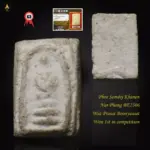
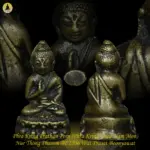
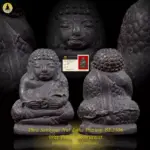
Phra Somdej Phraprathan 9 Chan Nur Phong BE2506 Wat Prasat Boonyawat
| Type | Phra Somdej |
| Temple | Wat Prasat |
| B.E. Year | 2506 |
| Material | Phong |
| SKU | TAC-0764 |
Authentic Phra Somdej Phraprathan 9 Chan, nuea phong, BE 2506, Wat Prasat Boonyawat. Entry-level Somdej tower format. SGD 138. Singapore dealer TAC.
What is the Phra Somdej Phraprathan 9 Chan from Wat Prasat, BE 2506?
The Phra Somdej Phraprathan 9 Chan is a nuea phong (sacred powder) amulet pressed in BE 2506 at Wat Prasat Boonyawat. It follows the classic Somdej-tower format with nine distinct tiers, giving collectors a clear structural anchor for identification and comparison. No certificate accompanies this piece.
The Phraprathan 9 Chan pim and what makes it distinct
Pim refers to the mould collectors authenticate against, and the Phraprathan 9 Chan pim is one of the more readable formats in Somdej collecting. Nine clearly stepped tiers give the composition a strong vertical rhythm. Tier spacing, shoulder geometry, the main Buddha silhouette, and base-line proportion are the four reference points collectors check first.
This piece is pressed in nuea phong — muan sarn (sacred powder blend) compacted into the mould under pressure. Reading a phong piece means looking at surface density, the way fine pores distribute across the face, how raised points soften with age, and whether the side profile feels consistent with the stated era. On a well-settled example, tone deepens naturally into recesses without any sign of artificial cleaning or enhancement.
- Tier rhythm: spacing and symmetry should be even across all nine levels.
- Powder surface: compact press, calm tone, fine pores — no harsh abrasion marks.
- High-point wear: natural softening at the Buddha’s robe edges and tier corners.
- Edge profile: side thickness and texture should read consistently with the front and back.
Wat Prasat Boonyawat and the BE 2506 context
Wat Prasat Boonyawat is the temple behind this piece, and the stated production year is BE 2506 — 1963 in the Western calendar. Amulets from that period sit in the broader Thai Buddhist amulet tradition that saw a significant wave of Somdej-format powder pieces produced across Bangkok-region temples during the mid-twentieth century. Condition and documentation from that era vary considerably, which is why photo coverage — front, back, and side — carries real weight when comparing examples.
This listing is attributed to Wat Prasat Boonyawat by name and year. The responsible collector approach is to anchor on what is stated and what is visible: temple, year, pim structure, and powder behaviour. There is no accompanying certificate for this piece, so comparison against known Wat Prasat Boonyawat references from BE 2506 is the primary authentication path.
What a collector should know at this price point
At SGD 138, this is an entry-level piece — practical for collectors building documented examples of mid-century Somdej-format phong amulets rather than those chasing niyom (collector-standard reference) grades. The clean 9 Chan layout means it photographs clearly and sits well alongside other Somdej-tower pieces in a reference collection.
Rarity is always a function of what is circulating, so it is better treated as a documentation piece than a scarcity play at this tier. What it does offer is a legible pim, a stated temple and year, and full photo angles for comparison — which is a reasonable starting point for a collector who wants a recognisable Somdej format without heavy entry cost.
This is a nuea phong Phra Somdej in the Phraprathan 9 Chan format, dated BE 2506 and attributed to Wat Prasat Boonyawat — a clean mid-century Somdej-tower piece at an accessible price point of SGD 138. We at TAC price this as a practical documentation piece for collectors building a reference set of Bangkok-region phong Somdej from the 2500s era — the legible 9 Chan pim and full photo coverage are the main draws.
Attributes reflect Thai Buddhist devotional tradition and are not measurable claims.