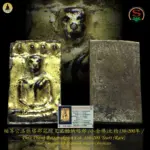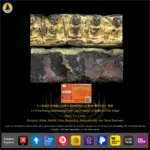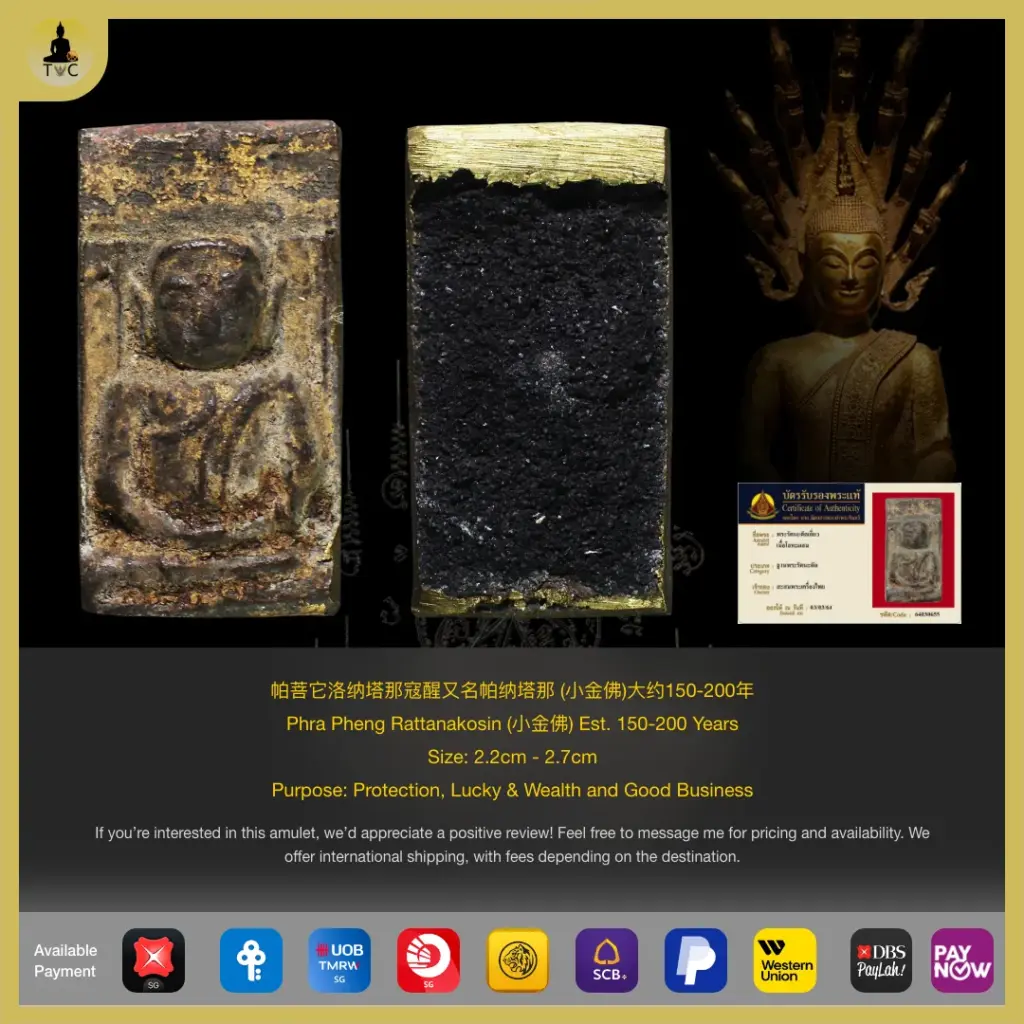
Phra Pheng Rattanakosin (小金佛) Est. 150-200 Years
| SKU | TAC-0806 |
Authentic Phra Pheng Rattanakosin (小金佛) Est. 150-200 Years, early Rattanakosin period, brass and mixed sacred alloys, long rak pit thong finish.
What is the Phra Pheng Rattanakosin (小金佛) Est. 150-200 Years?
The Phra Pheng Rattanakosin (小金佛) Est. 150-200 Years is an early Rattanakosin-period Thai Buddhist amulet, commonly called the Little Gold Buddha, dating to approximately B.E. 2368–2418 (circa 1825–1875). Cast from brass and mixed sacred alloys, finished with gold leaf and lacquer, and consecrated within the monastic networks of early Bangkok, it is one of the more historically grounded amulet types from Thailand’s first Bangkok century.
Where this piece comes from — and why that period matters to collectors
The Rattanakosin era opened in B.E. 2325 (1782 A.D.) when King Rama I relocated the capital to Bangkok and set in motion a large-scale revival of Buddhist institutions. Temple construction, the restoration of monastic scholarship, and the commissioning of sacred objects all accelerated during the reigns that followed. The Phra Pheng Rattanakosin (小金佛) Est. 150-200 Years belongs to that first century of production — pieces made before industrial methods entered the picture.
What distinguishes early Rattanakosin amulets from later commercially produced work is the institutional context of their making. Temple abbots and senior monks directed both the artisanal and ceremonial sides of production. The aesthetic draws directly from Ayutthaya-style Buddha imagery, reinterpreted through the emerging Bangkok idiom — a visual lineage any serious collector in this category will recognise immediately.
For collectors who want the wider historical frame, the Thai Buddhist amulet tradition has been documented as an unbroken practice spanning several centuries, rooted in the intersection of Buddhist devotion, material craft, and institutional authority.
Nuea and consecration — what went into making it
The nuea (material/substance) here is brass blended with mixed sacred alloys — chosen for durability and for the warm golden tone considered appropriate for a Buddha-form object. Into that casting went additional sacred materials: blessed phong (sacred powder), relic fragments, and incense ash drawn from temple ceremonies. These were incorporated directly into the metal or pressed into the base, layering the physical object with consecrated substance.
Surface finishing followed the long rak pit thong method — lacquer applied first as a sealant and primer, then gold leaf laid over it. This serves a preservative function as much as an aesthetic one, and on a genuine piece of this age you expect to see wear consistent with 150 to 200 years of handling: partial gold leaf loss, darkened lacquer in the recesses, and natural patination on the exposed brass beneath.
The pluk sek (consecration ceremony) that closed production involved extended sacred chanting by senior monks, meditation and empowerment rites, and the inscription of yant (sacred geometric designs carrying protective incantations). In early Rattanakosin practice this process was not a formality — it was the point at which the monastic community staked its institutional weight on the object. That collective dimension is part of what the collector market has consistently priced into pieces from this period.
What collectors look for and how to approach authentication
Genuine examples of this amulet type are materially scarce. Roughly 150 to 200 years of age places them firmly in early Rattanakosin Bangkok, and the supply of authenticated pieces has only contracted as collector interest across Thailand, Singapore, Malaysia, Hong Kong, Taiwan, and China has grown.
When evaluating a piece, focus on:
- Patination pattern — Age-consistent oxidation on brass and alloy surfaces, not artificially accelerated darkening.
- Gold leaf remnants — Partial survival of the long rak pit thong finish is expected; pieces that look freshly gilded warrant closer scrutiny.
- Casting and mould definition — Early Rattanakosin pieces were hand-cast; look for the fine but slightly irregular surface detail that separates period work from reproductions.
- Sacred material inclusions — Evidence of phong or relic incorporation at the base or back of the image.
- Provenance documentation — TAC sources these pieces with attention to traceable provenance and material integrity.
Collectors traditionally associate this amulet type with protection (klaew klaad), wealth attraction (maha lap), and loving-kindness (metta maha niyom), as documented within the Thai amulet tradition. It is also carried by those who regard it as a support for meditation and inner cultivation. These associations are part of what drives sustained demand for authenticated examples across the Chinese-speaking collector community, where the 小金佛 designation carries its own established reputation.
We at TAC regard this Phra Pheng Rattanakosin (小金佛) Est. 150-200 Years as a meaningful acquisition for any serious collector of early Rattanakosin-period Thai Buddhist material culture — pieces of this documented age and type are genuinely scarce in the current market. The combination of brass and mixed sacred alloy construction, documented sacred material inclusions, and the historical context of early Bangkok monastic production gives this amulet both devotional significance and tangible collector value for audiences in Singapore and across the region.
Attributes reflect Thai Buddhist devotional tradition and are not measurable claims.