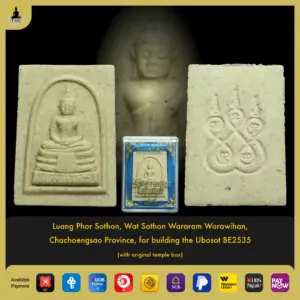
 Luang Phor Sothon, Wat Sothon Wararam Worawihan, Chachoengsao Province, for building the Ubosot BE2535 (with original temple box)
S$10
S$18save S$8 (44%)
| Type | Rian |
| Temple | Wat Phra Kaew |
| B.E. Year | 2475 |
| Material | Thong Daeng |
| SKU | TAC-0300 |
Luang Phor Sothon, Wat Sothon Wararam Worawihan, Chachoengsao Province, for building the Ubosot BE2535 (with original temple box)
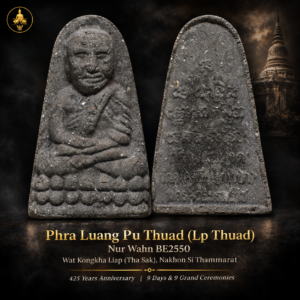 Phra Luang Pu Thuad (Lp Thuad) Nur Wahn BE2550 Wat Kongkha Liap (Tha Sak), Nakhon Si Thammarat (425 Years Anniversary, 9 Days & 9 Grand Ceremonies)
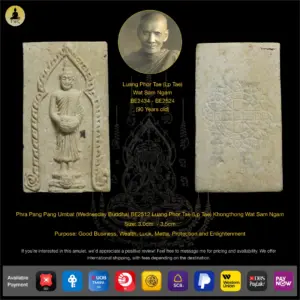 Phra Pang Umbat (Wednesday Buddha) BE2512 Luang Phor Tae (Lp Tae) Khongthong Wat Sam Ngam
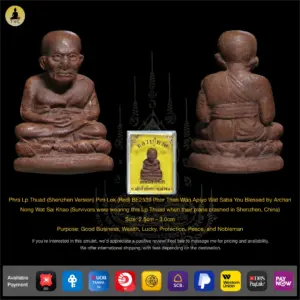 Phra Lp Thuad 龙婆托 (Shenzhen Version) Pim Lek (RED) BE2539 Phor Than Wan Apiyo Wat Saba You Blessed by Archan Nong Wat Sai Khao
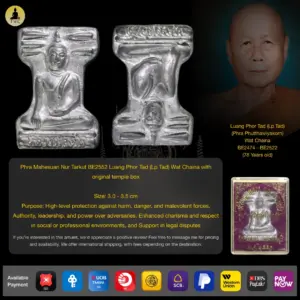 Phra Mahesuan Nur Tarkut BE2552 Luang Phor Tad (Lp Tad) Wat Chaina with original temple box
Each adds this amulet plus the offer at the bundle price — ready at checkout, or mention it when you enquire on WhatsApp.
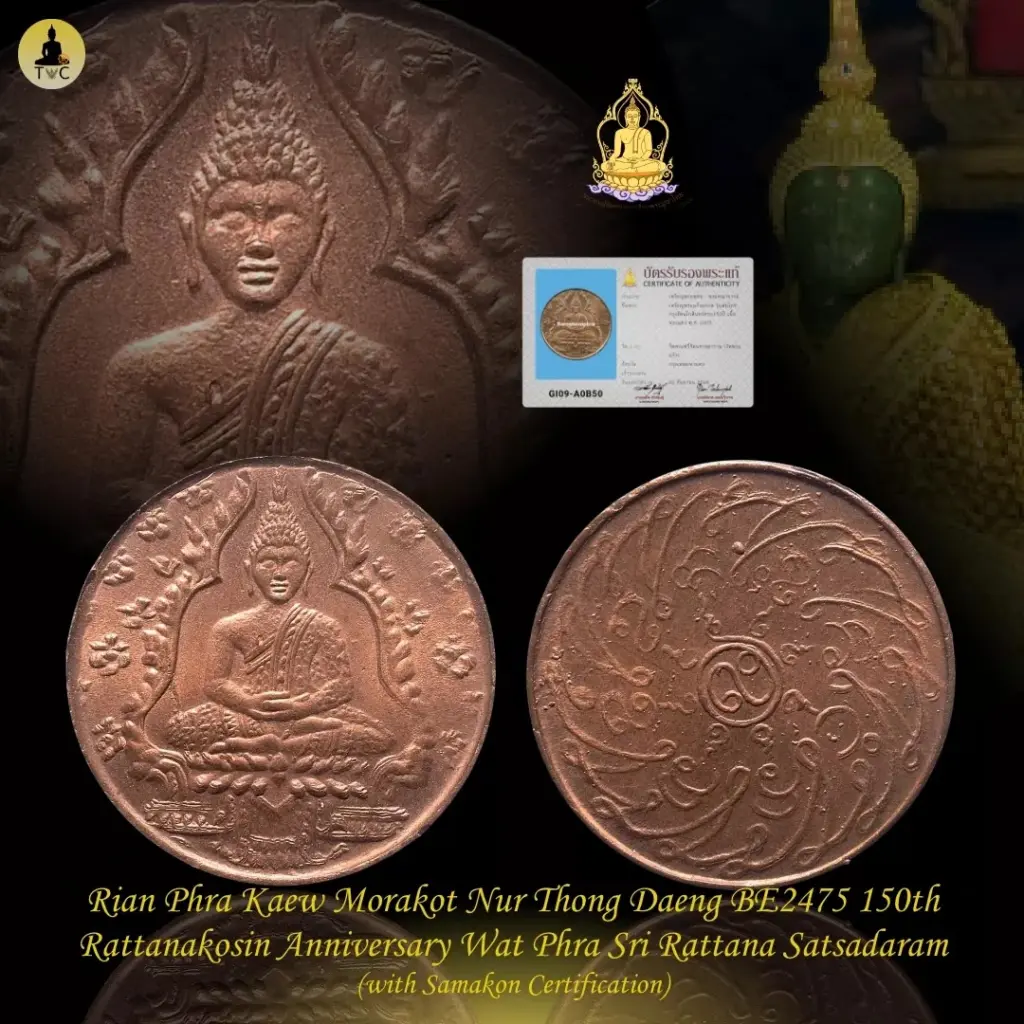
Authentic Rian Phra Kaew Morakot Nur Thong Daeng BE2475 150th Rattanakosin Anniversary Wat Phra Sri Rattana Satsadaram (Wat Phra Kaew), issued 1932 CE.
The Rian Phra Kaew Morakot Nur Thong Daeng BE2475 150th Rattanakosin Anniversary Wat Phra Sri Rattana Satsadaram (Wat Phra Kaew) is a sacred copper medallion struck in BE 2475 (1932 CE) to mark the sesquicentennial of the Rattanakosin era. Issued directly by Wat Phra Kaew, Thailand’s supreme royal chapel, it carries the Emerald Buddha in relief on the obverse and commemorative inscriptions on the reverse.
Bangkok was established in BE 2325 (1782 CE). One hundred and fifty years on, Wat Phra Kaew was the natural seat of the sesquicentennial rites under Rama VII (King Prajadhipok). That political moment — a kingdom on the cusp of constitutional change — gives BE 2475 a documentary weight that most commemorative issues simply do not have.
Wat Phra Kaew is not a residential monastery. It functions exclusively as the royal chapel within the Grand Palace, and sacred objects issued there carry the ritual authority of proximity to the Phra Kaew Morakot (Emerald Buddha), the kingdom’s palladium. For a rian (medallion) to originate here is already exceptional. To be consecrated during phutthaphisek (formal Buddhist consecration) chanting performed before the Emerald Buddha itself, with senior Sangha assembled, places this piece in a different category from standard temple editions.
Collectors working within the broader Thai Buddhist amulet tradition recognise that royal chapel issues benchmark the upper tier of the field. This rian is one of the clearest examples of why.
The nuea (material/substance) here is Thong Daeng — a sacred copper alloy associated with durability and strong ritual resonance in Thai Buddhist metalwork. The rian was produced by precision die-striking combined with hand finishing, consistent with royal workshop standards of the early 1930s. The obverse shows the Emerald Buddha in crisp relief; the reverse carries commemorative legends and royal chapel marks.
At 93 years old as of 2025, a genuine example will have developed a copper patina through natural oxidation — deep toning across the fields, with raised details still legible. Period surfaces are one of the first things an experienced eye checks. The relief depth and edge preparation are characteristic of the early Rattanakosin commemorative style and serve as reference points when assessing authenticity.
No certificate is listed for this piece. Collectors should factor that into authentication approach and seek independent expert assessment where needed.
Four factors consistently drive value on this rian. Provenance from Wat Phra Kaew places it at the premier tier of Thai royal devotional medals. The historic date — BE 2475, the 150th Rattanakosin year — adds documentary significance that purely devotional issues lack. The Emerald Buddha iconography commands consistent demand across Thai, Chinese, and overseas collector markets. And genuine age with intact period surfaces is decisive: later copies exist, and the alloy, legends, relief quality, and wear pattern all need to be congruent.
Pieces at this level are held long-term by serious collectors rather than traded frequently, which keeps market exposure relatively limited. That scarcity, combined with the royal chapel origin, means authentic examples in good preservation sit at the upper end of Rattanakosin commemorative pricing.
This is one of the more historically grounded pieces we handle at TAC — a Thong Daeng rian struck for the 150th Rattanakosin Anniversary directly at Wat Phra Kaew in BE 2475, consecrated before the Emerald Buddha during the sesquicentennial rites. For collectors of Thai royal devotional medals, the combination of royal chapel origin, the Emerald Buddha subject, and the documentary weight of the 1932 date makes this a centrepiece acquisition rather than a gap-filler.
Attributes reflect Thai Buddhist devotional tradition and are not measurable claims.