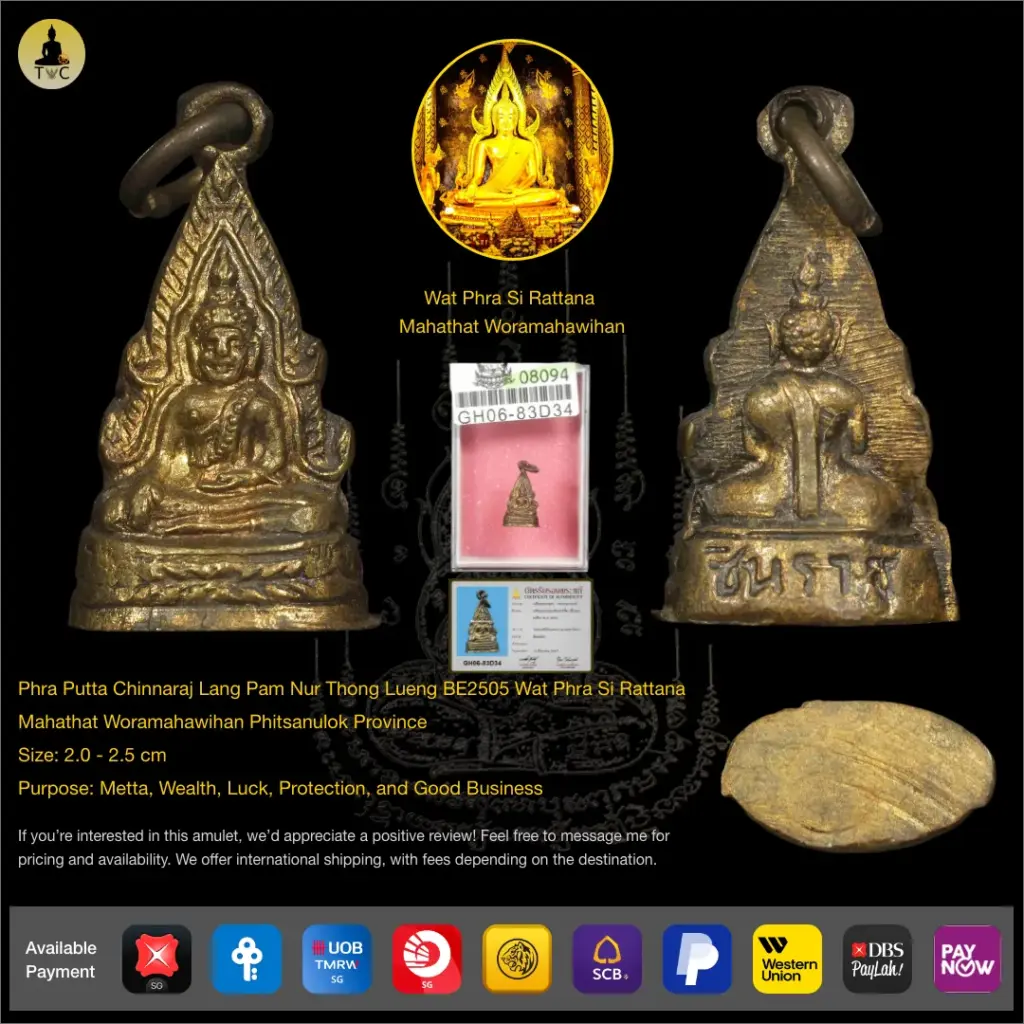
Phra Putta Chinnaraj 成功佛 Lang Pam Nur Thong Lueng BE2505 Wat Phra Si Rattana Mahathat Woramahawihan Phitsanulok
| Temple | Wat Phra Si Rattana Mahathat |
| B.E. Year | 2505 |
| Material | Thong Lueng |
| SKU | TAC-0521 |

Adds this amulet and the offer at the bundle price — ready at checkout. Or mention it when you enquire on WhatsApp.
Authentic Phra Putta Chinnaraj 成功佛 Lang Pam Nur Thong Lueng BE2505 Wat Phra Si Rattana Mahathat Woramahawihan Phitsanulok. Thong Lueng. Samakorn certified.
What is the Phra Putta Chinnaraj 成功佛 Lang Pam Nur Thong Lueng BE2505 Wat Phra Si Rattana Mahathat Woramahawihan Phitsanulok?
The Phra Putta Chinnaraj 成功佛 Lang Pam Nur Thong Lueng BE2505 Wat Phra Si Rattana Mahathat Woramahawihan Phitsanulok is a golden brass amulet issued in BE2505 (1962 CE) by Wat Phra Si Rattana Mahathat, Phitsanulok. Pressed in nuea Thong Lueng (sacred golden brass) to the classic Chinnaraj silhouette, it carries Samakorn certification and is known in Thai-Chinese collector circles as 成功佛 — the “Success Buddha.”
Why the Chinnaraj form from Phitsanulok carries weight
Phra Putta Chinnaraj is the principal sacred image of Wat Phra Si Rattana Mahathat, one of Thailand’s most significant royal monastery complexes. Amulet issues that replicate this image draw directly on the temple’s centuries-long association with that form — the iconography is inseparable from the site. Within the broader Thai Buddhist amulet tradition, a Chinnaraj piece from its home temple carries a different weight than one produced elsewhere.
The BE2505 issue was created for two practical purposes: to honour the principal image and to raise funds for restoration of the monastery complex. That context matters to collectors. This was not a commercial run produced off-site — it was a temple-initiated edition tied to a specific institutional need at the source.
The Chinese community nickname 成功佛 (“Success Buddha”) came from devotees, not from the temple’s official title. It reflects how Thai-Chinese collectors read the Chinnaraj form: clarity, disciplined effort, and the confidence to move through difficulty. In that framing, “success” is the outcome of right conduct, not a shortcut around it.
Nuea, pim, and how this piece was made
The nuea (material/substance) is Thong Lueng — a sacred golden brass alloy. Traditional accounts describe the metal as drawn from older consecrated objects and temple-linked sources, with temple-associated powders used as spiritual seasoning in the casting. The result is a warm, dense brass with the colour and weight profile collectors associate with prosperity symbolism.
The pim (mould) is Lang Pam — a back-stamp style that produces a clean, defined reverse impression alongside the classic Chinnaraj front face. Lang Pam pressing was favoured for its durability under long-term devotional handling. Pieces from this run that retain sharp detail on both faces are the ones collectors pay attention to.
The phutthaphisek (consecration ceremony) at Wat Phra Si Rattana Mahathat in BE2505 was a formal monastery-led event. Senior monastics presided, protective and blessing texts were chanted to seal intent into the issue, and the invocation centred on the Chinnaraj image-field — wisdom, success, and protection. Some traditional accounts include ritual purification with fire symbolism as part of the energising process.
What collectors look for and how this piece is certified
For a BE2505 Chinnaraj in Thong Lueng, the key authentication points are:
- Casting consistency — the surface should show even metal density without cold-pour pitting or fill gaps
- Lang Pam reverse — the back impression should be crisp and correctly centred to the known pim for this run
- Patina character — sixty-plus years of natural oxidation on Thong Lueng produces a specific tone; artificially aged pieces read differently under close examination
- Samakorn certificate — this piece carries Samakorn documentation, which provides an independent reference point for provenance and authenticity
Pieces with intact Samakorn certification and clean casting integrity are the benchmark for this edition. Surface condition and the sharpness of the Chinnaraj face are the factors that separate mid-range examples from the ones serious collectors hold onto.
This BE2505 Chinnaraj in Thong Lueng is one of the more straightforward pieces to recommend for a collector building a Phitsanulok reference set — the temple provenance is direct, the Samakorn certificate is in hand, and the edition has clear community recognition under the 成功佛 name. We at TAC carry this at SGD 188 for a certified, home-temple Chinnaraj issue — the combination of documentation and classic nuea makes it a practical entry point for collectors at this level.
Attributes reflect Thai Buddhist devotional tradition and are not measurable claims.