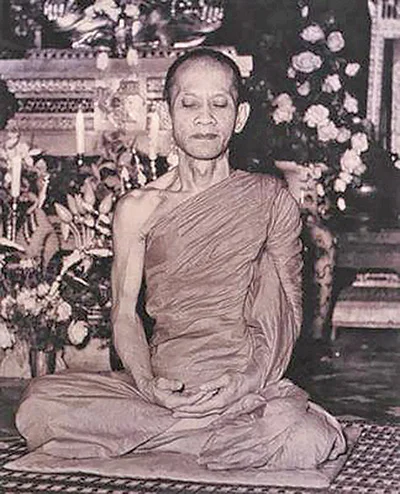
Roop Muen Chao Khun Wat Thepsirin Nor Nur Phong Namon (powder with oil) BE2513 Wat Sin Khan
| Monk | Chao Khun Nor Wat Thepsirin |
| Temple | Wat Thepsirin |
| B.E. Year | 2513 |
| Material | Nur Phong Namon |
| SKU | TAC-0160 |
Authentic Roop Muen Chao Khun Wat Thepsirin Nor Nur Phong Namon (powder with oil) BE2513 Wat Sin Khan by Chao Khun Nor Wat Thepsirin. Nur Phong Namon nuea.
What is the Roop Muen Chao Khun Wat Thepsirin Nor Nur Phong Namon (powder with oil) BE2513 Wat Sin Khan by Chao Khun Nor Wat Thepsirin?
The Roop Muen Chao Khun Wat Thepsirin Nor Nur Phong Namon (powder with oil) BE2513 Wat Sin Khan by Chao Khun Nor Wat Thepsirin is a sacred powder amulet pressed in BE 2513 (1970), issued at Wat Sin Khan in Bangkok and consecrated by Chao Khun Nor (Phra Udomsarnsobhon) of Wat Thepsirin. The nuea — material — is Nur Phong Namon, a blend of sacred phong (powder) bound with namman wan herb oil.
Chao Khun Nor and the weight this batch carries
Chao Khun Nor, formally titled Phra Udomsarnsobhon, was the abbot of Wat Thepsirin and is regarded as one of the more disciplined meditation masters of his generation. His standing rested on decades of strict Vinaya practice and a reputation for deep concentration — the kind that made his personal blessings count in the eyes of both devotees and later collectors.
This particular batch was not issued from Wat Thepsirin itself. It was commissioned and distributed through Wat Sin Khan, a Bangkok temple closely tied to his legacy. The pluk sek — consecration ceremony — took place over multiple sessions in front of the principal Buddha image at Wat Thepsirin, with Chao Khun Nor leading the chanting. Several other monks attended. Some pieces were brought back for additional chanting sessions later, adding further rounds of blessing to the same batch.
Within the broader Thai Buddhist amulet tradition, a monk’s personal involvement in the phutthaphisek — the formal consecration — is what serious collectors focus on first. With this run, the direct involvement of Chao Khun Nor across multiple sessions is the central claim collectors examine when authenticating a piece.
What goes into the Nur Phong Namon and how the pim reads
Nur Phong Namon is a specific muan sarn — sacred powder blend — that uses namman wan herb oil as a binder rather than water or lacquer. This gives the finished amulet a soft body with a slightly shiny, oil-absorbed surface and a faint earthy scent. The texture sets it apart visually and physically from dry-pressed batches of the same period.
The muan sarn for this batch draws on several sources. Sacred powders gathered from Chao Khun Nor’s earlier consecration ceremonies form the base. Into that go phutthakhun powders from important Buddhist ceremonies, along with incense ash, remnants of prayer-ritual flowers, and holy water sediment. The namman wan oil was added both for binding and — according to the belief around this batch — for amplifying the accumulated sacred energy of the powder blend.
On the front, the pim carries Chao Khun Nor seated in deep meditation, face and robes finely rendered. The back carries yant inscriptions — sacred geometric inscriptions — on some sub-batches, while others have a smooth reverse. The surface on genuine pieces shows visible oil absorption: look for a slightly darkened or uneven sheen rather than a uniform matte finish. Tiny embedded herb particles or traces of incense ash in the pressed body are also consistent with authentic examples of this nuea type.
What collectors look for and how this piece is certified
Condition matters significantly here. Pieces with clear facial definition and an intact powder-oil texture command the most attention. Once the surface is cracked, chipped, or the oil has dried unevenly from poor storage, both the collector appeal and the reference value drop.
- Front face: fine detail on Chao Khun Nor’s features and robes should be legible, not worn flat
- Surface texture: oil absorption visible as a sheen or slight darkening — not artificially applied
- Body composition: small herb particles or ash traces may be visible in the pressed powder
- Back: check whether yant inscriptions are present (some sub-batches) or smooth (others) — both are documented
- Aroma: the characteristic earthy, faintly herbal scent of Nur Phong Namon nuea
No certificate information is recorded for this piece at time of listing. Buyers should factor that into their authentication process and rely on physical examination against documented reference pieces for this batch.
We at TAC consider the Roop Muen Chao Khun Wat Thepsirin Nor Nur Phong Namon (powder with oil) BE2513 Wat Sin Khan one of the more consequential portrait amulets associated with Chao Khun Nor — issued at Wat Sin Khan in BE 2513 from a limited commission, with consecration conducted personally across multiple sessions. Collectors drawn to monks with a meditation lineage rather than a ceremonial one will find this run worth serious attention.
Attributes reflect Thai Buddhist devotional tradition and are not measurable claims.