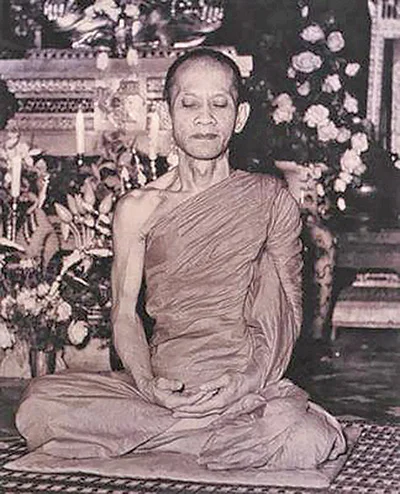
Phra Pidta Lang Yant Nur Phong BE2513 Chao Khun Nor Wat Thepsirin
| Type | Phra Pidta |
| Monk | Chao Khun Nor Wat Thepsirin |
| Temple | Wat Thepsirin |
| B.E. Year | 2513 |
| Material | Phong |
| SKU | TAC-0465 |
Authentic Phra Pidta Chao Khun Nor Wat Thepsirin, BE 2513. Phong Namon with yantra reverse. Singapore dealer, TAC since 2015.
What is the Phra Pidta by Chao Khun Nor Wat Thepsirin, BE 2513?
The Phra Pidta Chao Khun Nor Wat Thepsirin is a sacred powder amulet issued in BE 2513 (1970 CE) under the supervision of Chao Khun Nor (Phra Dhammananmuni) at Wat Thepsirin, Bangkok. Pressed from phong (sacred powder blend) and bearing a yantra inscription on the reverse, this edition is documented by collectors for its clear year identity and disciplined temple context.
Chao Khun Nor and the BE 2513 Wat Thepsirin edition
Chao Khun Nor, known formally as Phra Dhammananmuni, presided over sacred creation at Wat Thepsirin with an emphasis on restraint and meditative rigour. Devotees of his era describe the phutthaphisek (consecration ceremony) as a multi-session affair — disciplined chanting, careful preparation of materials, and senior monk presence throughout — rather than a single-day event. The BE 2513 issues sit in what collectors consider his mature period of practice.
Wat Thepsirin itself carries the standing of a Bangkok royal temple environment, which comes with a correspondingly structured monastic code. That context matters when evaluating amulets: the ritual conditions were formal, the procedures documented within the temple’s own tradition, and the final blessing led under Chao Khun Nor’s direct supervision.
The nuea, the pim, and what makes this edition specific
The nuea (material/substance) here is Phong Namon — a muan sarn (sacred powder blend) incorporating old amulet powders, scripture ash, and wax residues from temple use. Collectors examining a piece from this edition look for natural powder pores, consistent body density, and a surface tone consistent with over fifty years of age. Those are the baseline cues before anything else.
The pim (mould collectors authenticate against) is the classic Pidta Lang Yant format: a compact Pidta body on the obverse, with clear yantra inscriptions on the reverse. The lang yant (yantra reverse) is the defining feature of this edition within the broader Thai Buddhist amulet tradition. It complements the Pidta posture — the closed-eyes figure sealing the senses — with an outer layer of protective inscription.
- Material blend: Phong Namon with old amulet powders, scripture ash, and temple candle/wax residues
- Pim format: Classic Pidta Lang Yant — compact body, yantra reverse emphasis
- Consecration: Multi-session chanting with senior monk presence; final empowerment under Chao Khun Nor’s supervision
What collectors look for and how this piece is certified
For the BE 2513 Wat Thepsirin issues, the authentication focus falls on four points: crispness of the yantra impression on the reverse, natural powder pores consistent with the Phong Namon blend, an aged surface patina appropriate to the era, and a clean provenance trail — prior collector documentation, old storage records, or a known source chain. No single point is conclusive on its own.
This piece does not carry a third-party certificate. Collectors working without certification rely more heavily on visual reference against documented examples from the same edition and, where possible, comparison opinions from experienced specialists familiar with late-era Wat Thepsirin phong pieces. That is the standard approach for uncertified BE 2513 material from this temple.
This BE 2513 Phra Pidta Lang Yant from Wat Thepsirin is one of the cleaner examples we have handled from this period — . The phong body carries the material profile collectors expect from late-era Wat Thepsirin work under Chao Khun Nor, and the yantra reverse is a detail that distinguishes this pim within the broader Pidta category. At SGD 128 it sits at a practical entry point for anyone building a documented Wat Thepsirin reference set.
Attributes reflect Thai Buddhist devotional tradition and are not measurable claims.