Phra Somdej Lang Yant Nur Phong Se Daeng BE2513 Chao Khun Nor Wat Thepsirin
| Type | Phra Somdej |
| Monk | Chao Khun Nor Wat Thepsirin |
| Temple | Wat Thepsirin |
| B.E. Year | 2513 |
| Material | Phong Se Daeng |
| SKU | TAC-0671 |
Authentic Phra Somdej Chao Khun Nor Wat Thepsirin BE2513, Phong Se Daeng nuea with lang yant reverse. No certificate. Singapore dealer TAC.
What is the Phra Somdej Chao Khun Nor Wat Thepsirin BE 2513?
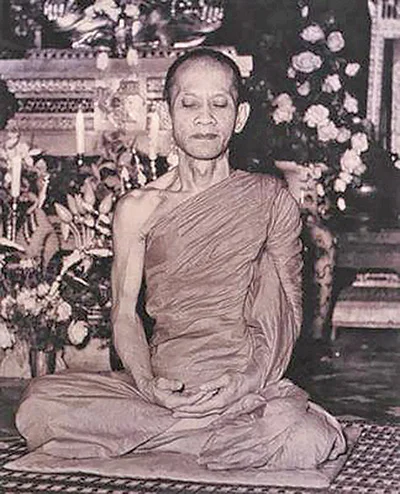
The Phra Somdej Chao Khun Nor Wat Thepsirin BE 2513 is a sacred powder amulet pressed in the classic Somdej format, with a yant (sacred inscription) stamped on the reverse and a warm red-toned phong (sacred powder) body known as Phong Se Daeng. It was made under the blessing line of Chao Khun Nor — full name Phra Ya Norrarat Rachamanit — at Wat Thepsirin in Bangkok, and dated to 1970.
Chao Khun Nor and why BE 2513 matters to collectors
Chao Khun Nor — widely known in Thai collector circles as เจ้าคุณนรฯ — was born 5 February BE 2441 and passed on 8 January BE 2514. He was a Dhammayut monk who spent his practice years at Wat Thepsirintrawat Ratchaworawihan in Bangkok. What collectors consistently note about him is the simplicity and discipline of his monastic life, which shaped how devotees read his blessing work: quiet, grounded, nothing performative about it.
His role in the amulet ecosystem at the temple was primarily one of consecration. Temple circles and senior monks organised the runs; he provided the pluk sek (consecration ceremony) and the final charging rites. BE 2513 sits at the end of that activity — collectors who follow this line describe late BE 2513 as a significant final peak period before his passing the following year. That proximity to his passing is part of why pieces from this window carry more weight in the market.
The broader Thai Buddhist amulet tradition places enormous value on the monk’s personal practice and the consecration moment. For Chao Khun Nor pieces, both are considered strong.
The nuea and the lang yant — reading what the piece tells you
Nuea (material/substance) here is Phong Se Daeng — a red-toned muan sarn (sacred powder blend) body typical of the phra phong tradition. The powder blend in this style commonly incorporates devotional powders and temple-incense ash. The warm red colour is characteristic, and as the surface ages it develops a gentle natural patina that experienced collectors recognise immediately.
The lang yant — หลังยันต์, a yant imprint on the reverse — serves two purposes. Devotionally, it marks the piece as carrying a protective intention. For authentication, it is a physical identity feature collectors cross-reference against known pim (mould) characteristics from the Wat Thepsirin BE 2513 production period. When examining a piece from this line, the yant impression, the density and tone of the powder body, and the overall surface ageing are the primary points of reference.
- Powder tone: warm red, consistent across the body — uneven or patchy colouring can indicate a later copy
- Yant impression: clean and defined on the reverse, not blurred or shallow
- Surface ageing: natural patina consistent with 50-plus years — look for even oxidation rather than artificial treatment
- Somdej form: balanced composition front-facing, proportions matching documented pim from this period
What collectors make of the Somdej format from this line
Phra Somdej is the most widely recognised format in Thai amulet collecting — simple, symmetrical, readable at a glance. It carries no visual complexity, which means collectors focus almost entirely on nuea quality, consecration pedigree, and condition. For this piece, those three factors converge on a monk known for strict practice, a temple with a documented blessing timeline, and a powder body that ages in a predictable, traceable way.
Collectors traditionally carry Somdej pieces for klaew klad (แคล้วคลาด — safe passage and avoidance of harm), khum khrong (คุ้มครอง — protection), and metta (เมตตา — a calm, approachable presence in daily interactions). These associations come from the format itself and from the Buddhist practice behind the consecration, not from the piece as an object in isolation.
No third-party certificate is currently attached to this piece. Buyers who require certified authentication should factor in the cost and process of independent expert review before acquisition.
This is a BE 2513 Phra Somdej from the blessing line of Chao Khun Nor at Wat Thepsirin — pressed in Phong Se Daeng with a lang yant on the reverse, dated to the final full year of his active consecration period before his passing in early BE 2514. We at TAC consider pieces from this specific window genuinely time-sensitive from a collector standpoint, and this one is offered without a certificate, so authentication rests on the physical.
Attributes reflect Thai Buddhist devotional tradition and are not measurable claims.