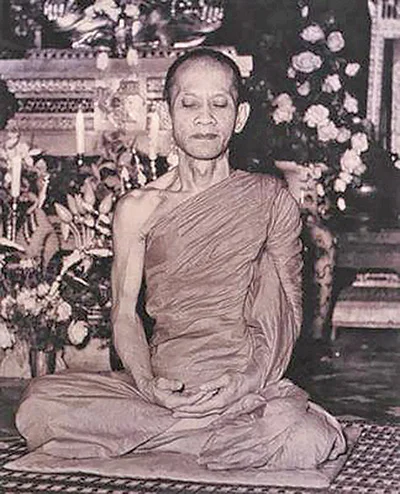
Phra Nak Prok Lang Roop Muen Chao Khun Nor BE2513 Wat Thepsirin
| Type | Phra Nak Prok |
| Monk | Chao Khun Nor Wat Thepsirin |
| Temple | Wat Thepsirin |
| B.E. Year | 2513 |
| Material | (Nur Phong) |
| Pim / Mold | Phra Nak Prok |
| Condition | Good |
| Certificate | Thaprachan |
| SKU | TAC-0068 |
Authentic Phra Nak Prok by Chao Khun Nor Wat Thepsirin, BE 2513. Nuea phong sacred powder blend. Certified Thaprachan. Available from TAC, Singapore dealer.
What is the Phra Nak Prok by Chao Khun Nor Wat Thepsirin, BE 2513?
The Phra Nak Prok Chao Khun Nor Wat Thepsirin is a nuea phong (sacred powder) amulet issued in BE 2513 at Wat Thepsirin, Bangkok. Pressed as a Lang Roop Muen commemorative batch in honour of Chao Khun Nor (Phra Norarat Rajmanit), it depicts the Buddha seated under the seven-headed Naga and carries Thaprachan certification for collector authentication.
Chao Khun Nor and the Lang Roop Muen edition
Chao Khun Nor, formally known as Phra Norarat Rajmanit, spent his monastic life almost entirely within Wat Thepsirin. He kept a strict vegetarian, one-meal-a-day discipline and rarely left the temple grounds. That consistency of practice built the barami (accumulated spiritual perfection) that collectors associate with amulets bearing his name.
The Lang Roop Muen concept ties a Buddha image directly to a specific monk — the reverse of this pim (mould type) carries imagery dedicated to Chao Khun Nor himself. Issuing it as a commemorative run at Wat Thepsirin in BE 2513 anchored his devotional legacy in a tangible, dateable object. It was also a practical effort: proceeds supported temple development and ongoing Dhamma activities.
Wat Thepsirin, the nuea, and how this piece was made
Wat Thepsirin is one of Bangkok’s royal temples, known for its restrained Bangkok-style Buddha images and strict monastic observance. The culture of kammatthan (meditation practice) and Vinaya discipline there is visible in this amulet’s proportions — no excessive ornamentation, clean facial lines, well-defined robe folds. It reads as an object made in a place that took the work seriously.
The nuea (material/substance) is nuea phong — a muan sarn (sacred powder blend) comprising Pong Phutthakun (buddha-virtue blessed powder), Pong Itthijay (success powder), and Pong Trinisinghae (invulnerability powder), combined with holy ash and incense residue from major ceremonies. The Nak Prok pim shows the Buddha seated under seven layered Naga hoods, with crisp powder stratification visible on well-preserved examples. That surface texture is one of the first things a collector checks.
The phutthaphisek (consecration ceremony) in BE 2513 was a major multi-day event at Wat Thepsirin. The roster of attending masters included Luang Phor Suang (Wat Praibun), Luang Phor Kuay (Wat Kositaram), Luang Phor Pae (Wat Pikulthong), Luang Phor Chen (Wat Ngiu Rai), Luang Phor Fung (Wat Nong Muang), Luang Phor Chuan (Wat Kaosoon), Luang Phor Bunmee (Wat Ban Khun Sai), and Luang Phor Chap (Wat Ngiu Rai). Within the broader Thai Buddhist amulet tradition, a phutthaphisek conducted by this calibre of masters is a significant mark of a batch’s standing.
What collectors look for and how this piece is certified
The BE 2513 Lang Roop Muen batch is considered collector-grade. Sharp mould detail and intact original surface texture define the better examples. Pieces that have been cleaned, re-lacquered, or touched up lose the natural ageing at the edges and high points that authenticators rely on.
Authentication points to check:
- Correct pim geometry — seven-headed Naga with layered hoods, clear facial definition, well-pressed robe folds consistent with Wat Thepsirin style
- Authentic nuea phong tone and natural powder stratification visible on the surface
- Unaltered edge and high-point ageing without signs of polishing or re-finishing
- Thaprachan certificate confirming the batch and collector recognition of this BE 2513 edition
Thaprachan is the recognised certification standard that most serious collectors in this region will want to see with a piece of this age and provenance. It is not a guarantee of value, but its absence is a red flag for anything at collector-grade price levels.
We at TAC consider the BE 2513 Lang Roop Muen batch one of the more disciplined Nak Prok editions from the post-war Bangkok royal-temple circle — the phutthaphisek roster alone sets it apart from comparable nuea phong pieces of that decade. The combination of Chao Khun Nor's personal standing at Wat Thepsirin and the quality of the consecrating masters gives this piece a strong position for collectors focused on the late Rattanakosin Nak Prok lineage.
Attributes reflect Thai Buddhist devotional tradition and are not measurable claims.