Phra Phet Lek Lang Yant Nur Phong Wahn BE2505 Chao Khun Sri Wat Ang Sila, Chonburi
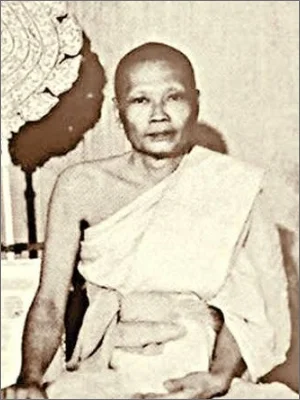
| Monk | Chao Khun Sri Wat Suthat |
| Temple | Wat Ang Sila |
| B.E. Year | 2505 |
| Material | Phong Wahn |
| SKU | TAC-0757 |
Authentic Phra Phet Lek Lang Yant Nur Phong Wahn BE2505 Chao Khun Sri Wat Ang Sila, Chonburi by Chao Khun Sri Wat Suthat. Phong Wahn.
What is the Phra Phet Lek Lang Yant Nur Phong Wahn BE2505 Chao Khun Sri Wat Ang Sila, Chonburi by Chao Khun Sri Wat Suthat?
The Phra Phet Lek Lang Yant Nur Phong Wahn BE2505 Chao Khun Sri Wat Ang Sila, Chonburi by Chao Khun Sri Wat Suthat is a compact Buddha-image amulet pressed from phong wahn (sacred herbal powder blend) and consecrated at Wat Ang Sila in Chonburi during BE 2505. The reverse carries a yant (sacred inscription), giving the piece a complete front-and-back devotional structure in one wearable form.
Chao Khun Sri Wat Suthat and the Wat Ang Sila Connection
The monk behind this piece is Chao Khun Sri Wat Suthat, whose title places him within the senior ecclesiastical rank that Thai temple administration confers on abbots of standing. His association with Wat Ang Sila gives the amulet a grounded Chonburi provenance — not a Bangkok prestige issue, but a provincial temple piece with a clear devotional lineage.
Wat Ang Sila sits along the eastern Gulf coast of Chonburi province. Local temple amulets from this area have long served devotees who value daily-wear practicality over decorative spectacle. Within the broader Thai Buddhist amulet tradition, pieces tied to a named monk at a named provincial temple carry a specific kind of collector appeal — the identity is traceable, the devotional context is intact, and the lineage does not rely on hype.
BE 2505 corresponds to 1962 CE, which places this piece in the middle decades of Thai amulet production — a period when provincial temple editions were made primarily for devotional distribution rather than commercial runs. That context shapes how collectors read the piece today.
Nuea and Construction: Reading a Phong Wahn Piece
The nuea (material/substance) here is phong wahn — a muan sarn (sacred powder blend) incorporating wahn, the herbal matter that Thai ritual tradition treats as symbolically and practically significant within the amulet body. This is not a metal or resin piece. Powder amulets from this era were hand-pressed, and the way the muan sarn behaves at the edges and recessed lines is one of the first things a collector checks.
On the front, the pim (mould collectors authenticate against) presents a small Buddha-image form — Phra Phet Lek, the compact seated figure. On the reverse, the lang yant carries the sacred inscription that completes the amulet’s ritual structure. Front image plus back yant is a format that runs deep in Thai devotional practice: visible Buddhist imagery paired with encoded protective symbolism.
When examining a piece like this, collectors pay attention to:
- Surface consistency of the phong wahn — even powder density without obvious repairs or fills
- Behaviour of the muan sarn at recessed yant lines on the reverse — fine herb particles in the grooves are a natural feature of genuine old powder pieces
- Overall tone and patina appropriate to a piece pressed in BE 2505
- Coherence of the front Buddha-image impression against the known pim
No certificate details are on record for this listing. Collectors should study the piece directly against reference material and, where possible, consult specialists familiar with Wat Ang Sila issues from this period.
What Collectors and Devotees Carry This For
Traditionally, Buddha-image amulets with a lang yant reverse are associated with khum khrong (protective support) and steadier passage through daily uncertainty. The front image is understood as an invitation to calm and reverence; the yant on the back is read as a compact ritual support that works quietly. Devotees also associate this kind of piece with metta — a more open, receptive quality in daily interactions.
For collectors, the appeal sits elsewhere. This is a clearly identified temple issue: specific monk, specific temple, specific province, specific year. That combination — Chao Khun Sri Wat Suthat, Wat Ang Sila, Chonburi, BE 2505, phong wahn — is what gives the piece a stable collector identity. Local temple amulets from the early-to-mid BE 2500s that retain coherent material integrity are increasingly difficult to source in good condition.
We at TAC are listing this Phra Phet Lek Lang Yant Nur Phong Wahn BE2505 Chao Khun Sri Wat Ang Sila, Chonburi as a clearly attributed provincial temple piece from a period — early BE 2500s — when Chonburi devotional issues were pressed primarily for local distribution rather than commercial runs. For collectors who track named-monk, named-temple powder amulets from this era, the combination of Chao Khun Sri Wat Suthat, Wat Ang Sila, and intact phong wahn nuea is the primary draw here.
Attributes reflect Thai Buddhist devotional tradition and are not measurable claims.