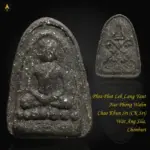
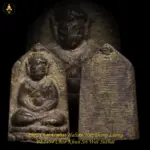
Phra Pidta Roon Rae Nur Phong Sapha BE2500 Nur Phong Sapha Chao Khun Sri Wat Ang Sila
| Type | Phra Pidta |
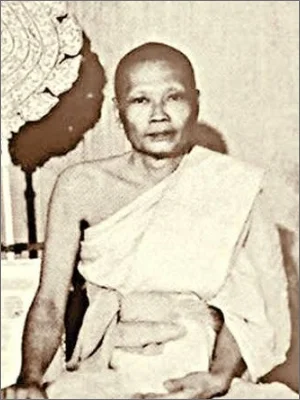
| Monk | Chao Khun Sri Wat Suthat |
| Temple | Wat Ang Sila |
| B.E. Year | 2500 |
| Material | Phong Sapha |
| SKU | TAC-0483 |
Authentic Phra Pidta Chao Khun Sri Wat Suthat, Wat Ang Sila BE 2500. Phong Sapha nuea, G-Pra certified, Italy gold casing.
What is the Phra Pidta by Chao Khun Sri Wat Suthat from Wat Ang Sila, BE 2500?
The Phra Pidta Chao Khun Sri Wat Suthat is a run raek (first-batch) powder amulet issued in BE 2500 at Wat Ang Sila, pressed from Phong Sapha — a temple-blessed sacred powder blend. Attributed to Chao Khun Sri Wat Suthat, it carries G-Pra certification and is housed in an Italy gold casing.
BE 2500 and why that date matters to collectors
BE 2500 falls in 1957 CE, a year that carries real weight in Thai amulet study. It marks the midpoint of the twentieth Buddhist century — a symbolically significant moment that prompted many temples to issue special editions. Pieces confirmed to this date attract steady collector attention across Singapore, Malaysia and the Chinese-speaking markets precisely because the historical context is so clear.
For this run raek example from Wat Ang Sila, the BE 2500 date is part of the core collecting identity. Alongside the named release and the Phong Sapha nuea (material/substance), it gives collectors a concrete framework for comparison against other surviving examples. That combination of period date, named batch and documented material is what separates a well-defined study piece from a generic older amulet.
Chao Khun Sri Wat Suthat, Wat Ang Sila and the Phong Sapha nuea
Chao Khun Sri Wat Suthat held the senior ecclesiastical rank denoted by the Chao Khun title — a rank conferred by the Thai royal court on monks of recognised standing. Amulets attributed to a named Chao Khun carry that lineage directly into the collector record, which is why the attribution here is treated as a primary authentication point rather than background detail.
Wat Ang Sila is the issuing temple, and within the broader Thai Buddhist amulet tradition, temple attribution anchors the piece to a specific consecration environment and community of practice. Collectors researching this line study the physical consistency of examples known to come from Wat Ang Sila to build their own reference set.
The nuea here is Phong Sapha — a phong (sacred powder blend) composition. Powder amulets of this age are read through surface density, compression marks at the edges, and how the material has settled in protected recesses over more than six decades. The surface tone and texture that develop naturally over that span are part of what collectors verify, not restore.
Reading this piece as a collector
The Phra Pidta image type is one of the oldest and most studied forms in Thai amulet collecting. The closed posture — both hands covering the face — is associated with composed inward awareness and protection. For this example, the study points are the silhouette and body proportions of the pim (mould collectors authenticate against), the flow of the powder surface on the front face, and the character of the reverse.
- Check edge sharpness and compression marks consistent with an original pressed pim rather than a cast copy.
- Look at protected recesses — under the arms, between the legs — where undisturbed original powder surface should show settled age character.
- Verify that the casing fit is snug without concealing key authentication areas; the Italy gold casing on this example is fitted for preservation and display.
- Read the G-Pra certificate alongside the physical piece — certification adds market confidence but does not replace direct study of the nuea and pim.
The Italy gold casing also tells you something about how this piece has been handled. A well-fitted casing this old, still holding the amulet cleanly, suggests careful ownership. That matters when you are buying from the secondary market.
This BE 2500 Phra Pidta Roon Rae from Wat Ang Sila, associated with Chao Khun Sri, represents one of the more recognised early batch references from that temple — and at TAC we consider period-dated Phong Sapha pieces from named roon to be meaningful additions to any mid-century Thai amulet study collection. The Phong Sapha material, a dry sacred-powder composition, develops a surface character over decades that experienced collectors learn to read as part of authentication, and we would encourage careful examination of that quality here . The accompanying G-Pra certification provides a documented third-party reference point, which we at TAC regard as a practical support for both new and established collectors acquiring pieces at this price tier.
Attributes reflect Thai Buddhist devotional tradition and are not measurable claims.