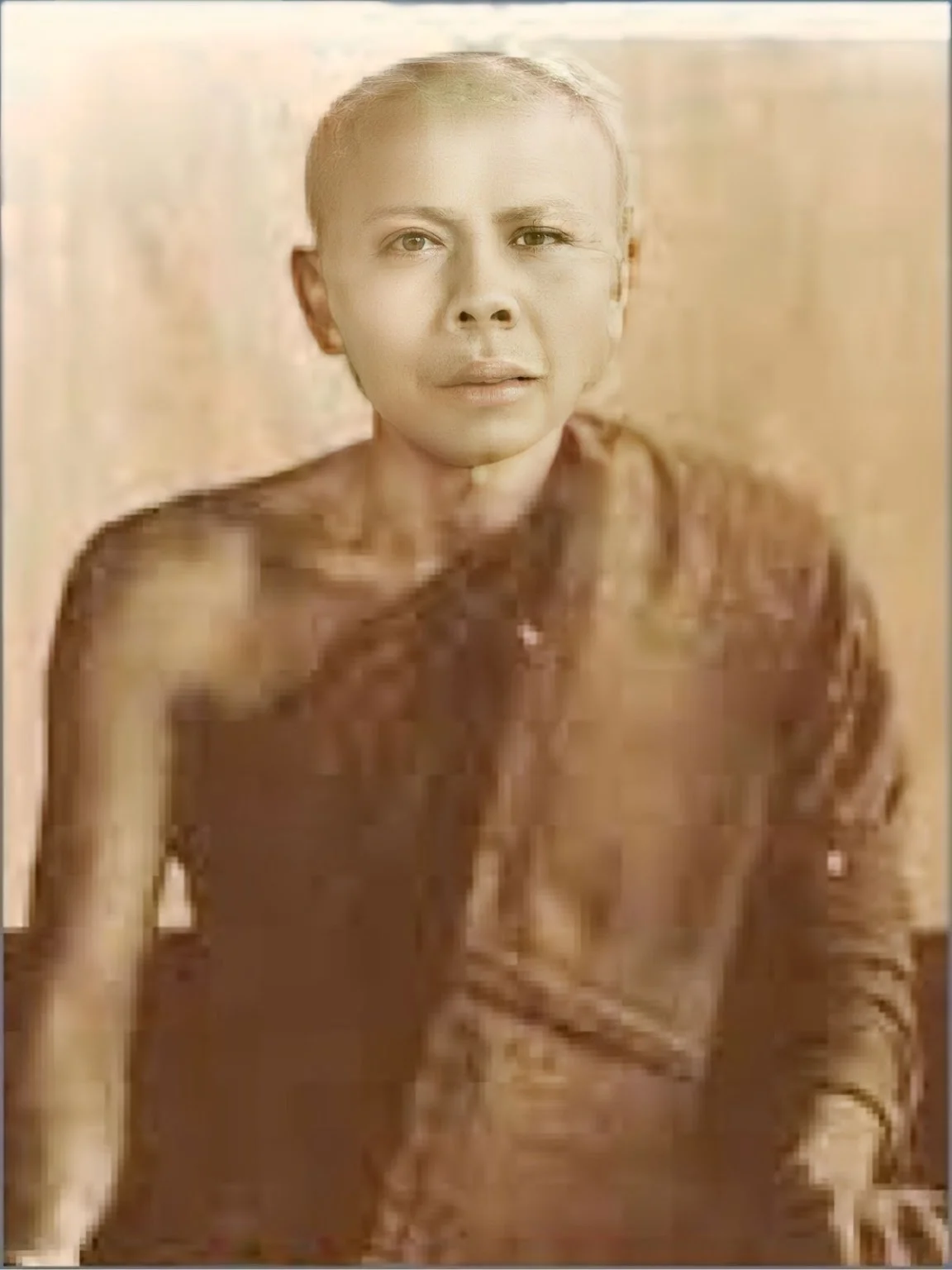
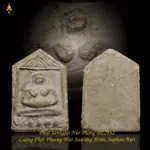
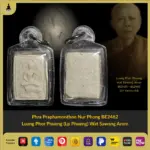
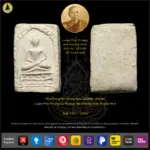
Phra Phong Pim Chana Man (Phra Mae Thorani Bib Muai Phom) BE2460 – BE2462 Luang Phor Phueng Wat Sawang Arom
| Monk | Luang Phor Phueng (Lp Phueng) Wat Sawang Arom, Supan Buri |
| Temple | Wat Sawang Arom |
| B.E. Year | 2460 |
| SKU | TAC-0246 |
Authentic Phra Phong Pim Chana Man (Phra Mae Thorani Bib Muai Phom) BE2460 - BE2462 Luang Phor Phueng Wat Sawang Arom by Luang Phor Phueng (Lp Phueng) Wat…
What is the Phra Phong Pim Chana Man (Phra Mae Thorani Bib Muai Phom) BE2460 – BE2462 Luang Phor Phueng Wat Sawang Arom by Luang Phor Phueng (Lp Phueng) Wat Sawang Arom, Supan Buri?
The Phra Phong Pim Chana Man (Phra Mae Thorani Bib Muai Phom) BE2460 – BE2462 Luang Phor Phueng Wat Sawang Arom is a sacred powder amulet — phra phong (pressed sacred powder) — created by Luang Phor Phueng (Lp Phueng) Wat Sawang Arom, Supan Buri at Wat Sawang Arom, Suphan Buri between BE2460 and BE2462, pressed from a muan sarn blend incorporating yantra chalk powder, Phra Somdej Wat Rakang fragments, pollen powders, Pong Itthijay, and holy water.
Luang Phor Phueng and the early years at Wat Sawang Arom
Born in 1883 in Ban Phai Mu, Song Phi Nong District, Suphan Buri, Luang Phor Phueng came from a farming family and began his formal studies at Wat Khlong Madan under Luang Phor Saeng — learning Thai, Khmer script, chanting, and Buddhist texts from an early age. He was ordained in 1945 at Wat Song Phi Nong with Phra Palat Bunyang as preceptor. His principal mentors were Luang Phor Niang Inthachoto and Luang Phor Nong Inthawanno. During that period he also formed a close working relationship with Luang Phor Sod — later of Wat Pak Nam — and Luang Phor Hom, deepening his practice in meditation and Buddhist sciences.
On 13 May 1919, he moved to Wat Sawang Arom in Ban Kum Subdistrict, Song Phi Nong. The temple was modest at the time. He worked with the surrounding community to expand the grounds: digging a protective ditch, planting coconut trees, raising a mound for the ubosot. The amulets he made during this early period — including this Chana Man series — were distributed as tokens of appreciation to supporters who contributed to the temple’s construction.
The broader Thai Buddhist amulet tradition ties a monk’s reputation to both practice and lineage. For Luang Phor Phueng (Lp Phueng) Wat Sawang Arom, Supan Buri, the standing of his phong rests in part on one well-documented account: in 1950, Luang Phor Sod of Wat Pak Nam reportedly requested some of Luang Phor Phueng’s sacred powder to blend into his own works. Collectors cite this as a marker of the powder’s recognised quality — a peer endorsement across two significant monastic figures of that era.
The muan sarn, the pim, and how these were made
The nuea (material/substance) of this piece is its primary point of interest. The muan sarn (sacred powder blend) was not assembled quickly. Yantra chalk writings on slate — yant inscribed and then erased repeatedly over years — were collected until the accumulated powder reached what Luang Phor Phueng considered sufficient potency. Fragments of Phra Somdej Wat Rakang were added to the blend. Pollen and flower powders from temple ceremonies contributed to the base. Pong Itthijay powder — traditionally associated with obstacle removal — was also incorporated. Holy water bound the blend and maintained ritual integrity through pressing.
The pim (the mould collectors authenticate against) depicts the Buddha in a meditation/victory posture on the front, representing the Chana Man — Victory over Mara — narrative. Mae Thorani, the Earth Goddess wringing water from her hair, is the symbolic counterpart: the force that dissolves falsehood and clears obstacles. The back carries yant and protective inscriptions. Surface tones typically run white to off-white or pale yellow, shaped by the herb and mineral content of the blend.
The consecration process was extended and structured. Sacred threads — 108 lines — were strung around the working area. Participants observed cleansing precepts throughout. Completed pieces rested inside the chapel for three months of continuous prayer, followed by a further three months of personal blessing by Luang Phor Phueng. The production window of BE2460 to BE2462 was a deliberate and finite one.
What collectors look for in this piece
With only a three-year production window, authentic examples are becoming harder to place. Pieces do not come with a named certification body at this listing. Collectors working this category typically assess:
- Powder structure: stable, not crumbling — the holy water binder should have set firmly over the decades
- Surface patina: consistent age character across the face and back, not artificially darkened in patches
- Pim clarity: the Mae Thorani figure and the meditation posture should read cleanly against the mould lines
- Colour tone: white, off-white, or pale yellow consistent with the documented mineral and herb content
- Yant on reverse: crisp inscription lines appropriate to the pressing period
Because this series was distributed as temple-building tokens rather than a commercial run, surviving pieces vary in condition. Pristine examples with full pim definition and unbroken surface are the ones that attract the most collector attention.
We at TAC are offering this early sacred powder piece from Luang Phor Phueng's BE2460–BE2462 series — a finite production run tied directly to the construction of Wat Sawang Arom, which gives it a clear historical anchor that later editions lack. What makes this series worth serious attention is the documented connection to Luang Phor Sod of Wat Pak Nam, who reportedly requested Luang Phor Phueng's sacred powder for his own works — a detail that carries real weight with knowledgeable collectors.
Attributes reflect Thai Buddhist devotional tradition and are not measurable claims.