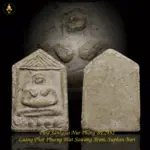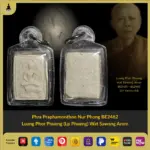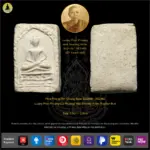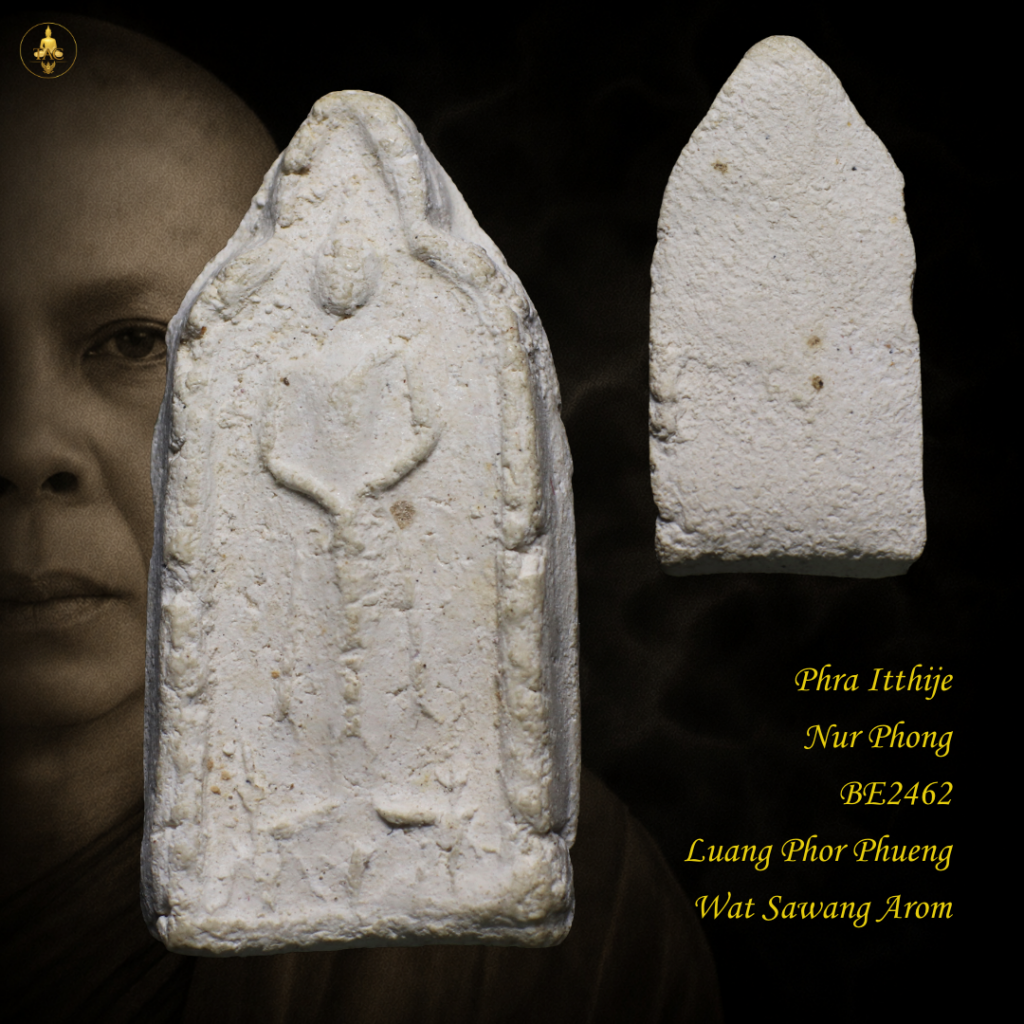
Phra Itthije Nur Phong BE2462 Luang Phor Phueng Wat Sawang Arom
| Type | Phra Itthije |
| Monk | Luang Phor Phueng (Lp Phueng) Wat Sawang Arom, Supan Buri |
| Temple | Wat Sawang Arom |
| B.E. Year | 2462 |
| Material | Nur Phong |
| Condition | Good |
| SKU | TAC-PhraItthije-LpPhueng-001 |
Authentic Phra Itthije Luang Phor Phueng, Wat Sawang Arom BE 2462. Nur Phong. Rare early Rattanakosin amulet. Available from trusted Singapore dealer.
What is the Phra Itthije amulet by Luang Phor Phueng?
The Phra Itthije Luang Phor Phueng is an authentic Thai amulet created in BE 2462 at Wat Sawang Arom, Song Phi Nong District, Suphan Buri Province. Crafted from Nur Phong — a sacred powder accumulated over many years — this amulet represents one of the most revered early Rattanakosin-era powder amulets from the Suphan Buri tradition.
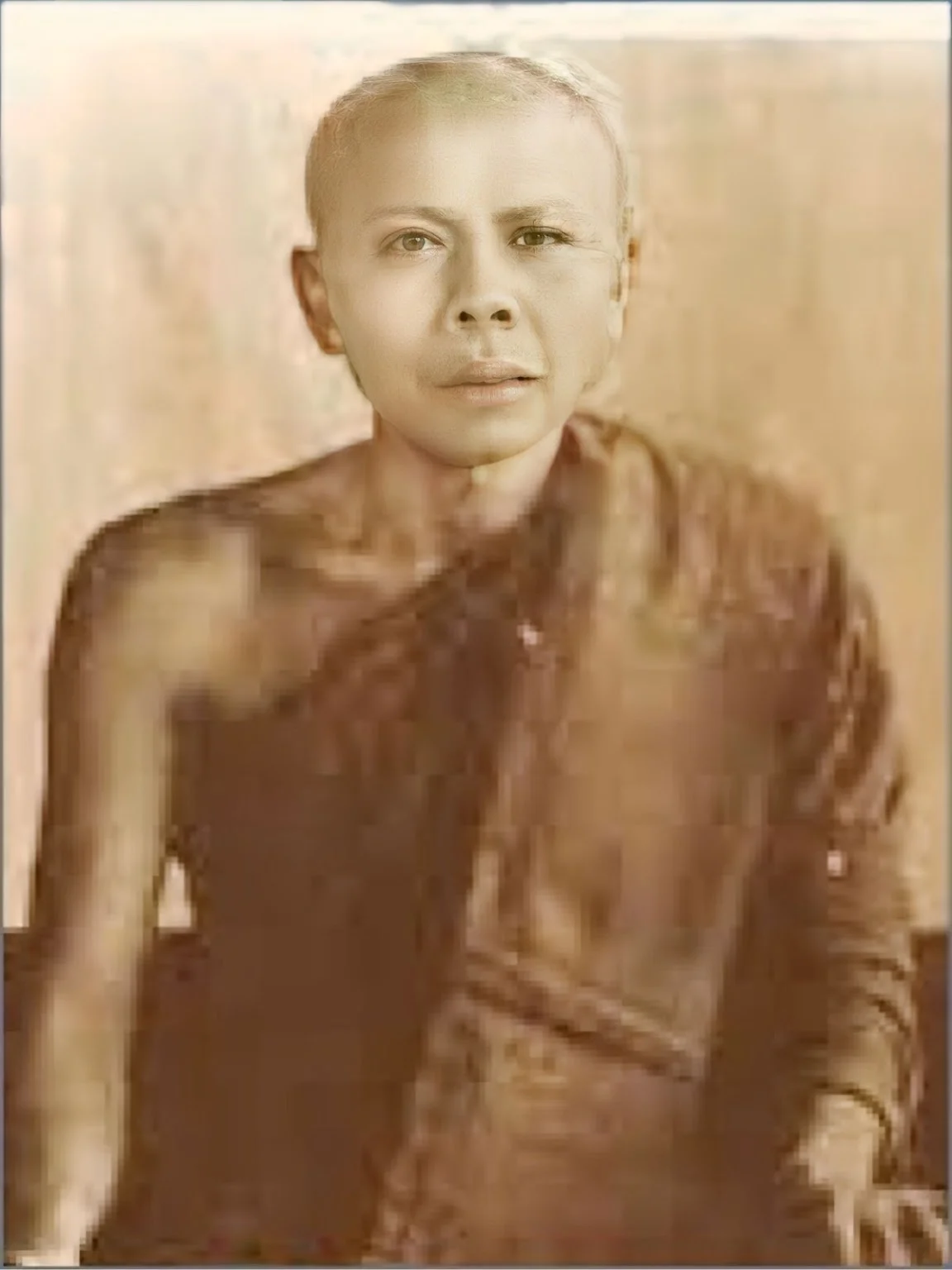
Luang Phor Phueng was born in 1883 in Ban Phai Mu, Ton Tan Subdistrict, Song Phi Nong District, Suphan Buri Province. His father’s name was Hrai and his mother’s name was Pui; they were farmers, and the family lived modestly. Following his parents’ separation, Luang Phor Phueng lived with his mother, helping with farming from a young age.
His mother, determined to give him an education, sent him to study with Luang Pho Saeng at Wat Khlong Madan. There, Luang Phor Phueng diligently learned Thai and Khmer scriptures, becoming proficient in reading, writing, and Buddhist prayers — a foundation that would shape his monastic life.
Luang Phor Phueng was ordained at Wat Song Phi Nong in 1945, with Phra Palat Bunyang as preceptor, Luang Pho Niang Inthochoto as karma-vachariya, and Luang Pho Nong Inthawanno as anusasana-acharya. He later travelled to study Vipassanā meditation under Luang Pho Pluem at Wat Khao Yai, Tha Maka District, Kanchanaburi Province, deepening his practice before returning to Suphan Buri.
Phra Itthije Luang Phor Phueng and Wat Sawang Arom Heritage
Luang Phor Phueng arrived at Wat Sawang Arom, Ban Kum Subdistrict, Song Phi Nong District, Suphan Buri Province on 13 May 1919, accompanied by a lively procession. Luang Pho Nong, Luang Pho Sod, and Luang Pho Hom were all present to see him off, reflecting the deep bonds of friendship and shared spiritual practice among these monks.
Upon arriving at Wat Sawang Arom, Luang Phor Phueng immediately set about constructing the temple with the help of local villagers. The community dug a moat around the temple grounds, planted coconut trees along the embankments, and built the mounds required for the construction of the main chapel. As a gesture of gratitude, Luang Phor Phueng distributed his sacred amulets to the devotees who contributed to this foundational effort.
Wat Sawang Arom became the spiritual home where Luang Phor Phueng would spend decades refining his amulet-making practice. The Thai Buddhist amulet tradition places great emphasis on the sanctity of the temple and the moral purity of the creating monk — both of which are central to the enduring veneration of amulets from Wat Sawang Arom.
Nur Phong Phra Itthije — Composition and Craftsmanship
The Nur Phong Phra Itthije draws its potency from a sacred powder that Luang Phor Phueng began accumulating long before the amulets were formally pressed. He would write sacred symbols on a slate board using chalk and then erase them, collecting the resulting powder over many years and storing it across numerous containers. This slow, deliberate process of accumulation is regarded by devotees as integral to the spiritual charge held within the powder.
So highly regarded was this sacred powder that in 1950, Luang Pho Sod of Wat Pak Nam personally requested a portion of Luang Phor Phueng’s Nur Phong to incorporate into his own amulets. This is a remarkable testament to the quality and spiritual reputation of the material used in amulets such as the Phra Itthije BE 2462.
When pressing amulets, Luang Phor Phueng followed strict ceremonial protocols. He used 108 strands of sacred thread to encircle the amulet-making area, and all participants were required to purify their bodies and observe the five moral precepts before taking part. Once completed, the finished amulets were placed in the temple’s main hall, where monks chanted prayers every morning, evening, and night for a full three months — after which Luang Phor Phueng performed a solo consecration through to the end of the third quarter.
Spiritual Benefits of Phra Itthije by Luang Phor Phueng
The Phra Itthije Luang Phor Phueng is traditionally venerated among collectors and devotees for the breadth of blessings associated with this amulet type. Collectors from Singapore, Malaysia, Thailand, and Greater China associate the Phra Itthije category with protection, fortune, and personal magnetism — qualities that have made Luang Phor Phueng amulets from Wat Sawang Arom enduringly sought after across Southeast Asia.
As an authentic Thai amulet consecrated through one of the most rigorous multi-month chanting ceremonies recorded in the Suphan Buri tradition, the Phra Itthije BE 2462 is regarded by devotees as carrying the full weight of Luang Phor Phueng’s decades of Vipassanā practice and moral cultivation.
- Protective Blessing: Devotees traditionally venerate this amulet for spiritual protection and warding off misfortune in daily life.
- Charisma & Influence (Metta Maha Niyom): Collectors associate the Phra Itthije type with enhanced personal magnetism, goodwill from others, and harmonious relationships.
- Wealth Accumulation: The Phra Itthije BE 2462 is regarded among collectors as auspicious for financial prosperity and business success.
Phra Itthije BE 2462 — Authentication and Collector Value
The Phra Itthije BE 2462 was created during a period when Luang Phor Phueng’s craftsmanship and sacred powder practice had already reached full maturity. Having accumulated his Nur Phong over many years before pressing, the amulets from this era are considered amongst his most spiritually concentrated works. For Thai amulet Singapore collectors and those across Greater China, amulets from this early Rattanakosin period carry significant historical and spiritual prestige.
Collectors should note that Luang Phor Phueng created multiple amulet types throughout his lifetime, including the Praphamandal, Chiang Saen, Ok Rong, 7-Layer, Sanghati, and Chinnarat types, among others. The Phra Itthije Wat Sawang Arom example stands as one of his most collectible pieces, and provenance research referencing the monk’s biography and the temple’s history is strongly recommended when acquiring any example.
Given the age of these amulets — now over a century old — condition, surface patina consistent with aged Nur Phong, and documented provenance are the primary authentication benchmarks used by experienced collectors. Consulting with a specialist Thai amulet Singapore dealer who has access to reference materials on Luang Phor Phueng’s known productions is the most reliable path to confident authentication.
Attributes reflect Thai Buddhist devotional tradition and are not measurable claims.