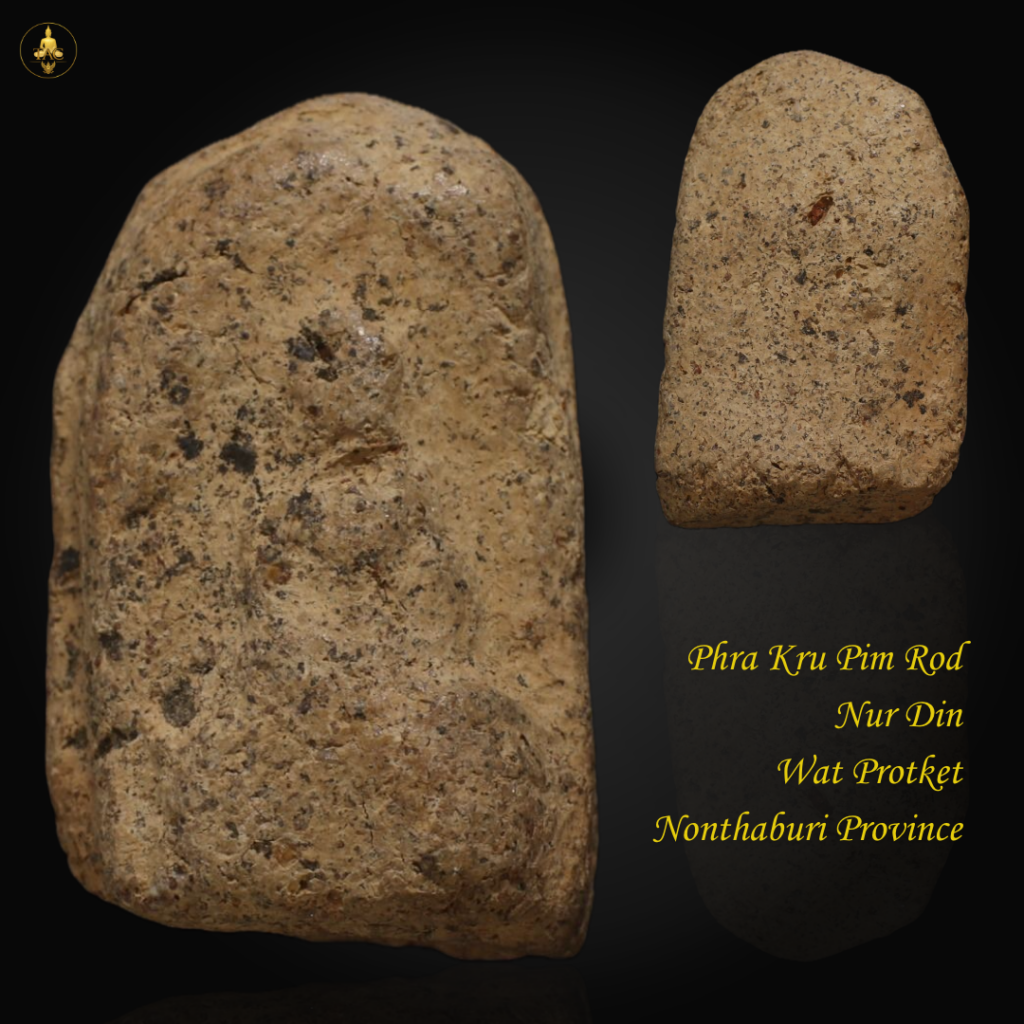
Phra Kru Pim Rod Nur Din BE2100-2200 Wat Protket Nonthaburi Province
| Type | Phra Kru Pim Rod |
| B.E. Year | 2100 |
| Material | Nur Din |
| Condition | Fair |
| SKU | TAC-PhraKruPimRod--001 |
Authentic Phra Kru Pim Rod from Wat Protket, Nonthaburi, BE 2100. Pressed nuea din, no certificate. Ancient kru recovery.
What is the Phra Kru Pim Rod from Wat Protket, Nonthaburi, BE 2100?
The Phra Kru Pim Rod from Wat Protket, Nonthaburi Province, is an ancient votive tablet pressed from nuea din (sacred earth) and recovered from within the temple’s sealed sacred structure. Dating to BE 2100, it carries the accumulated consecration of centuries rather than a single modern ceremony. No certificate accompanies these pieces.
What makes a kru find from Wat Protket significant
A kru — a sealed chamber within a chedi or prang where votive tablets were interred as acts of merit — is not opened on a schedule. When Wat Protket in Nonthaburi Province yielded this batch, it was treated as a religious event for the surrounding community. That is standard for any kru recovery, but the depth of the find and the condition of the material matter just as much as the temple’s name.
The Thai Buddhist amulet tradition places kru pieces in a category of their own precisely because the consecration was not organised by a single monk at a single ceremony — it accumulated over generations of devotional use, prayer, and the physical weight of the structure above. No modern phutthaphisek (consecration ceremony) replicates that layered history.
Nonthaburi Province sits just north of Bangkok, and Wat Protket has a long presence in the area. For collectors in Singapore and the region, pieces from established provincial temples carry traceable recovery context — which is one of the few things that can partially substitute for a formal certificate when none exists.
The nuea and the pim — what you are actually holding
Nuea din, or pressed sacred earth, is the material here. Earth gathered from spiritually significant ground — temple compounds, river confluences, sites of sustained devotional activity — was combined with binding agents and sometimes phong (sacred powder blends) before being worked into moulds. The pim rod form is elongated and tubular, distinct from the flatter tablet shapes most collectors encounter first.
Pressing a pim rod by hand requires consistent pressure along the length of the mould. The result is never perfectly symmetrical, and that slight asymmetry is one of the things authenticators look for. Once pressed and dried — sometimes kiln-hardened — the tablets were sealed inside the chedi as votive offerings dedicated to the Buddha, the Dhamma, and the Sangha.
After centuries inside a sealed structure, the nuea din changes. The surface mineralises: earthy tones deepen, micro-fractures develop along natural stress lines, and the density of the material shifts in ways that modern reproductions do not replicate convincingly. That mineralisation is the first thing a serious collector examines.
For this piece specifically, the nuea composition and the BE 2100 date place it well into the early Rattanakosin period at minimum. No certificate accompanies it, which is common for kru amulets of this age — formal grading systems for Thai amulets are a much more recent development.
Authentication points and what to check before you buy
With no certificate, the burden of authentication falls entirely on the physical piece. That is not unusual for genuine kru finds of this age, but it does mean you need to look carefully. A few things to check:
- Surface mineralisation: Natural patina should be consistent across all faces, including the base and reverse. Artificial aging tends to concentrate on the front face and looks uneven under magnification.
- Micro-fracture patterns: Genuine aged nuea din develops fine cracking that follows the internal structure of the material. Reproductions often show surface crazing that does not penetrate.
- Weight and density: Aged pressed earth has a particular heft. Modern clay reproductions feel different in the hand — lighter or oddly uniform.
- Pim asymmetry: Hand-pressed mould work leaves slight irregularities. Machine-pressed or cast reproductions are too consistent.
- Recovery context: Ask the dealer for whatever provenance documentation exists, even informal records of the kru find. For pieces this old with no certificate, consistent provenance narrative matters.
Independent examination by a recognised Thai amulet association remains the most reliable step before any significant purchase. TAC sources pieces with care, but we always recommend collectors do their own due diligence on uncertified kru material.
This BE 2100 Phra Kru Pim Rod from Wat Protket, Nonthaburi, is one of the older nuea din kru pieces we carry at TAC — the dating alone puts it well into the early Rattanakosin period, and the mineralisation on the surface is what you want to see on a piece of this age. No certificate accompanies it, which is par for the course with genuine kru material this old, but that also means buyers are relying on the physical piece and your sourcing record, so worth being explicit about how we acquired it.
Attributes reflect Thai Buddhist devotional tradition and are not measurable claims.