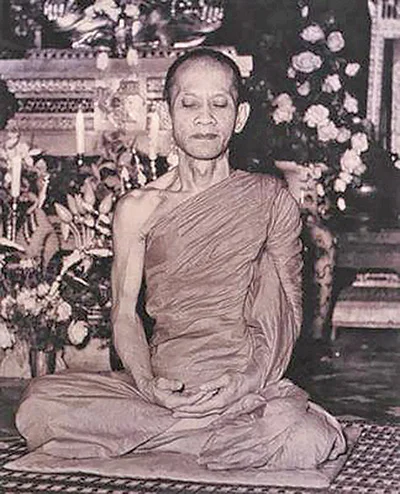
Phra Somdej Pim 3 Chan Lang Ser Lang Yant Nur Phong Namon BE2513 Chao Khun Nor (CK Nor) Wat Thepsirin
| Type | Phra Somdej |
| Monk | Chao Khun Nor Wat Thepsirin |
| Temple | Wat Thepsirin |
| B.E. Year | 2513 |
| Material | Phong Namon |
| SKU | TAC-0094 |
Authentic Phra Somdej by Chao Khun Nor Wat Thepsirin, BE 2513. Pressed from Phong Namon, Pim 3 Chan with rear Ser and Yant. No certificate.
What is the Phra Somdej Chao Khun Nor Wat Thepsirin BE 2513?
The Phra Somdej Chao Khun Nor Wat Thepsirin BE 2513 is a Pim 3 Chan (three-tiered arch mould) edition pressed from Phong Namon (sacred powder), consecrated at Wat Thepsirin in Bangkok. The reverse carries a Ser tiger motif and Yant sacred inscription. Issued in BE 2513, this piece is now over five decades old and holds a distinct place in senior royal-temple Somdej collecting.
Chao Khun Nor and what his name on an amulet means
Chao Khun Nor Wat Thepsirin held senior rank within the Thai ecclesiastical hierarchy during his tenure at the temple. That rank matters to collectors because it determined who could preside over a phutthaphisek (consecration ceremony) — and how much institutional weight the ceremony carried. Not every monk of his era had the standing to anchor an edition like this.
His period of active amulet production at Wat Thepsirin coincided with the BE 2513 issue, and the ritual standards he applied are reflected in the precision of the pressed form and the layered muan sarn (sacred powder blend) used as the nuea (material/substance). The combination of his personal authority and the temple’s ceremonial infrastructure gives this piece dual provenance — individual and institutional at once.
The pim, the nuea, and what is on the back
The pim (mould collectors authenticate against) here is the Pim 3 Chan — the classical three-tiered arch format with a seated Buddha at centre. It follows the Somdej design lineage established by the great masters of the 19th century, and pressing it cleanly into Phong Namon requires the right consistency in the powder mix. Sharp definition on the arch tiers and the Buddha image is one of the first things an experienced eye checks.
Phong Namon as a nuea typically draws from dried floral offerings, aromatic resins, and blessed chalk accumulated across temple ritual cycles. When a senior monk like Chao Khun Nor oversees the blend, powders gathered over multiple ceremonial rounds go into the mix — so the material itself carries layered ritual history before a single piece is pressed. That accumulated matter is considered integral to efficacy within Thai Buddhist amulet tradition.
The reverse face sets this edition apart from standard Somdej issues of the same period. A Ser (tiger) motif sits alongside a Yant inscription — both pressed into the same Phong Namon body. Collectors treat these rear markings as a visual authentication check and as indicators of the specific protective invocations made during consecration. On a genuine aged piece, the Yant lines should be legible but show the natural softening that five decades of patination produces.
Wat Thepsirin — why the temple source matters for this edition
Wat Thepsirin is a royal-grade temple in Bangkok with formal standing within the Thai Buddhist administrative structure. That status is not ceremonial — it shapes which monks are posted there, which consecrations receive institutional backing, and which editions become documentable in collector reference records. For a piece with no third-party certificate, temple source carries real weight.
Amulets from senior royal-temple monks of the BE 2513 era are now five-plus decades old. The Singapore and Malaysian markets have maintained steady interest in them precisely because they sit at the intersection of historical age, institutional legitimacy, and named-monk provenance. Well-preserved examples are not common, and condition has a direct bearing on how seriously buyers engage.
Authentication for this edition rests on physical examination rather than a formal certificate from a certifying body. That means surface texture, mould sharpness, natural age patina on the Phong Namon without signs of artificial treatment, and the clarity of the rear Ser and Yant — all assessed against documented reference specimens from Wat Thepsirin. Provenance tracing, where available, adds meaningful confidence.
- Front face: Pim 3 Chan arch clearly defined; seated Buddha pressed with consistent depth across the surface
- Nuea surface: natural Phong Namon patina consistent with fifty-plus years; no artificial colouring or resin treatment
- Reverse: Ser motif and Yant inscription present and legible, with aged softening at the edges of pressed lines
- Provenance: documented ownership history or verifiable temple-sourced acquisition adds confidence where no certificate exists
We at TAC are offering this Phra Somdej Chao Khun Nor Wat Thepsirin BE 2513 — a Pim 3 Chan edition in Phong Namon nuea with the distinctive rear Ser motif and Yant inscription that set it apart from standard Somdej issues of the same period. There is no third-party certificate for this edition, so I would encourage buyers to review the physical evidence carefully and, if needed, consult a collector familiar with Wat Thepsirin issues from this era.
Attributes reflect Thai Buddhist devotional tradition and are not measurable claims.