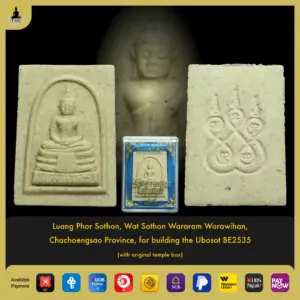
 Luang Phor Sothon, Wat Sothon Wararam Worawihan, Chachoengsao Province, for building the Ubosot BE2535 (with original temple box)
S$10
S$18save S$8 (44%)
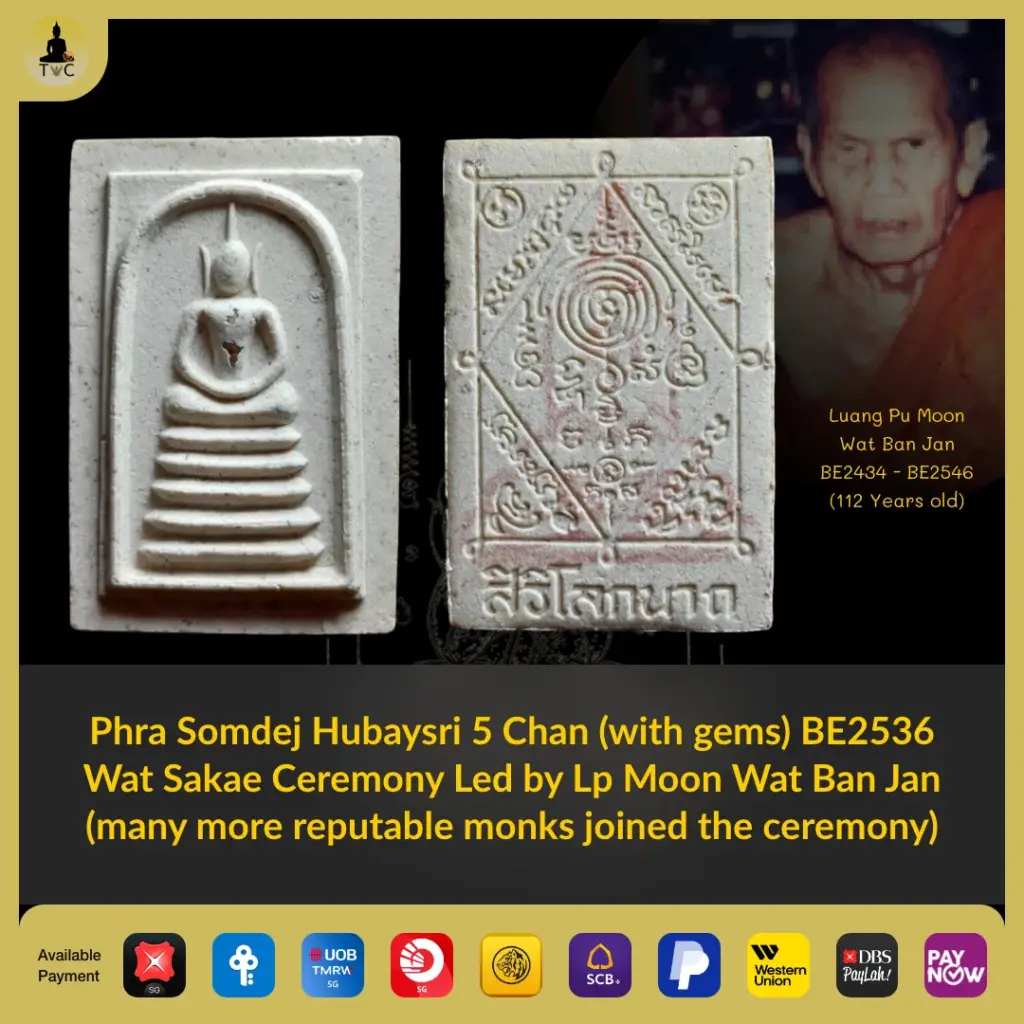
| Type | Phra Somdej |
| Monk | Luang Pu Moon Wat Ban Jan |
| Temple | Wat Ban Jan |
| B.E. Year | 2536 |
| SKU | TAC-0451 |
Luang Phor Sothon, Wat Sothon Wararam Worawihan, Chachoengsao Province, for building the Ubosot BE2535 (with original temple box)
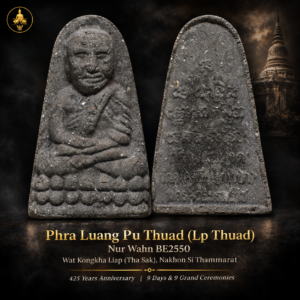 Phra Luang Pu Thuad (Lp Thuad) Nur Wahn BE2550 Wat Kongkha Liap (Tha Sak), Nakhon Si Thammarat (425 Years Anniversary, 9 Days & 9 Grand Ceremonies)
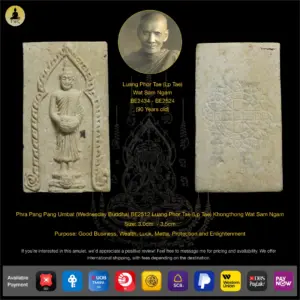 Phra Pang Umbat (Wednesday Buddha) BE2512 Luang Phor Tae (Lp Tae) Khongthong Wat Sam Ngam
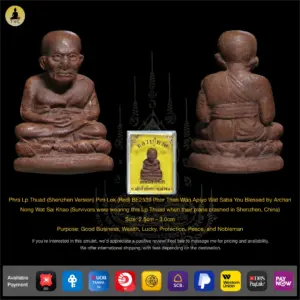 Phra Lp Thuad 龙婆托 (Shenzhen Version) Pim Lek (RED) BE2539 Phor Than Wan Apiyo Wat Saba You Blessed by Archan Nong Wat Sai Khao
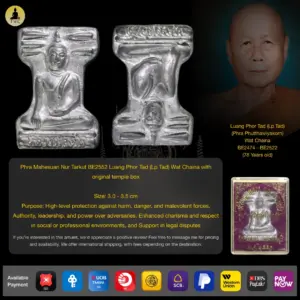 Phra Mahesuan Nur Tarkut BE2552 Luang Phor Tad (Lp Tad) Wat Chaina with original temple box
Each adds this amulet plus the offer at the bundle price — ready at checkout, or mention it when you enquire on WhatsApp.
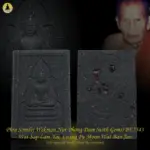
Authentic Phra Somdej Hubaysri 5 Chan (with gems) by Luang Pu Moon Wat Ban Jan, consecrated at Wat Sakae, Ayutthaya, BE2536.
The Phra Somdej Luang Pu Moon Wat Ban Jan — formally the Phra Somdej Hubaysri 5 Chan (with gems) — was consecrated at Wat Sakae, Ayutthaya in BE2536 (1993 CE). Luang Pu Moon Bhuridhatto of Wat Ban Jan presided over the ceremony. The nuea (material/substance) is a sacred powder mix pressed into a five-layered base with embedded colourful gemstones set into the surface.
Luang Pu Moon Bhuridhatto of Wat Ban Jan is regarded as one of the more accomplished forest-tradition masters of his generation. He is particularly associated with deep samadhi practice and mastery of Sai Wet Witthaya Buddhakom — a strand of Buddhist meditative and ritual knowledge. That reputation is why collectors track which ceremonies he led, not just which temple he belonged to.
For this piece, Luang Pu Moon served as presiding master at Wat Sakae. He was supported by a group of other reputable monks. The multi-stage consecration covered traditional chanting, meditation, and a final empowerment timed to auspicious astrological alignments — standard procedure for a large-scale Somdej pluk sek (consecration ceremony) of this period.
Wat Sakae is located in Ayutthaya, a province with deep roots in the Thai Buddhist amulet tradition. The temple hosted this batch as the physical site of consecration, with Wat Ban Jan‘s abbot providing the ritual authority. That cross-temple arrangement — a Wat Sakae production blessed by a Wat Ban Jan master — is part of what gives this run its particular identity among collectors.
The pim (mould) is the Somdej Hubaysri 5 Chan form. The five-step base, called 5 Chan, references five progressive stages: Sila (morality), Samadhi (concentration), Pañña (wisdom), Vimutti (liberation), and Vimutti-ñanadassana (knowledge of liberation). It is a classical Somdej shape rendered in a distinctly BE2536 aesthetic.
The embedded gemstones are the most visually identifying feature of this batch. They are set into the surface of the phong (sacred powder blend) and symbolise the jewels of the Dhamma — abundance, opportunity, and clarity. The reverse carries a lang yant (sacred inscription on the back face). The nuea itself is a Somdej-style muan sarn: old Somdej powder, temple soils, holy ash, relic fragments, and other ritual substances blended and pressed under the guidance of senior monks.
No certificate accompanies this amulet. That puts more weight on physical authentication. Collectors familiar with BE2536 Wat Sakae production look at a consistent set of reference points:
Because no certificate is attached, buyers should cross-reference with established collector forums and, where possible, consult a specialist before purchasing at higher price points.
We at TAC sourced this piece as part of our BE2536 Wat Sakae holdings — a batch that stands out specifically because Luang Pu Moon Bhuridhatto of Wat Ban Jan presided over the consecration, giving it a clear lineage connection that collectors in this region recognise. For a collector looking at BE2536 modern Somdej without a certificate, the value case rests on the monk connection and physical authentication against niyom reference pieces — worth spelling that out clearly in the listing notes.
Attributes reflect Thai Buddhist devotional tradition and are not measurable claims.