Phra Somdej Lang Yant BE2513 Wat Sin Khan Chao Khun Nor Wat Thepsirin
| Type | Phra Somdej |
| Monk | Chao Khun Nor Wat Thepsirin |
| Temple | Wat Thepsirin |
| B.E. Year | 2513 |
| SKU | TAC-0109 |
Authentic Phra Somdej Chao Khun Nor Wat Thepsirin, BE 2513, issued for Wat Sin Khan. Nur phong blend with Phong Itijay, Phong Pattamung and lang yant reverse.
What is the Phra Somdej Lang Yant by Chao Khun Nor Wat Thepsirin, BE 2513?
The Phra Somdej Chao Khun Nor Wat Thepsirin is a sacred powder amulet pressed in BE 2513 (1970 CE) by Chao Khun Nor (Phra Yanarat Ratchamanit) of Wat Thepsirin, Bangkok. The nuea — the material substance — is nur phong (sacred powder blend), incorporating Phong Itijay, Phong Pattamung, scripture fragments, and traces of ritual oil. This batch was issued specifically to support restoration and Dhamma propagation at Wat Sin Khan.
Chao Khun Nor and how this piece came to exist
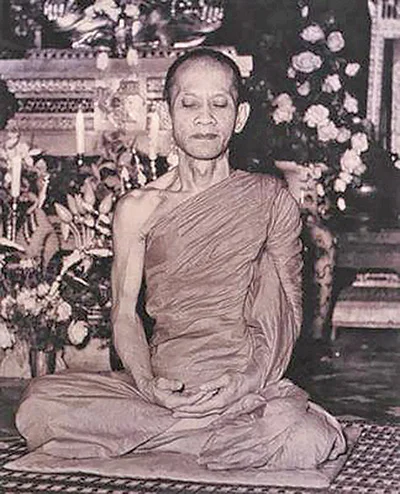
Chao Khun Nor Wat Thepsirin, formally titled Phra Yanarat Ratchamanit, was not a monk who performed large public consecration events. His approach ran in the opposite direction — prolonged private sessions, silent katha recitation, and deep samādhi. That discipline shaped the character of his later-era amulets in a specific way: the empowerment was absorbed through meditation and visualised energy transfer rather than through the kind of mass pluk sek (consecration ceremony) that many collectors associate with high-profile Bangkok editions.
This BE 2513 batch was produced at his base of practice, Wat Thepsirin, with proceeds and merit directed toward Wat Sin Khan. The arrangement was common for that period — a senior monk lending his spiritual weight to support a smaller temple’s building fund or Dhamma work. What it means for collectors today is that the amulets carry the lineage of Wat Thepsirin while the institutional connection runs through Wat Sin Khan.
The pim, the nuea, and what the reverse yant tells you
The obverse follows the classic Somdej archetype: Buddha seated on tiered throne, framed within an arch. The proportions are compact and meditative — nothing exaggerated. Throne tiers and arch lines reference the Wat Rakhang and Wat Thepsirin lineages that collectors working this category know well. The mould, or pim, is restrained by design, consistent with CK Nor’s sober approach to ritual objects.
What sets this piece apart from a standard Somdej is the reverse. The lang yant — a yant (sacred geometric inscription) pressed into the back face — adds a layer of protective geometry to the contemplative obverse. That combination is characteristic of mid-BE 2510s Bangkok production, where the Somdej form began to absorb more explicitly protective symbolism. The nur phong blend itself includes Phong Itijay and Phong Pattamung — two of the five traditional sacred powders — alongside scripture fragments and traces of Nam Man Mon (ritual consecrated oil). The result is a muan sarn (sacred powder blend) with both textual and meditative components baked in.
The Thai Buddhist amulet tradition places considerable weight on the sincerity and depth of a monk’s practice during empowerment. For pieces by CK Nor, that sincerity was expressed through solitude and extended concentration — not spectacle.
What collectors focus on and how this edition is graded
Among CK Nor’s later works, this Somdej Lang Yant edition is assessed as collector-grade. Authentic examples issued to Wat Sin Khan are scarce, and well-kept pieces are harder still to find. The things collectors check on this pim are straightforward:
- Clean, defined arch lines on the obverse — no blurring at the edges
- Clearly pressed throne tiers with consistent depth across all levels
- Crisp, legible reverse yant geometry — smearing or wash-out is a flag
- Nur phong surface texture consistent with aged sacred powder — not recast or refinished
No certificate accompanies this piece. Buyers working without a cert rely on physical characteristics and, where possible, comparison against documented reference pieces in collector circles. The scarcity of well-preserved examples from this issue means established collector opinion carries significant weight when assessing grade.
We at TAC sourced this BE 2513 Phra Somdej Lang Yant from Chao Khun Nor's Wat Thepsirin issue — a batch pressed in nur phong and directed to Wat Sin Khan, making it distinct from the more commonly seen Thepsirin-only editions. CK Nor's known practice of private, samādhi-based empowerment rather than public ceremony gives his later-era pieces a particular character that serious collectors of Bangkok-lineage Somdej actively seek out. No certificate accompanies this piece, so the listing should reflect that honestly and direct interested buyers to contact us for a closer look.
Attributes reflect Thai Buddhist devotional tradition and are not measurable claims.