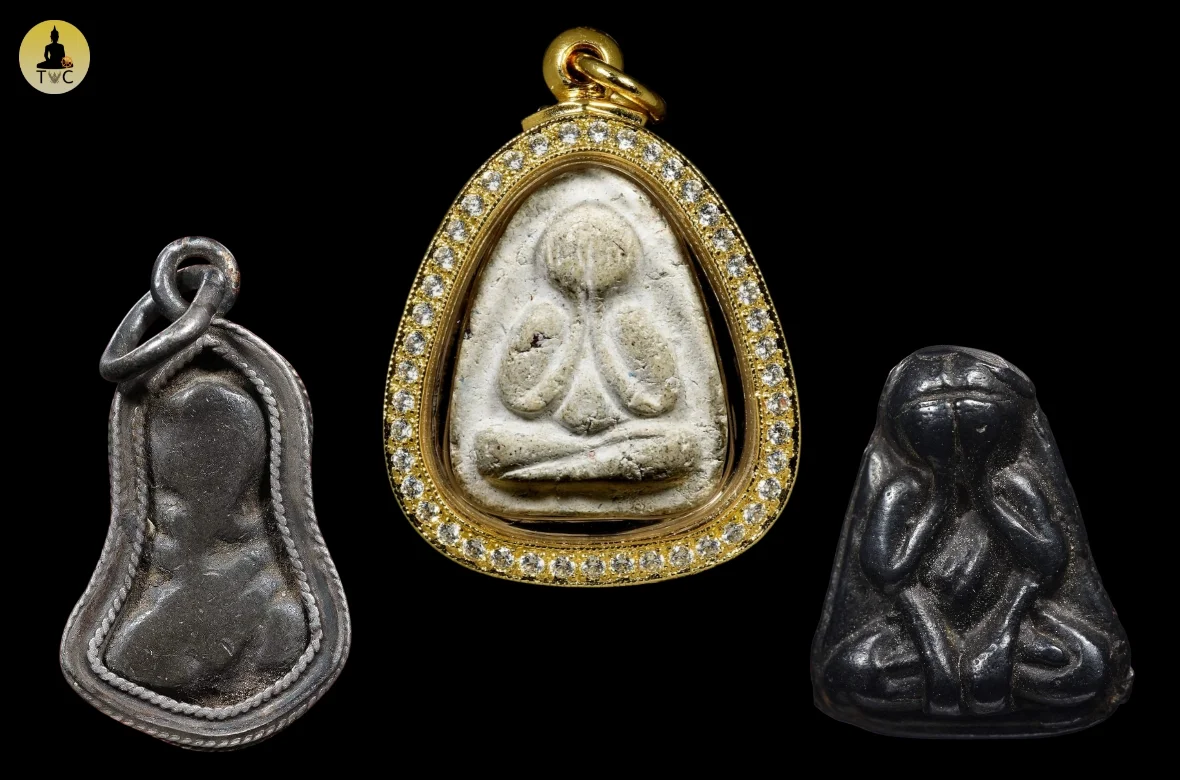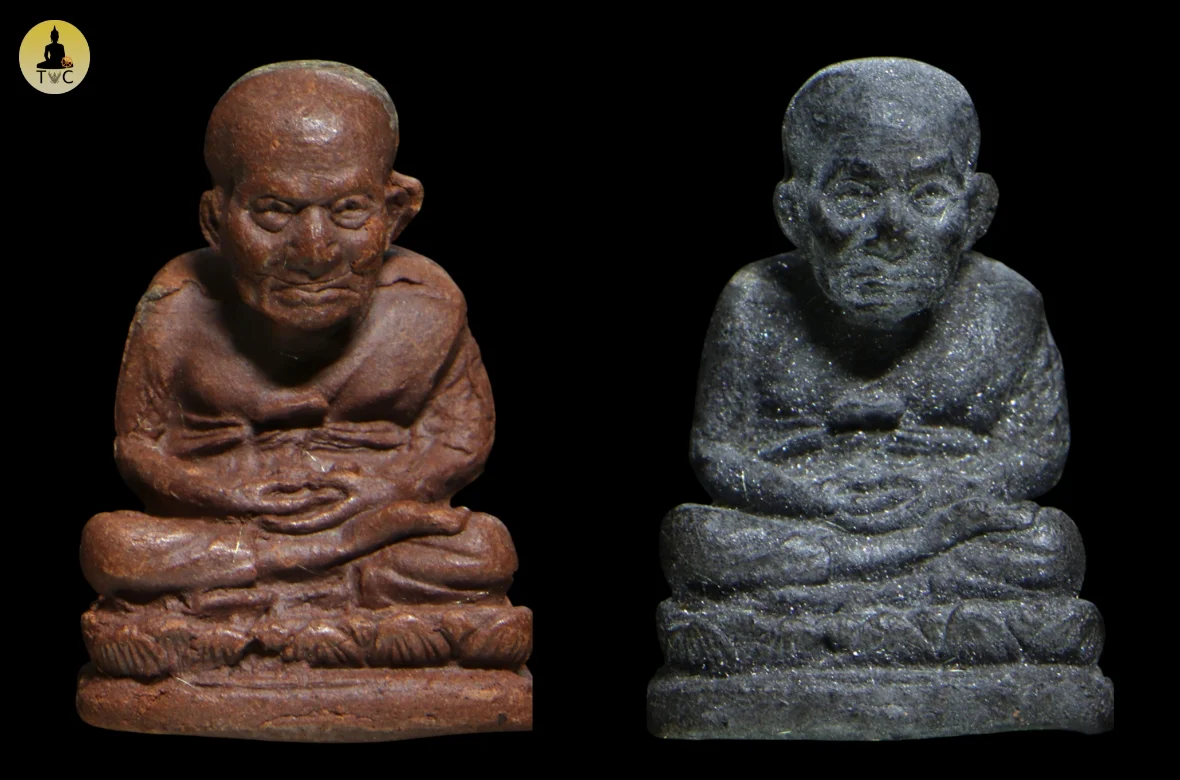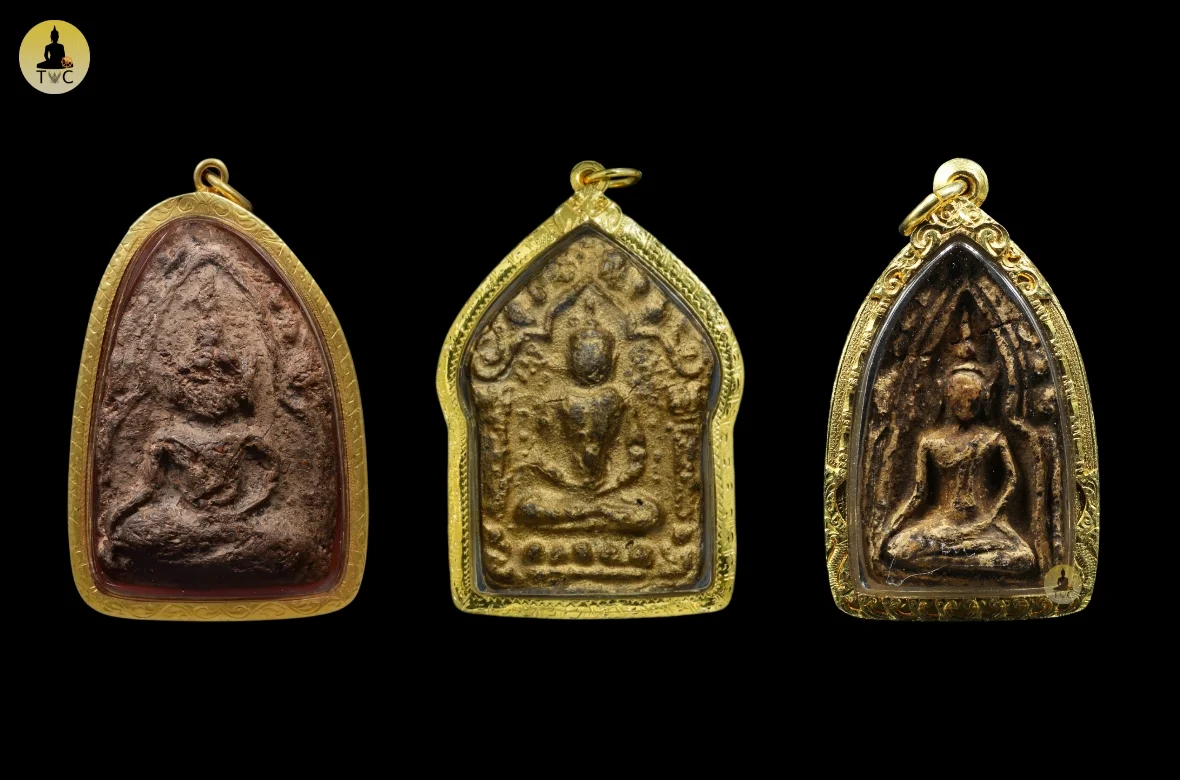
The legendary amulet created by Somdej Phra Phutthacharn (To Phromrangsi), later became the original model for the famous “Phra Somdej Wat Bang Khun Phrom
Discover how Phra Somdej Wat Rakhang by Somdej To became the original model for Phra Somdej Wat Bang Khun Phrom — history, authentication, and collector value for Singapore enthusiasts.
Phra Somdej Wat Rakhang and Phra Somdej Wat Bang Khun Phrom — History and Significance
Phra Somdej Wat Rakhang, the legendary amulet created by Somdej Phra Phutthacharn (To Phromrangsi) of Wat Rakhang Kositaram, later became the original model for the famous Phra Somdej Wat Bang Khun Phrom — one of the five sacred Benjapakee amulets revered across Thai Buddhist tradition. For collectors in Singapore, Malaysia, Hong Kong, and Greater China, understanding this lineage is essential to appreciating the spiritual authority and market significance of both amulets. The design heritage, material composition, and sacred blessings of Wat Rakhang form the direct foundation upon which Wat Bang Khun Phrom was built.
Both amulets originate from the Rattanakosin era, a period of profound Buddhist scholarship and artistic refinement in Thai amulet history. Somdej Phra Phutthacharn (To Phromrangsi) is regarded as one of the most revered monks in Thai Buddhist tradition, known for his mastery of Dhamma and sacred consecration practices.
The connection between these two amulets is not merely aesthetic — it reflects a deliberate transfer of sacred lineage, material knowledge, and spiritual intent from one temple to another, making both pieces among the most studied subjects in authentic Thai amulet scholarship.
Origins and Historical Context of Phra Somdej Wat Rakhang and the Creation of Phra Somdej Wat Bang Khun Phrom
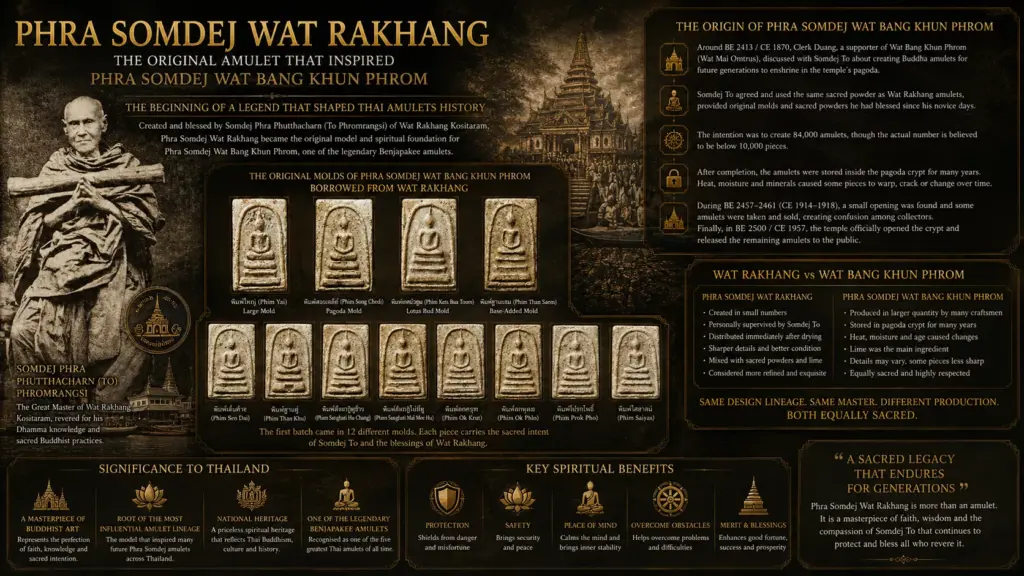
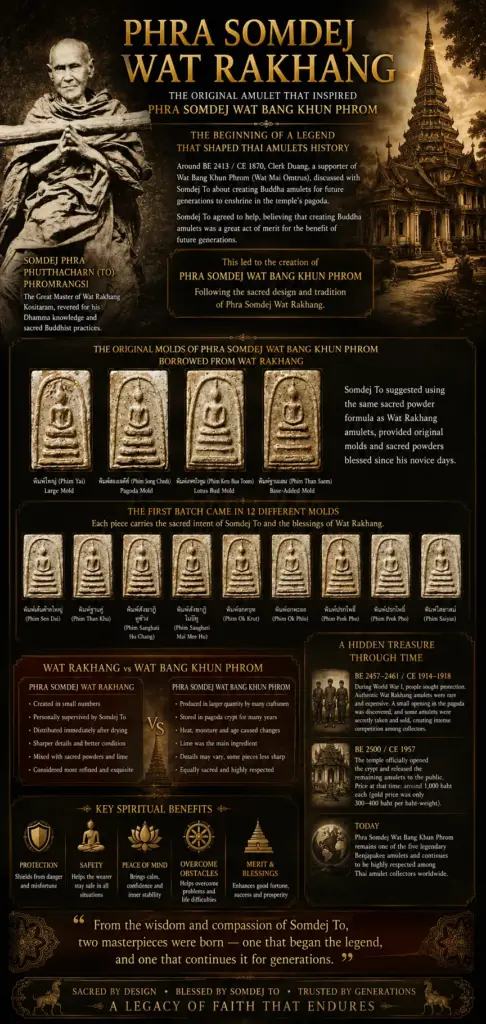
The origins of Phra Somdej Wat Bang Khun Phrom trace directly to approximately BE2413 (CE1870), when a pivotal conversation took place between Clerk Duang — an ancestor of the Thanokoset family and a devoted supporter of Wat Bang Khun Phrom (now known as Wat Mai Omtrus) — and Somdej Phra Phutthacharn (To Phromrangsi).
Clerk Duang proposed creating Buddha amulets for future generations, to be enshrined inside a newly built pagoda during the temple’s renovation. Somdej To agreed, expressing that the creation of Buddha amulets represented a great act of merit in Thai Buddhist tradition.
Somdej To recommended using the same powder-based material composition as the revered Wat Rakhang amulets. He also authorised the use of several original molds from Wat Rakhang — establishing an unbroken material and spiritual link between the two amulet series that collectors and scholars recognise to this day.
Key Events and Sacred Significance of Phra Somdej Wat Rakhang as the Model for Phra Somdej Wat Bang Khun Phrom
The sacred significance of this creation lies in the direct transfer of Somdej To’s personal sacred powders — materials he had collected and consecrated since his early years as a novice monk — into the Wat Bang Khun Phrom amulets.
Somdej To provided four original molds from Wat Rakhang for the initial production: the Phim Yai (large mold), Phim Song Chedi (pagoda mold), Phim Kets Bua Toom (lotus bud mold), and Phim Than Saem (base-added mold). Because four molds alone were insufficient for a large-scale production, additional molds were later carved based on the original Wat Rakhang designs.
The intended production target was 84,000 amulets, in accordance with Buddhist belief regarding the number of Dhamma teachings. However, collectors widely accept that the actual number produced was likely below 10,000 pieces. The first batch ultimately came in 12 distinct mold types, listed as follows:
- Phim Yai (large mold)
- Phim Song Chedi (pagoda mold)
- Phim Sen Dai
- Phim Kets Bua Toom (lotus bud mold)
- Phim Than Saem (base-added mold)
- Phim Than Khu
- Phim Sanghati Hu Chang
- Phim Sanghati Mai Mee Hu
- Phim Ok Krut
- Phim Ok Phlo
- Phim Prok Pho
- Phim Saiyas
After completion, the amulets were sealed inside the crypt of the pagoda for many decades. Prolonged exposure to heat, moisture, and soil minerals caused some pieces to warp, crack, or alter in shape — a key distinguishing factor that authentication experts examine today.
How to Identify and Authenticate Phra Somdej Wat Rakhang and Distinguish It from Phra Somdej Wat Bang Khun Phrom
Understanding the physical and material differences between these two amulet series is fundamental for any serious collector. Phra Somdej Wat Rakhang, the legendary amulet created by Somdej Phra Phutthacharn (To Phromrangsi), was produced in carefully supervised small batches — Somdej To personally oversaw production, creating only a limited number each day. After drying, the Wat Rakhang amulets were distributed immediately rather than stored underground, which preserved their sharpness and overall condition.
The material composition also differs: Wat Rakhang amulets contain sacred powders blended with lime as part of a refined formula, whereas Wat Bang Khun Phrom amulets used lime as the primary ingredient. Because multiple craftsmen were involved in Bang Khun Phrom production, slight variations in pressing depth and sharpness naturally occur across pieces. Collectors and authentication specialists consistently note that Wat Rakhang amulets appear finer and more refined in surface detail compared to their Bang Khun Phrom counterparts.
Key authentication markers collectors examine for Phra Somdej Wat Rakhang include:
- Surface sharpness and detail clarity — original Wat Rakhang pieces show crisper mold definition due to controlled small-batch production and immediate post-drying distribution
- Material composition — the presence of sacred powder blended with lime, distinguished from the lime-dominant formula of Wat Bang Khun Phrom
- Absence of underground storage effects — genuine Wat Rakhang amulets do not display the warping, cracking, or mineral staining caused by decades inside a crypt
- Mold correspondence — authentic pieces correspond to the original four mold types (Phim Yai, Phim Song Chedi, Phim Kets Bua Toom, Phim Than Saem) authorised by Somdej To
For collectors seeking an authentic Thai amulet from either series, consulting experienced dealers with documented provenance records is the most reliable verification pathway.
Phra Somdej Wat Rakhang and Phra Somdej Wat Bang Khun Phrom — Impact on Thai Amulet History and Collector Value
Phra Somdej Wat Bang Khun Phrom is today officially recognised as one of the five legendary Benjapakee amulets — the most prestigious classification in Thai amulet history — a status directly attributable to its design and spiritual lineage inherited from Phra Somdej Wat Rakhang. The broader significance of this Thai Buddhist amulet tradition reflects centuries of sacred craftsmanship, monastic scholarship, and living devotional practice.
During World War I (BE2457–2461 / CE1914–1918), widespread anxiety across Thailand drove intense demand for protective amulets linked to Somdej To. Authentic Wat Rakhang amulets were already extremely rare and costly by this period. Simultaneously, a small opening was discovered in the Wat Bang Khun Phrom pagoda crypt, leading to the secret removal and private sale of amulets — creating significant market confusion and collector competition that persists in the authentication landscape to this day.
The definitive public release came in BE2500 (CE1957), when the temple officially opened the pagoda crypt and offered the remaining amulets to the public at approximately 1,000 baht each — a remarkable price at a time when gold was valued at only 300–400 baht per baht-weight. This event cemented Phra Somdej Wat Bang Khun Phrom’s legendary status across Thailand and the broader collector community in Southeast Asia.
Phra Somdej Wat Rakhang and Phra Somdej Wat Bang Khun Phrom — Collector Guide for Singapore and Southeast Asia
For collectors in Thai amulet Singapore markets, as well as in Malaysia, Taiwan, and Greater China, both Phra Somdej Wat Rakhang and Phra Somdej Wat Bang Khun Phrom represent the apex of Rattanakosin-era amulet collecting. Genuine pieces from either series rarely appear on the open market and command significant premiums when they do. Collectors entering this category for the first time should prioritise building relationships with established, reputable dealers who can provide certification, comparative study materials, and documented provenance.
The shared heritage of these two amulets — originating from the same monk, the same sacred powders, and the same mold designs — means that a collector who understands one series is better equipped to appreciate and authenticate the other. This lineage knowledge is the foundation of informed collecting in this category of authentic Thai amulet.
Frequently asked questions
Phra Somdej Wat Rakhang, created by Somdej Phra Phutthacharn (To Phromrangsi) of Wat Rakhang Kositaram during the Rattanakosin era, served as the direct design and spiritual prototype for Phra Somdej Wat Bang Khun Phrom. Around BE2413 (CE1870), Somdej To agreed to assist Clerk Duang of the Thanokoset family in creating amulets for Wat Bang Khun Phrom, providing original molds and sacred powders from the Wat Rakhang collection. The four original Wat Rakhang molds — Phim Yai, Phim Song Chedi, Phim Kets Bua Toom, and Phim Than Saem — formed the template for what became a 12-mold production series. This direct transfer of sacred materials and design templates is why Phra Somdej Wat Bang Khun Phrom is considered one of the five legendary Benjapakee amulets in Thai amulet history. The lineage connection to Somdej To gives both amulets their supreme sacred authority among collectors worldwide.
Phra Somdej Wat Rakhang is generally valued higher than Phra Somdej Wat Bang Khun Phrom due to its smaller production volume, direct personal supervision by Somdej To, and superior material composition featuring sacred powders blended with lime. Authentic Wat Rakhang amulets display sharper mold definition because they were distributed immediately after drying rather than stored underground. Phra Somdej Wat Bang Khun Phrom pieces, sealed inside a pagoda crypt for decades before the official release in BE2500 (CE1957), often show the effects of heat, moisture, and mineral exposure — including warping, cracking, or surface discolouration. When Wat Bang Khun Phrom amulets were officially released in 1957, they were priced at around 1,000 baht each, at a time when gold was only 300–400 baht per baht-weight, illustrating their already remarkable perceived value. Serious collectors work with certified dealers and conduct comparative study using documented reference specimens to distinguish authentic pieces from later reproductions.
Phra Somdej Wat Rakhang holds the highest spiritual standing among Thai protective amulets because it was personally created and consecrated by Somdej Phra Phutthacharn (To Phromrangsi), a monk universally revered for his deep mastery of Dhamma and sacred Buddhist practices. The amulet embodies the Buddhist ideal of merit-making — Somdej To himself described the creation of Buddha amulets as a great act of merit, and this intention is considered to be embedded within every piece. In Thai Buddhist tradition, wearing or venerating a Phra Somdej Wat Rakhang is associated with protection, good fortune, and spiritual progress. The amulet's influence extended beyond Wat Rakhang when Somdej To transferred its design and sacred materials to Wat Bang Khun Phrom, spreading its spiritual heritage to an entirely new devotional lineage. Both amulet series continue to be actively venerated across Thailand, Singapore, Malaysia, Taiwan, and Hong Kong as living expressions of Rattanakosin-era Buddhist sacred art.