Luang Pu Thap Wat Anong
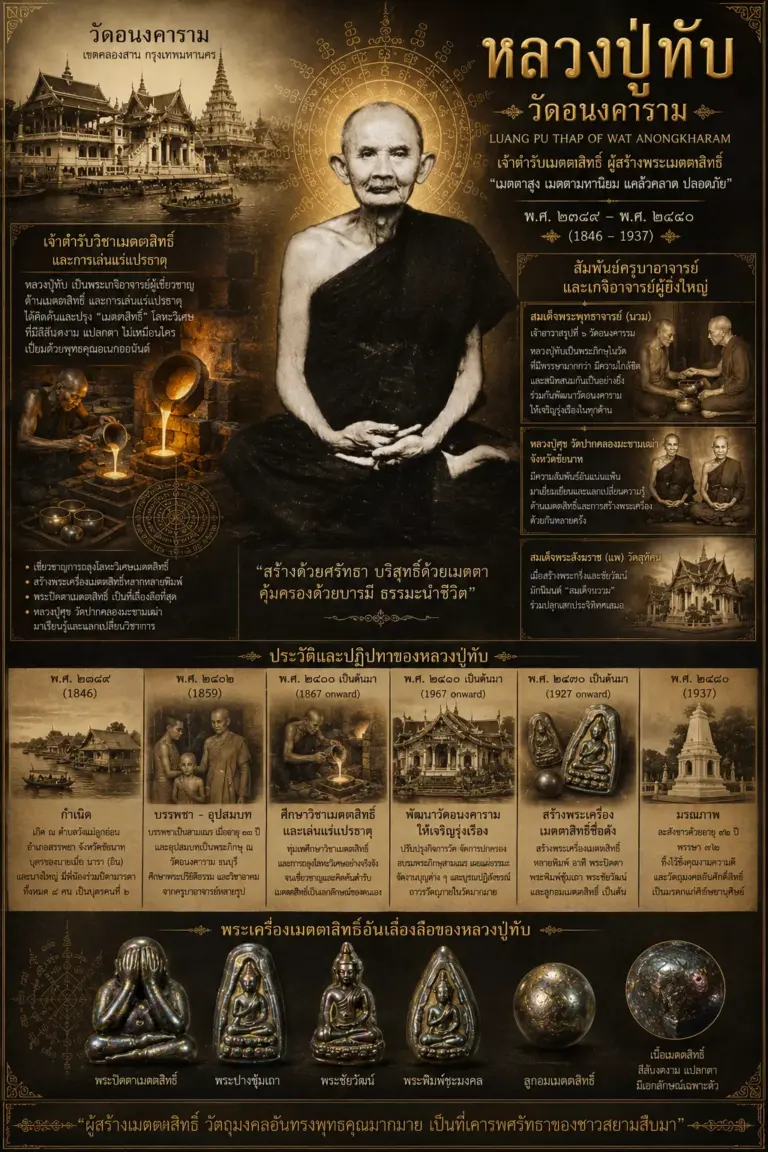
Luang Pu Thap (หลวงปู่ทับ) was a revered Thai Buddhist master monk of Wat Anongkharam (วัดอนงคาราม), Khlong San District, Bangkok, born around BE 2389 (AD 1846) and passing away in BE 2480 (AD 1937). He is celebrated throughout the Thai amulet collector community as a grandmaster of alchemy who created the legendary Mekh Sithi (เมฆสิทธิ์) metal, most famously cast into the highly coveted Phra Pidta Mekh Sithi amulet. Read more ↓
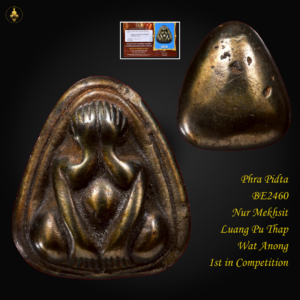
Amulets by Luang Pu Thap Wat Anong 3 total · 2 available

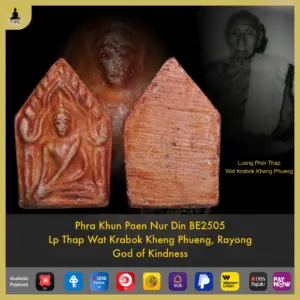
![[SOLD] Phra Khun Paen Pim Toh Nur Phong BE2505 Luang Phor Thap Wat Krabok Kheng Phueng](https://tac-media.sgp1.digitaloceanspaces.com/2026/03/phra-khun-paen-pim-toh-nur-phong-be2505-luang-phor-thap-wat-krabok-kheng-phueng-300x300.webp)
Biography
Who Was Luang Pu Thap?
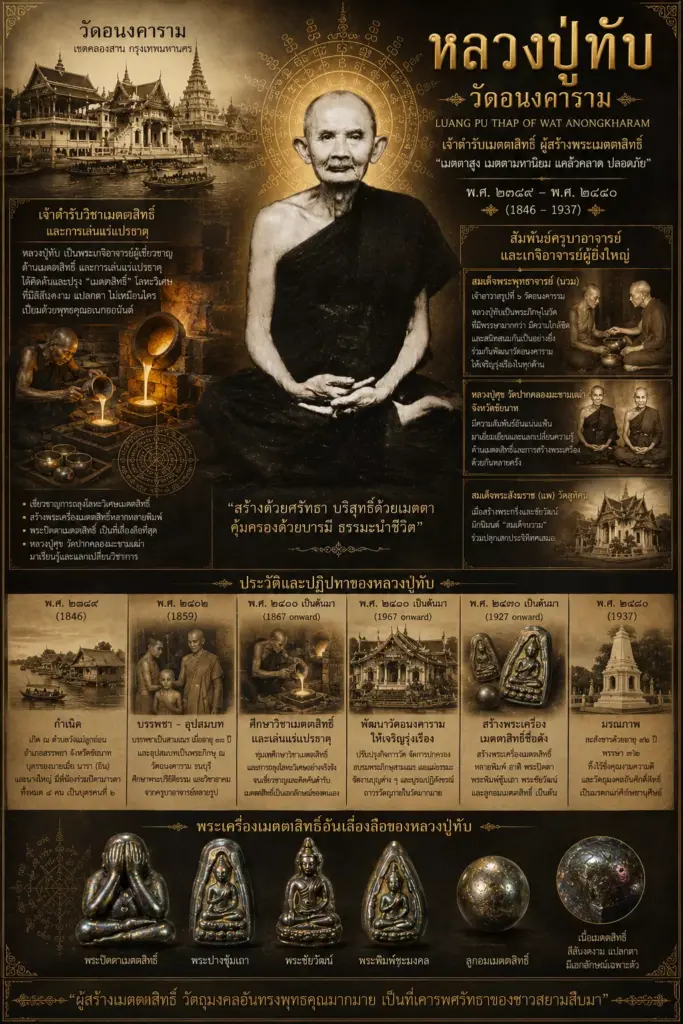
Luang Pu Thap (หลวงปู่ทับ) was a revered Thai Buddhist master monk of Wat Anongkharam (วัดอนงคาราม), Khlong San District, Bangkok, born around BE 2389 (AD 1846) and passing away in BE 2480 (AD 1937). He is celebrated throughout the Thai amulet collector community as a grandmaster of alchemy who created the legendary Mekh Sithi (เมฆสิทธิ์) metal, most famously cast into the highly coveted Phra Pidta Mekh Sithi amulet.
Early Life and Ordination
Luang Pu Thap (หลวงปู่ทับ) was born around BE 2389 (AD 1846), though precise details regarding his birthplace, family background, and early secular life are not widely documented in English sources. What is known from Thai temple records and collector traditions is that he entered the monastic order and took up residence at Wat Anongkharam (วัดอนงคาราม) in Khlong San District (เขตคลองสาน), on the Thonburi side of Bangkok.
He is noted to have accumulated more years in the monkhood than many of his contemporaries at the same temple, which speaks to both his deep commitment to the Vinaya (พระวินัย) and the breadth of spiritual knowledge he was able to develop over his long monastic career. His tenure at Wat Anongkharam coincided with the abbotship of Somdej Phra Phutthacharn Nawam Phutthasaro (สมเด็จพระพุทธจารย์ นวม พุทธสโร), the 6th abbot of the temple, under whose leadership the temple flourished significantly. Luang Pu Thap passed away in BE 2480 (AD 1937), having devoted the entirety of his adult life to Buddhist practice and the sacred alchemical arts.
Spiritual Development and Practice
Luang Pu Thap is principally remembered in devotee and collector circles as an old master monk (ครูบาอาจารย์) with rare and formidable expertise in two interrelated disciplines: alchemy (โลหะวิทยา) and sacred magic (ไสยศาสตร์). His mastery of metal-smelting techniques—particularly the creation of Mekh Sithi (เมฆสิทธิ์), a ritually charged alloy prized for its distinctive and beautiful colour as well as its reputed miraculous properties—set him apart as one of the foremost alchemical masters of his era in Bangkok.
His reputation extended well beyond the walls of Wat Anongkharam. Luang Pu Suk (หลวงปู่สุก) of Wat Pak Khlong Makham Thao (วัดปากคลองมะขามเฒ่า), Chai Nat Province—himself one of the most celebrated monk-alchemists in Thai Buddhist history—travelled to Wat Anongkharam specifically to study and exchange knowledge with Luang Pu Thap. This cross-temple transmission of alchemical knowledge is historically significant: Luang Pu Suk subsequently applied the Mekh Sithi casting technique at his own temple to produce his own celebrated rectangular amulets, a lineage that collectors in Singapore, Malaysia, and Thailand continue to prize to this day. The spiritual lineage and alchemical knowledge originating with Luang Pu Thap can therefore be traced directly into one of the most important amulet traditions of the twentieth century.
Major Amulet Consecrations and Ceremonies
Luang Pu Thap’s most celebrated contribution to Thai amulet heritage is his mastery of Mekh Sithi (เมฆสิทธิ์) metal—a sacred alchemical alloy he personally smelted and consecrated. The amulets he created using this material are recognised across several principal types: Phra Pidta (พระปิดตา), Phra Pang Son Ha (พระปางสรงน้ำ), Phra Chaiwat (พระชัยวัฒน์), and Luk Om (ลูกอม) — spherical amulets believed to concentrate powerful sacred energy within a compact form.
Among all these, the Phra Pidta made of Mekh Sithi is universally regarded by collectors as the most important and most sought-after amulet associated with Luang Pu Thap. The combination of the Phra Pidta iconographic form—representing the meditating Buddha with eyes closed, associated with protection, fortune, and the blocking of misfortune—with the rare Mekh Sithi metal has made these pieces objects of intense collector attention across Thailand, Singapore, Malaysia, Taiwan, Hong Kong, and China.
Detailed batch-by-batch records including specific BE consecration years, batch names, and precise material compositions are not widely documented in English sources. Collectors and researchers seeking granular production records are advised to consult Thai-language temple archives at Wat Anongkharam directly or reference specialist Thai amulet publications and certified grading bodies such as G-Pra (จีพระ) and Samakom (สมาคม). Thai Amulets Collection will update this record as further verified documentation becomes available.
Legacy and Temple Significance
Luang Pu Thap’s legacy rests upon two pillars that remain living forces in Thai Buddhist culture today. The first is his alchemical transmission: his teaching of the Mekh Sithi technique to Luang Pu Suk of Wat Pak Khlong Makham Thao directly shaped one of the most important amulet lineages of the twentieth century, cementing his status as a foundational figure in Thai sacred metallurgy.
The second pillar is institutional. Luang Pu Thap’s decades of devoted practice at Wat Anongkharam (วัดอนงคาราม) contributed to the temple’s spiritual prestige during the abbotship of Somdej Phra Phutthacharn Nawam Phutthasaro, under whom the temple flourished in all dimensions—religious, administrative, and educational. Together, the two monks defined a golden era for Wat Anongkharam that collectors and devotees continue to reference as the temple’s most sacred period.
Today, Wat Anongkharam remains an active and venerated temple in Khlong San District, Bangkok. Devotees visit to pay respects at shrines honouring the temple’s revered masters, and amulets attributed to Luang Pu Thap are treated with the highest level of reverence in the collector community. Specific details regarding dedicated shrines or statues erected in Luang Pu Thap’s individual honour within the temple are not widely documented in English sources.